When Rachel, 34, heard her AMH was 0.4 ng/mL, her doctor told her she had “the ovarian reserve of a 42-year-old.” That number — from a $90 blood test — changed her entire treatment plan.
The AMH test is one of the most important, and most misunderstood, tools in fertility medicine. It’s also one of the more affordable ones. Here’s what it costs, where to get it, and what the number actually means for your chances of having a baby.
What Does an AMH Test Cost?
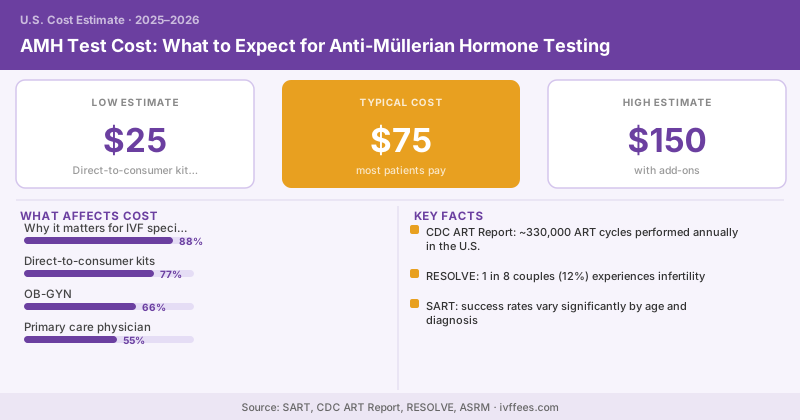
AMH testing costs vary significantly based on where you get it done.
| Testing Location | Low | Typical | High |
|---|---|---|---|
| Direct-to-consumer kit (mail-in) | $25 | $75 | $150 |
| OB-GYN (through lab order) | $30 | $80 | $200 |
| Fertility clinic | $60 | $100 | $200 |
| Hospital lab (self-pay) | $40 | $90 | $180 |
| With insurance (copay only) | $0 | $25 | $60 |
The actual lab test itself — whether ordered by your OB or a fertility specialist — typically runs $80–$150 without insurance. The cost difference you see between providers is mostly overhead, not a different test. They’re all measuring the same biomarker from the same blood draw.
What Is AMH and Why Does It Matter?
Anti-Müllerian hormone is produced by the small follicles in your ovaries. The more active follicles you have, the higher your AMH. It’s the closest thing we have to a direct count of your remaining egg supply — your “ovarian reserve.”
What makes AMH particularly useful is that it doesn’t fluctuate much throughout your menstrual cycle, unlike FSH or estradiol. You can test it any day, any time — no waiting for day 3.
Why it matters for IVF specifically: AMH is the best predictor of how you’ll respond to ovarian stimulation. A high AMH suggests you’ll produce more eggs per retrieval. A low AMH predicts poor response — meaning fewer eggs collected, fewer viable embryos, and potentially multiple retrieval cycles needed.
According to a 2020 study published in Human Reproduction, AMH was the strongest single predictor of ovarian response in IVF cycles, outperforming age and FSH as independent variables. Your RE uses it to calibrate your medication doses before starting a cycle.
AMH Levels: What the Numbers Mean
Here are the general reference ranges used by most U.S. fertility labs, though interpretation should always be done by your doctor in the context of your full picture:
- Above 3.5 ng/mL: High — sometimes associated with PCOS, suggests strong response to stimulation
- 1.5–3.5 ng/mL: Normal — good reserve, expected response
- 1.0–1.5 ng/mL: Low-normal — still workable, may need higher medication doses
- 0.5–1.0 ng/mL: Low — diminished ovarian reserve, poor response likely
- Below 0.5 ng/mL: Very low — significant concern, may need to modify treatment or consider alternatives
One critical caveat: AMH doesn’t predict egg quality — only quantity. A woman with very low AMH can still have excellent egg quality and achieve pregnancy, especially if she’s young. The number tells you something real but not everything.
Where to Get Tested Without a Fertility Clinic
You don’t need a referral to a fertility specialist to get an AMH test. Options include:
Direct-to-consumer kits: Companies like LetsGetChecked, Everlywell, and Modern Fertility offer home AMH tests for $50–$150. You prick your finger or do a blood draw at home, mail the sample, and get results online. These are FDA-regulated and clinically accurate for initial screening.
OB-GYN: Your OB can order AMH as part of annual bloodwork. Whether it’s covered depends on your insurance and how it’s coded — sometimes it slips through as part of a general endocrine panel; other times it’s flagged as “fertility-related” and excluded.
Primary care physician: Increasingly, PCPs are comfortable ordering AMH for women in their late 20s and 30s who are planning for future fertility. It’s a reasonable request at your annual exam.
Consider getting tested if: you’re over 30 and planning to have children in the next 3–5 years, you’re considering egg freezing, you have irregular periods or a history of ovarian surgery, or you’ve been trying to conceive for 6+ months without success. Earlier testing gives you more time to act on the information.
Insurance Coverage for AMH
Coverage varies wildly. Most major insurers don’t cover AMH as a standalone “fertility” test, but some cover it under:
- “Endocrine function testing”
- “Gynecological evaluation”
- “Diagnostic workup for menstrual irregularity”
The 2021 RESOLVE survey found that 62% of patients who were denied AMH coverage successfully received it after appealing and having their doctor add a non-fertility diagnostic code. It’s worth trying.
If you’re paying out of pocket, you can also use GoodRx or similar tools to compare lab pricing. LabCorp and Quest Diagnostics both offer AMH testing directly through their patient portals at prices ranging from $40–$120 without insurance.
AMH Is Not a Fertility Death Sentence
This bears repeating because it causes so much anxiety. AMH is a quantity marker, not a quality marker, and not a pregnancy prediction. Women with very low AMH get pregnant. Women with very high AMH struggle to conceive. The test is a tool, not an oracle.
What AMH does well: helps your RE make better treatment decisions. A low AMH means they’ll likely start you on higher doses of stimulation medication and may recommend more aggressive monitoring. That’s valuable information that leads to better care.
AMH results can look different depending on which lab runs the test. Beckman Coulter and Roche Elecsys assays give slightly different numbers from the same blood sample. If you’re comparing results over time, try to use the same lab. Ask your clinic which assay they use so you’re comparing apples to apples.
The Bottom Line
An AMH test costs $25–$200 depending on where you get it done. For most women, this is one of the most valuable $100 investments in reproductive planning — especially if you’re in your 30s and thinking ahead. Start with a DTC kit or ask your OB before paying fertility clinic rates. And whatever your number is, get it interpreted by a doctor who can put it in context.