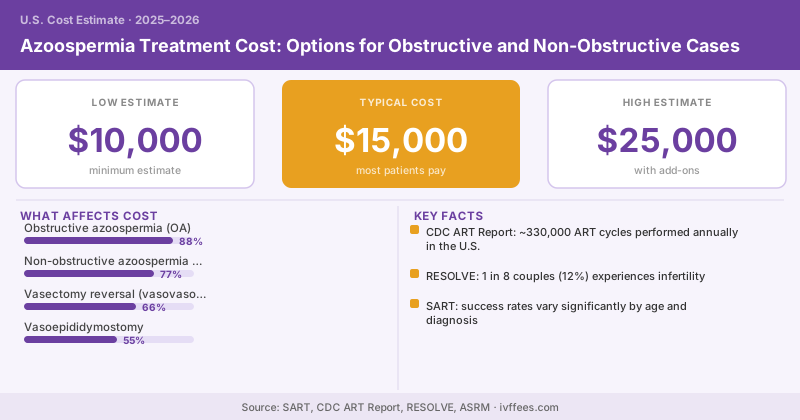
Azoospermia — no sperm in the ejaculate — sounds like a dead end. It isn’t. According to the American Urological Association, approximately 10–15% of infertile men have azoospermia, and the majority of them have at least one viable treatment path. But which path, and what it costs, depends entirely on whether you have the obstructive or non-obstructive type.
Get that distinction wrong — or skip the diagnostic workup — and you’ll spend money on the wrong treatment.
The Two Types of Azoospermia (And Why They Drive Everything)
Obstructive azoospermia (OA): The testes are producing sperm normally, but a physical blockage prevents sperm from reaching the ejaculate. Causes include prior vasectomy, congenital bilateral absence of the vas deferens (CBAVD, associated with CFTR gene mutations), prior epididymal or ejaculatory duct obstruction, or infection-related scarring.
Sperm are present — they just can’t get out. Treatment involves either surgically bypassing the blockage or retrieving sperm directly from the reproductive tract.
Non-obstructive azoospermia (NOA): The testes are producing little or no sperm due to primary spermatogenic failure. Causes include Klinefelter syndrome (47,XXY), Y-chromosome microdeletions (AZF regions), cryptorchidism (undescended testicles), prior chemotherapy or radiation, or idiopathic causes.
Sperm may exist in tiny pockets within testicular tissue but can’t be found in ejaculate because there aren’t enough to reach it. Treatment requires finding those pockets surgically — and success is never guaranteed.
Diagnostic Workup First: Know Before You Spend
Before committing to any treatment, you need a complete workup. Skipping this step leads to expensive mistakes.
| Diagnostic Test | Cost Range |
|---|---|
| Semen analysis (x2, 6–8 weeks apart) | $50 – $200 each |
| Hormone panel (FSH, LH, testosterone, estradiol, prolactin) | $150 – $400 |
| Genetic testing (karyotype + Y-chromosome microdeletion) | $400 – $1,500 |
| CFTR mutation testing (if CBAVD suspected) | $200 – $600 |
| Scrotal ultrasound | $200 – $500 |
| Testicular biopsy (diagnostic, if needed) | $1,500 – $4,000 |
Total diagnostic workup: typically $1,000–$3,500, sometimes more. This is not optional. FSH levels, testicular volume, and genetic results directly determine which treatment has any chance of working.
Treatment Options and Costs for Obstructive Azoospermia
OA has the better prognosis and generally lower treatment costs. You have two main routes:
Option 1: Surgical Reconstruction
If the blockage can be fixed, natural conception becomes possible — no IVF required.
Vasectomy reversal (vasovasostomy): For men whose azoospermia results from a prior vasectomy. Costs $5,000–$15,000 depending on surgeon and facility. Success rates drop significantly with time: >90% patency within 3 years of vasectomy, falling to 30–40% or lower beyond 15 years. The procedure requires a microsurgical specialist.
Vasoepididymostomy: A more complex microsurgical procedure to bypass epididymal scarring. Often performed alongside vasovasostomy when the epididymis is found to be blocked during surgery. Adds $2,000–$5,000 to the reconstruction cost.
Ejaculatory duct resection: For ejaculatory duct obstruction, TURED (transurethral resection of the ejaculatory ducts) is a surgical option. Costs $3,000–$8,000.
This is a genuine decision point for vasectomy-related OA. Vasectomy reversal costs $5,000–$15,000 upfront but allows natural conception if successful. IVF with TESA retrieval costs $13,000–$25,000+ per cycle but has more predictable outcomes. If the vasectomy was more than 10–15 years ago, IVF/ICSI with sperm retrieval often has better per-cycle outcomes than reversal. Discuss timing and partner’s age with your RE and urologist together.
Option 2: Sperm Retrieval for IVF/ICSI
When reconstruction isn’t feasible (CBAVD, failed reversal, anatomic absence), TESA or PESA retrieves sperm directly for use with ICSI.
For OA, retrieval success rates exceed 90%. This is a reliable path.
Treatment Options and Costs for Non-Obstructive Azoospermia
NOA is more expensive and less certain. The only treatment option for biological parenthood is micro-TESE combined with IVF/ICSI — if sperm can be found.
Micro-TESE
Microsurgical testicular sperm extraction uses an operative microscope to identify and biopsy the small pockets of active spermatogenesis that persist even in severely impaired testes. Per ASRM data, micro-TESE retrieval rates in NOA range from 40–60% overall, but vary significantly by cause:
- Idiopathic NOA: ~50% retrieval rate
- Prior chemotherapy (Hodgkin’s lymphoma, etc.): ~35–50%
- Klinefelter syndrome (47,XXY): ~40–55% with optimal patient selection
- AZFc Y-chromosome deletion: ~50–70%
- AZFa or AZFb deletions: near 0% — sperm retrieval is not recommended
Micro-TESE costs $7,000–$15,000 for the procedure alone. Combined with IVF/ICSI, total cycle costs reach $21,000–$42,000.
Men with AZFa or AZFb Y-chromosome microdeletions have near-zero chance of sperm retrieval with any technique. Y-chromosome microdeletion testing before scheduling micro-TESE can save $7,000–$15,000 in futile surgical costs. This is why genetic testing is a non-negotiable first step.
Medical Therapy for NOA (Limited Role)
In select cases of NOA caused by hypogonadotropic hypogonadism (low FSH/LH from pituitary or hypothalamic origin), hormone therapy can sometimes stimulate sperm production:
- hCG + FSH (gonadotropin therapy): $500–$2,000/month for 6–18 months of treatment. This is one of the few medical treatments that can actually restore sperm to the ejaculate in the specific subgroup with secondary hypogonadism.
- Clomiphene or anastrozole: Sometimes used off-label for NOA with low testosterone. Cost: $30–$150/month. Evidence is limited.
- Medical therapy won’t work for genetic causes (Klinefelter, Y-deletions), prior radiation, or primary testicular failure.
Donor Sperm: The Alternative Path
If sperm retrieval fails or genetic testing predicts near-zero retrieval success, donor sperm is an option. Donor sperm costs $600–$1,800 per vial for IUI or IVF use. A single IUI cycle with donor sperm costs $1,000–$3,000. IVF with donor sperm runs $12,000–$20,000 per cycle but has higher success rates per cycle than IUI.
Many couples with NOA ultimately consider donor sperm as the most cost-effective path to parenthood, especially after one or more failed micro-TESE attempts.
Full Cost Comparison: NOA Treatment Paths
| Treatment Path | Estimated Total Cost | Success Rate |
|---|---|---|
| Medical therapy (hypogonadotropic cases only) | $3,000 – $15,000/year | Variable |
| Micro-TESE + IVF/ICSI (single cycle) | $21,000 – $42,000 | 20–40% live birth |
| Donor sperm + IUI (3 cycles) | $5,000 – $10,000 | 30–50% cumulative |
| Donor sperm + IVF | $12,000 – $22,000 | 50–70% per cycle |
The complete IVF cost breakdown and a male fertility testing workup are both worth reviewing before you commit to a path. The diagnostic investment is small relative to what’s at stake.