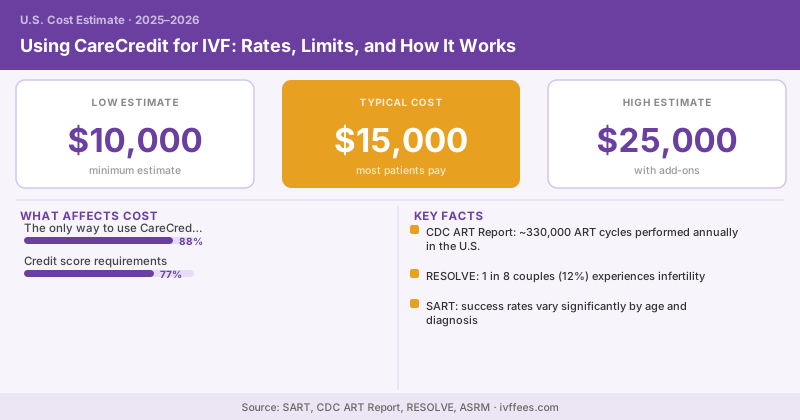
A $15,000 IVF quote and a CareCredit application—that’s how millions of fertility patients cover treatment. But the card that looks like free financing can flip into 29.99% APR on day one if you’re not careful.
Here’s everything you need to know before you swipe.
What CareCredit Is (and Who Backs It)
CareCredit is a healthcare credit card issued by Synchrony Bank. It’s designed specifically for medical expenses—dental, vision, veterinary, and fertility care—and it’s accepted at approximately 85% of U.S. fertility clinics, according to Synchrony’s provider network data. The card functions like any other revolving credit line, except it’s restricted to healthcare purchases.
Credit limits typically run from $200 to $25,000 or more, depending on your credit profile. For most IVF patients, a limit in the $10,000–$20,000 range is achievable with good credit.
The Promotional Periods: 0% If You Pay in Time
CareCredit’s main draw is its promotional financing tiers:
| Promo Period | Minimum Purchase | Deferred Interest | Standard APR if Not Paid Off |
|---|---|---|---|
| 6 months | $200 | Yes | 29.99% |
| 12 months | $1,000 | Yes | 29.99% |
| 18 months | $2,500 | Yes | 29.99% |
| 24 months | $2,500 | Yes | 29.99% |
During the promo window, you pay 0% interest—but only if you pay the entire balance by the end of the period. Miss that deadline by even one payment? Synchrony charges you all the interest that accrued from day one. That’s deferred interest, not waived interest, and it’s the trap most patients don’t see coming.
The Deferred Interest Trap: Real Math
Say you charge $15,000 for an IVF cycle on a 12-month 0% promo card. You make minimum payments each month—roughly $250–$300—but there’s still $8,000 left at month 12.
At that point, CareCredit charges interest on the full original $15,000 balance retroactively at 29.99% APR. That’s roughly $4,500 in interest charges hitting your statement at once. You end up owing $12,500 on what you thought was a no-interest deal.
The only way to use CareCredit safely: calculate the exact payoff needed each month and stick to it. On a $15,000 balance over 12 months, that’s $1,250 per month—every month, no exceptions.
How the Application Works
Applying takes about 10 minutes online at carecredit.com or through your clinic’s front desk. You’ll need:
- Social Security Number
- Income information
- Employment status
Synchrony does a hard credit pull, which temporarily dips your score by 5–10 points. Approval decisions typically come within minutes. Once approved, you can use the card immediately at any participating provider.
Credit score requirements: CareCredit doesn’t publish a minimum score, but most approvals happen at 620 or above. Better scores (700+) unlock higher credit limits. The CFPB’s 2023 consumer credit data notes that medical credit cards like CareCredit are among the most accessible forms of healthcare financing for subprime borrowers, though the deferred-interest terms carry significant risk for that same population.
Which Fertility Clinics Accept CareCredit?
About 85% of U.S. fertility clinics participate in Synchrony’s healthcare network. You can confirm acceptance by:
- Checking the CareCredit provider locator at carecredit.com/find-care
- Calling your clinic’s billing department directly
- Asking during your initial consultation
Major clinic networks like CCRM, Shady Grove Fertility, and RMA typically accept CareCredit across most locations.
Stacking CareCredit With Other Financing
CareCredit doesn’t have to be your only tool. Many patients use it in combination with:
- HSA/FSA funds — IVF qualifies as a medical expense under IRS Publication 502, so you can pay your CareCredit bill using an HSA or FSA debit card
- Partial clinic financing — some clinics offer their own payment plans for balances CareCredit doesn’t cover
- Personal loans — a lower-interest personal loan can pay off a CareCredit balance before the promo period ends
What CareCredit Won’t Cover
CareCredit can be used for most direct fertility clinic charges: monitoring visits, egg retrieval, embryo transfer, and ICSI fees. However, some expenses may need to go through a different channel:
- Pharmacy costs for fertility medications (usually require a specialty pharmacy, not the clinic)
- Legal fees for surrogacy contracts
- Third-party donor agency fees (some agencies don’t accept CareCredit)
Is CareCredit Worth It for IVF?
If you can genuinely pay off the balance within the promotional period, CareCredit is among the cheapest financing options available—effectively 0% interest. The math beats most personal loans.
If you’re uncertain you can pay it off in time, the 29.99% APR makes it one of the most expensive options on the market. A dedicated fertility loan at 8–14% APR will almost always be cheaper than deferred-interest CareCredit that doesn’t get paid off.
The decision comes down to one question: do you have a realistic plan to pay the full balance before the promo ends? If the answer is yes, CareCredit is an excellent tool. If there’s any doubt, look at other options first.