The $45,000 quote left her speechless — but it’s not unusual. Donor egg IVF is among the most expensive fertility treatments available, and the price has a lot of moving parts that most patients don’t see coming.
If your own eggs aren’t viable, donor eggs offer remarkably high success rates. The CDC’s 2021 Assisted Reproductive Technology report shows that IVF cycles using fresh donor eggs in women of any age achieve live birth rates of approximately 47% per transfer — compared to roughly 16% for women over 40 using their own eggs. But those results come at a steep cost.
What Donor Egg IVF Actually Costs
The total price depends on whether you use a fresh donor (a specific individual who undergoes stimulation for you) or frozen donor eggs (eggs retrieved from a donor in advance and cryopreserved for later sale).
| Cost Component | Low End | Typical | High End |
|---|---|---|---|
| Recipient IVF cycle (your clinic) | $5,000 | $8,000 | $12,000 |
| Fresh donor compensation + agency fee | $15,000 | $25,000 | $35,000 |
| Fresh donor medical/screening | $3,000 | $5,000 | $8,000 |
| Fresh donor egg IVF (total) | $25,000 | $38,000 | $55,000 |
| Frozen egg bank cohort (6–8 eggs) | $12,000 | $18,000 | $25,000 |
| Recipient IVF cycle (thaw + FET) | $4,000 | $6,000 | $9,000 |
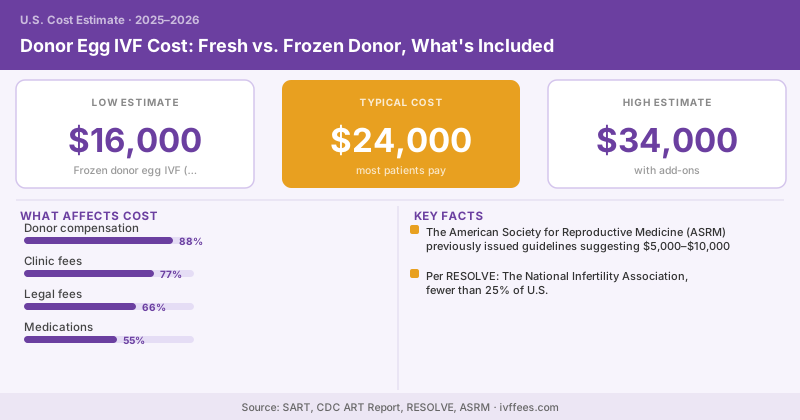
| Frozen donor egg IVF (total) | $16,000 | $24,000 | $34,000 |
Fresh vs. Frozen Donor Eggs
Fresh donor eggs mean your clinic matches you with a donor who undergoes controlled ovarian stimulation timed to your cycle. All retrieved eggs are yours. You typically get more eggs (10–20+), which means more embryos and more chances. But you’re also paying the donor’s full compensation, agency fees, her medical costs, and the synchronization logistics.
Frozen donor eggs (also called “egg banking” or “vitrified donor eggs”) are purchased as a cohort — usually 6 to 8 mature eggs — from a dedicated egg bank like California Cryobank, NOVAREL Donor Services, or Fairfax EggBank. You don’t pay for a donor cycle; you pay for the eggs already banked. This significantly lowers the cost and shortens timelines, but you get fewer eggs to work with.
What Moves the Price
Donor compensation is the biggest variable in fresh cycles. The American Society for Reproductive Medicine (ASRM) previously issued guidelines suggesting $5,000–$10,000 as “appropriate” compensation per donation. In practice, agencies often pay donors $8,000–$15,000+, especially for repeat donors or those with desirable characteristics. Some egg banks pay considerably more. This compensation flows through to what you pay.
Clinic fees vary by geography. A clinic in New York City may charge $8,000–$12,000 for the recipient cycle (monitoring, embryo transfer, lab). A clinic in Texas or Ohio might charge $4,500–$7,000 for the same services.
Legal fees. Fresh donor cycles require a legal contract between you and the donor — expect $1,000–$2,500 in attorney fees. Many frozen egg banks include an escrow-managed donor agreement in their purchase price.
Medications. You’ll still need estrogen and progesterone to prepare your uterus for transfer. These medications typically add $500–$1,500 on top of any clinic fee.
For most recipients, frozen donor eggs make financial sense for a first attempt. If a frozen cohort doesn’t yield a successful pregnancy, you can then consider a fresh cycle with more eggs. The gap in success rates between fresh and frozen has narrowed significantly with modern vitrification — some studies show no statistically significant difference in live birth rates.
Does Insurance Cover Donor Egg IVF?
It depends on your state and your policy. In states with comprehensive fertility mandates — Illinois, Massachusetts, New Jersey — some insurers cover the recipient’s IVF cycle (the transfer portion). However, donor compensation and egg bank fees are almost never covered, even in mandate states.
Per RESOLVE: The National Infertility Association, fewer than 25% of U.S. fertility patients have any meaningful insurance coverage for donor egg cycles. In most cases, you’re paying the full amount out of pocket.
Shared-Risk Programs for Donor Cycles
Several clinics offer “guaranteed” or shared-risk packages for donor egg recipients. Because donor egg success rates are high, these programs can be cost-effective: you pay one flat fee ($30,000–$50,000) for multiple attempts and receive a substantial refund if you don’t bring home a baby.
The math only works in your favor if you anticipate needing more than one transfer. If you get pregnant on the first frozen embryo transfer — which happens often with donor eggs — you’ll have paid a premium for insurance you didn’t need.
Shared-risk programs exclude patients with certain uterine conditions, chromosomal abnormalities, or age cutoffs. Read the exclusions carefully before signing. Refund terms also vary — some programs return 70%, not 100%, of fees paid.
Finding Lower-Cost Options
Known donors. If a friend or family member is willing to donate, you can avoid agency fees and may dramatically reduce donor compensation. You still need legal contracts and full medical screening — but the total may drop by $10,000–$20,000.
Egg bank cohort pricing. Some banks offer cohort pricing based on egg count (e.g., 6-egg vs. 8-egg vs. 12-egg packages). Buying the minimum cohort first, then buying more if needed, can be more economical than buying the largest package upfront.
Clinical trial participation. Some academic fertility centers run donor egg research studies where recipients receive treatment at reduced or no cost in exchange for participation. Check ClinicalTrials.gov.
The Bottom Line
Frozen donor egg IVF typically runs $16,000–$34,000 all-in. Fresh donor egg IVF ranges from $25,000 to $55,000 or more. Both offer substantially higher success rates than autologous IVF for women with diminished ovarian reserve or poor egg quality — which is why so many patients ultimately find the cost worth it.
Cost estimates based on ASRM guidelines, CDC 2021 ART National Summary Report, and egg bank published pricing. Individual costs vary by clinic, donor agency, and geographic location.