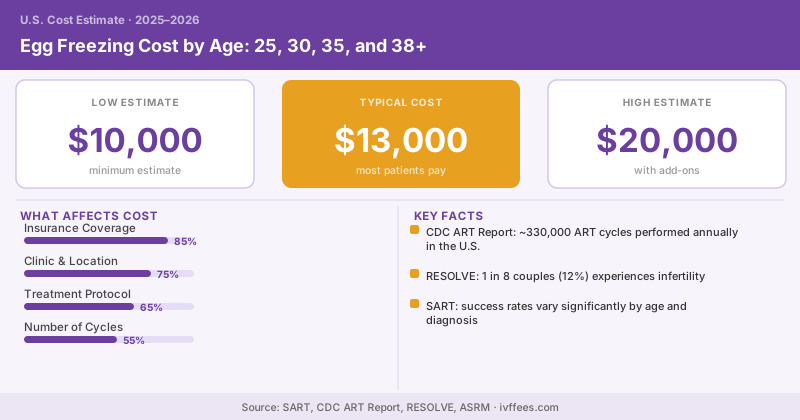
At 28, you might freeze 14 mature eggs in one retrieval cycle. At 38, you might freeze 4. Same clinic. Same $12,000. Very different outcome.
Age is the single biggest variable in egg freezing — not just for success rates, but for the true cost per viable egg you walk away with. Here’s what the numbers actually look like.
Why Age Changes Everything
Your ovarian reserve — the pool of eggs your ovaries have left — declines with age. That decline accelerates after 35. Fertility clinics measure this with AMH (anti-Müllerian hormone) and antral follicle counts (AFC) before your cycle, but age alone predicts a lot.
According to SART (Society for Assisted Reproductive Technology), the average number of mature oocytes retrieved drops substantially by age bracket:
- Under 35: avg 12–15 mature eggs per retrieval
- 35–37: avg 8–12 mature eggs per retrieval
- 38–40: avg 5–9 mature eggs per retrieval
- Over 40: avg 3–6 mature eggs per retrieval
That’s not just a fertility outcome difference — it’s a cost difference, because most women in the 38+ bracket need more than one retrieval cycle to bank a clinically meaningful number of eggs.
Cost Breakdown by Age Group
| Age Group | Retrieval Cost | Likely Cycles Needed | Total Estimated Cost |
|---|---|---|---|
| 25–29 | $10,000–$14,000 | 1 | $10,000–$14,000 |
| 30–34 | $10,000–$14,000 | 1 | $10,000–$15,000 |
| 35–37 | $11,000–$15,000 | 1–2 | $11,000–$28,000 |
| 38–40 | $11,000–$15,000 | 2–3 | $22,000–$45,000 |
| 40+ | $12,000–$16,000 | 2–4 | $24,000–$64,000 |
These totals include medications, monitoring, and first-year storage but exclude the eventual thaw and transfer (add $3,000–$7,000 when you’re ready to use them).
The Cost-Per-Viable-Egg Math
Here’s a way to think about what you’re actually buying:
A 30-year-old who spends $13,000 and retrieves 13 mature eggs pays roughly $1,000 per egg. With an ~80% survival rate on thaw (SART data), she ends up with about 10 surviving eggs. That’s $1,300 per surviving egg.
A 39-year-old who spends $13,000 and retrieves 5 mature eggs pays $2,600 per egg — and ends up with 4 surviving after thaw. That’s $3,250 per surviving egg. If she does a second retrieval, total costs can push $25,000+ for the same total egg count.
Most reproductive endocrinologists recommend banking at least 10–15 mature eggs if you want a reasonable chance at one live birth. For women under 35 with normal ovarian reserve, one cycle usually gets you there. For women 37+, two or more cycles are often recommended from the start.
SART Live Birth Rates: What Those Eggs Are Worth
Collecting eggs is only half the equation. What matters is what happens when you use them.
According to 2022 SART data on frozen oocyte cycles, the estimated live birth rate per intended egg retrieval is:
- Under 35: approximately 39–45%
- 35–37: approximately 30–37%
- 38–40: approximately 20–27%
- Over 40: approximately 9–14%
These are per-cycle rates. The more eggs you have banked, the more transfers you can attempt, and the higher your cumulative live birth probability gets.
What This Means for Timing
The math strongly favors freezing earlier. A 32-year-old who spends $13,000 on one retrieval cycle has better odds and lower total cost than a 39-year-old who spends $30,000 across three cycles to bank the same number of eggs.
That said, not everyone knows at 32 that they’ll want to freeze eggs. If you’re 36 or 38 and considering it now, the economics still make sense — you just need to go in with realistic expectations about how many cycles you might need.
Egg freezing isn’t free insurance. At 40+, even with a good number of frozen eggs, live birth rates are low enough that most REs will recommend discussing donor eggs alongside frozen-egg transfers. That changes the cost math significantly.
Does Age Affect Medication Costs?
Yes. Older women and those with lower ovarian reserve often require higher doses of gonadotropins to stimulate multiple follicle development. More medication means higher pharmaceutical costs — potentially $5,000–$7,000 in medications versus $2,500–$3,500 for a younger patient with normal reserve.
If you’ve had a prior cycle with poor response, your next cycle’s medication costs will likely be higher because your RE will adjust the protocol upward.
Should You Wait for a “Deal”?
Some clinics offer multi-cycle egg freezing packages (two cycles for a flat fee, or bundle pricing). These make the most sense for women 36+ who realistically need two cycles anyway. A $19,000 two-cycle bundle beats paying $13,000 twice.
Ask about package pricing before your first cycle — it’s much easier to negotiate before you’ve started than after your first retrieval came back with fewer eggs than hoped.
Data sourced from SART 2022 National Summary Report, ASRM practice committee guidelines 2024, and national clinic fee surveys.