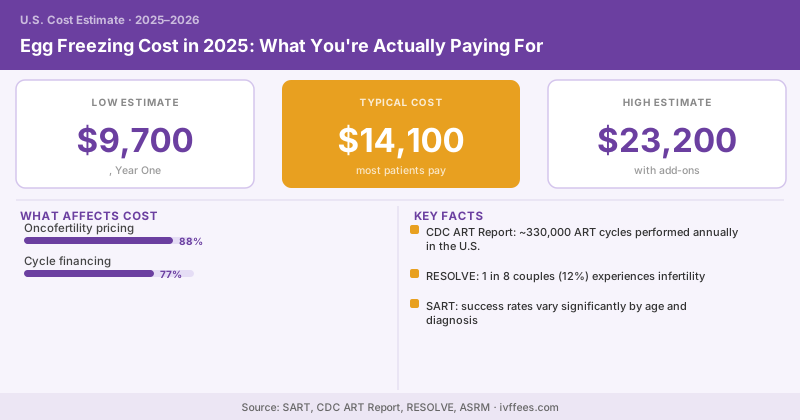
Most women who call a fertility clinic about egg freezing get a quote somewhere between $6,000 and $8,000. Then they find out that number doesn’t include medications. Or storage. Or the monitoring appointments billed separately. By the time everything is counted, they’re looking at $12,000–$16,000.
Here’s what egg freezing actually costs — and what you’re paying for at every step.
Estimates are for budgeting only. Actual costs vary by clinic, protocol, and insurance plan details. Medications sold separately unless noted. Get an itemized quote from your fertility clinic.
The Full Cost of One Egg Freezing Cycle
The honest all-in number for a single egg freezing cycle in the U.S. is $10,000 to $17,000. Some major metro clinics charge more. Some discount programs go lower. But for most women at a mainstream fertility clinic, plan on roughly $13,000–$15,000 total for cycle one.
| Cost Component | Low End | Typical | High End |
|---|---|---|---|
| Retrieval procedure (clinic fee) | $5,500 | $7,500 | $12,000 |
| Fertility medications | $2,500 | $4,000 | $6,500 |
| Initial consultation and workup | $300 | $500 | $1,000 |
| Monitoring appointments | $500 | $750 | $1,500 |
| Anesthesia | $400 | $650 | $1,000 |
| First-year embryo storage | $500 | $700 | $1,200 |
| Total, Year One | $9,700 | $14,100 | $23,200 |
Annual Storage Fees Add Up Fast
Here’s what the clinic brochure rarely emphasizes: you’ll pay to store your eggs every year until you use them or discard them. Annual storage fees typically run $500–$800 per year, though some clinics charge up to $1,200.
If you freeze your eggs at 32 and use them at 38, that’s six years of storage — potentially $3,000–$7,200 in storage costs alone, on top of your retrieval cycle.
According to ASRM (American Society for Reproductive Medicine), the average age at first egg freezing consultation is around 36, and the average time eggs remain in storage before use is approximately 4 years — though many are never used at all.
Before choosing a clinic, ask: What’s your annual storage fee? What happens to my eggs if I stop paying? Do you offer long-term storage contracts? Some clinics offer 5- or 10-year prepaid storage at a discount.
What Medications Are You Actually Taking?
Fertility medications for egg freezing are the same ovarian stimulation drugs used in IVF: injectable gonadotropins (FSH and/or LH) taken for 8–12 days to stimulate multiple follicle development. Brand names include Gonal-F, Follistim, and Menopur.
At retail pharmacy prices, these medications cost $3,000–$6,500 per cycle depending on your dose. Higher doses mean higher drug costs. Women with diminished ovarian reserve or poor response in a prior cycle often need more medication.
Ways to reduce medication costs:
- Specialty pharmacies: MDR Pharmacy, FertilityRx, and Freedom Fertility often price 20–35% below retail
- Manufacturer coupons and copay assistance: Merck and EMD Serono offer programs for their brand medications
- Biosimilars: Rekovelle (follitropin delta) is FDA-approved specifically for ART and may cost less than older brands
- Leftover medications: Some clinics facilitate donation of unused, unopened medications between patients
How Many Eggs Do You Need?
This question matters for cost because it determines whether one retrieval cycle is enough or whether you’ll need a second.
The reproductive endocrinology community generally considers 10–20 mature frozen eggs an adequate reserve for women under 38 who want a reasonable chance at one or two future pregnancies. A single cycle typically retrieves 8–15 mature eggs, though this varies enormously based on age and ovarian reserve.
Women in their late 30s often retrieve fewer eggs per cycle — sometimes only 3–6. That might mean needing two or three retrieval cycles to bank a meaningful number, which easily doubles or triples the total cost.
ASRM data suggests that the probability of achieving a live birth from frozen eggs declines significantly after age 38. Women who freeze eggs before 35 have the highest success rates when they later return to use them.
Egg freezing is not a guarantee. A 35-year-old who freezes 15 eggs has roughly a 60–70% chance of achieving a live birth using those eggs — not 100%. The younger you freeze, the better your odds. The more eggs banked, the better your odds. Neither is under your complete control.
Employer Benefits and “Fertility Freezing” Programs
Some large employers now cover egg freezing as a benefit — most famously, Apple, Facebook/Meta, Google, and Amazon began offering it more than a decade ago. Coverage amounts vary from $5,000 to $30,000+ over a career, often as part of a broader fertility benefit.
If you work for a large employer, check your HR benefits portal or call your benefits administrator directly. Fertility benefits are often listed under “family planning” or “reproductive health.” Don’t assume you don’t have coverage without checking.
For those without employer benefits, a handful of clinics partner with benefit platforms like Carrot Fertility, Progyny, or Maven that offer their own coverage or discount networks. These are worth exploring if you have them.
Financing and Programs Worth Knowing
Several clinics offer reduced-price egg freezing for women in specific situations:
Oncofertility pricing: If you’re facing a cancer diagnosis and chemotherapy or radiation that may affect fertility, many clinics offer significantly discounted or even free egg freezing cycles under oncofertility programs. LIVESTRONG Fertility maintains a database of participating clinics.
Military and first responder discounts: Some clinics offer reduced fees for active-duty military and veterans.
Cycle financing: Like IVF, egg freezing can be financed through CareCredit, Prosper Healthcare Lending, or clinic payment plans. A $14,000 cycle financed over 24 months at 0% promotional interest works out to about $583/month if paid off within the promotional window.
Is One Cycle Enough?
For women under 35 with good ovarian reserve, one cycle often retrieves enough eggs. For women 37+, or those with low AMH or low antral follicle counts, a second cycle is commonly recommended.
Budget for the possibility of two cycles. If you only need one, you’ll have money left over. If you need two, you won’t be financially blindsided.
The total cost for two retrieval cycles, annual storage for five years, and eventually a frozen embryo transfer when you’re ready can reach $35,000–$50,000. That’s a significant financial commitment — and one worth understanding clearly before you start.
Cost estimates based on ASRM 2024 guidelines, SART clinic reporting data, and national pharmacy pricing as of 2025.