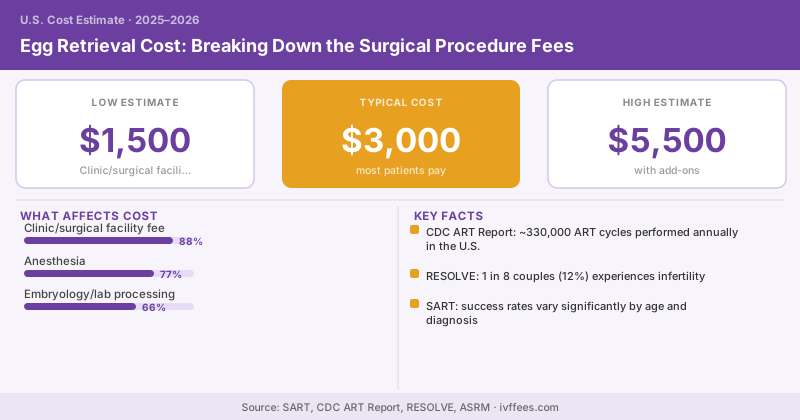
Of the many steps in an IVF cycle, the egg retrieval is the only true surgical procedure — and it’s billed like one. That means you may receive two or three separate bills: one from the clinic, one from the anesthesiologist, and sometimes one from the facility if the retrieval is done at an outpatient surgery center rather than at the clinic.
Here’s what each of those charges actually covers — and where you have room to ask questions.
What Egg Retrieval Actually Involves
The procedure itself takes 20–30 minutes. Under IV sedation, a physician uses a transvaginal ultrasound-guided needle to aspirate each follicle and collect the fluid containing eggs. A nearby embryologist processes each sample immediately, identifying and counting the mature oocytes.
It’s outpatient. You go home the same day. But it involves a surgeon, an anesthesiologist, a sterile procedure room, and an embryology lab — so the cost structure reflects that complexity.
The Full Cost Breakdown
| Cost Component | Low | Typical | High |
|---|---|---|---|
| Clinic/surgical facility fee | $1,500 | $3,000 | $5,500 |
| Anesthesia (IV sedation) | $400 | $900 | $1,800 |
| Embryologist/lab processing | $500 | $1,200 | $2,500 |
| Post-retrieval monitoring | $100 | $250 | $500 |
| Total egg retrieval cost | $2,000 | $4,500 | $8,000 |
Clinic/surgical facility fee: This covers OR time, nursing staff, the surgeon’s fee (RE performing the retrieval), equipment, and the sterile environment. At standalone fertility clinics with in-house procedure rooms, this fee is typically lower than at hospital-affiliated surgery centers.
Anesthesia: Most retrievals use IV sedation (propofol or a similar agent) — not general anesthesia. You’re deeply sedated and won’t feel or remember the procedure, but you’re breathing on your own without intubation. This is billed by the anesthesiologist separately and may or may not be in-network with your insurance plan.
Embryology/lab processing: The embryologist’s work during and immediately after retrieval — identifying eggs under the microscope, stripping cumulus cells, assessing maturity — is often included in the base lab fee. At some clinics it’s a separate line item.
Is Egg Retrieval Included in the “Base IVF Price”?
Sometimes yes, sometimes no. This is one of the most variable aspects of IVF pricing.
Some clinics quote you a “base IVF cycle” price of $12,000 to $15,000 that includes egg retrieval, embryo culture, and a fresh transfer. Others price these components separately, and the “base fee” of $8,000 to $10,000 includes only monitoring, retrieval, and lab — with transfer priced separately.
According to SART, the median reported cost per retrieval cycle nationally is approximately $12,000 to $13,000 for the procedure itself (excluding medications and genetic testing). But this bundled number obscures significant variation in how individual clinics itemize their pricing.
Before signing a financial agreement, ask your clinic: “Is the egg retrieval procedure fee included in my quoted cycle cost, or is it billed separately? What about anesthesia — is your anesthesiologist employed by the clinic or independent?” An independent anesthesiologist can create surprise out-of-network bills even when the clinic itself is in-network.
The Anesthesia Problem
This is where the most frustrating surprise bills come from. Your fertility clinic is in-network. The anesthesiologist who shows up for your retrieval is not in-network. You receive a bill for $800 to $2,000 from an anesthesiologist you never met or agreed to pay.
The No Surprises Act (effective January 2022) provides some protection against unexpected out-of-network bills for emergency services, but its coverage of scheduled outpatient procedures at in-network facilities is more limited. Check with your insurance company before your retrieval date:
- Is the clinic’s anesthesia department in-network?
- If not, does the clinic use contracted anesthesiologists who will accept in-network rates?
- Do I need to sign anything waiving out-of-network protections?
Egg Freezing Retrieval vs. IVF Retrieval
The physical procedure is identical whether you’re freezing eggs for fertility preservation or proceeding to IVF. The cost structure is largely the same. The difference comes afterward: if you’re freezing eggs, the embryology step stops at oocyte vitrification; if you’re doing IVF, the eggs are fertilized and cultured for several more days.
The CDC’s ART surveillance data shows that egg freezing cycles increased by 39% between 2019 and 2022 — a trend driven by elective fertility preservation among women 25–37 as well as medical indications like pre-chemo fertility preservation.
Does Insurance Cover Egg Retrieval?
If your state has an IVF insurance mandate and your plan covers IVF, the egg retrieval procedure is typically covered. In states without mandates, coverage depends entirely on your employer’s plan.
Anesthesia billing is separate and follows your plan’s anesthesia coverage — check your Summary of Benefits and Coverage document.
If you’re doing a “freeze-all” cycle — banking embryos or eggs without an immediate transfer — some insurance plans classify this differently than a “fresh IVF cycle with transfer.” Ask your insurance coordinator whether your plan covers retrieval without an immediate transfer attempt, as the coding can affect reimbursement.
Bottom Line
The egg retrieval itself costs $2,000 to $8,000 depending on location, clinic type, and whether you’re billed bundled or à la carte. The biggest variable you can control is anesthesia — confirm in-network status before your procedure date. Everything else is largely fixed once you’ve chosen your clinic.