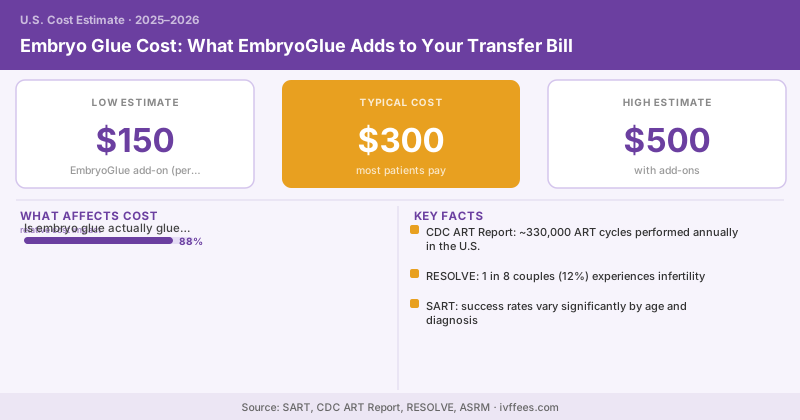
Picture a $300 line item on your transfer invoice labeled “EmbryoGlue.” It sounds like adhesive that sticks the embryo to your uterus. It isn’t. And whether you should pay for it depends almost entirely on your situation — not on the marketing.
Embryo glue is one of the most commonly offered IVF lab add-ons in the United States, and it’s also one of the most misunderstood. Let’s break down what you’re actually buying.
What Embryo Glue Really Is
EmbryoGlue is a brand-name transfer medium made by Vitrolife. The “glue” is hyaluronan, a sugar molecule that naturally occurs in your reproductive tract. The theory is that a higher concentration of hyaluronan in the transfer solution helps the embryo attach to the uterine lining.
So it’s not glue at all. It’s a culture medium with extra hyaluronan added. Your embryo sits in it briefly before the doctor transfers it during your frozen embryo transfer or fresh cycle.
What It Costs
The price varies a lot by clinic, mostly because some bundle it into the transfer fee and others charge separately.
| Embryo Glue Scenario | Low | Typical | High |
|---|---|---|---|
| EmbryoGlue add-on (per transfer) | $150 | $300 | $500 |
| Bundled into transfer package | $0 | $0 | $0 |
| Charged with other transfer add-ons | $250 | $450 | $700 |
A few hundred dollars feels small against the total cost of IVF, which is exactly why patients often accept it without much thought.
Embryo glue is a hyaluronan-enriched transfer medium, not literal adhesive. Most clinics charge $150–$500 per transfer. The evidence shows a modest benefit for some patients, but it’s not a guaranteed boost.
Does the Evidence Support It?
This is where you need to be careful. A 2020 Cochrane systematic review looked at hyaluronan-enriched transfer media and found moderate-quality evidence that it may improve live birth and clinical pregnancy rates. That’s more support than most IVF add-ons get.
But context matters. The UK’s Human Fertilisation and Embryology Authority (HFEA) runs a traffic-light rating system for add-ons, and many add-ons sit at amber or red because the evidence is weak or absent. Hyaluronan-enriched media is one of the better-studied options, yet the benefit appears strongest in patients with previous failed transfers — not necessarily everyone.
The ASRM has repeatedly cautioned that many IVF add-ons are marketed ahead of the data. So the honest answer is: embryo glue is one of the few add-ons with real evidence behind it, but the gain is modest and may not apply to first-time transfers with good-quality embryos.
When It Might Be Worth It
You’re a more reasonable candidate for embryo glue if:
- You’ve had one or more failed transfers with good embryos
- Your clinic includes it without a separate charge
- You’re transferring a single euploid embryo and want every reasonable edge
You’re probably overpaying if:
- It’s your first transfer with a top-grade blastocyst
- The clinic is stacking it with three or four other unproven add-ons
- You’re being pressured with “everyone does this”
How It Fits the Bigger Picture
Embryo glue is a tiny slice of your spending. If you’re already paying for PGT genetic testing and ICSI, another $300 may feel trivial — but those small charges add up fast, and they’re a big part of why IVF is so expensive. Ask your clinic to itemize every add-on so you can decide which ones you actually want.
Frequently Asked Questions
Is embryo glue actually glue? No. It’s a transfer medium enriched with hyaluronan, a natural sugar molecule. The embryo isn’t stuck to anything — the idea is that hyaluronan supports implantation. The name is marketing, not chemistry.
Does embryo glue guarantee a higher success rate? No add-on guarantees success. A 2020 Cochrane review found moderate evidence of improved live birth rates with hyaluronan-enriched media, but the benefit is modest and appears strongest in patients with prior failed transfers, not first-timers.
Should I refuse embryo glue to save money? That’s a conversation for your doctor. If you’ve had failed transfers, it may be reasonable. If it’s your first transfer with a high-grade embryo, the small benefit might not justify the cost. Ask why your clinic recommends it for your specific case.
Be wary of clinics that bundle embryo glue with a long list of other unproven add-ons and present them as a single “premium” package. You have the right to an itemized list and to decline individual extras.