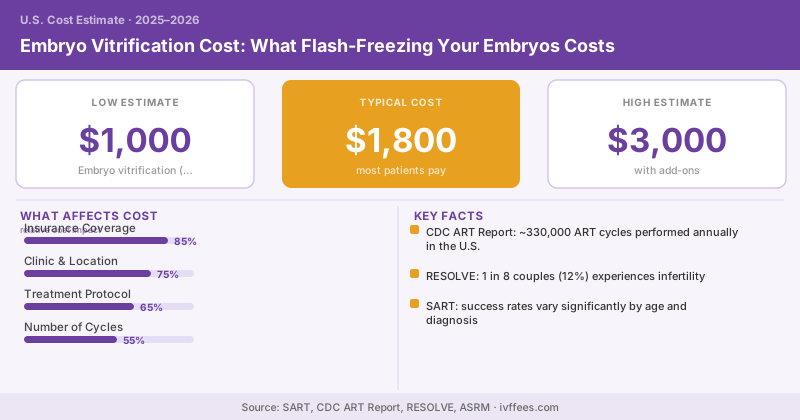
Your embryos can go from body temperature to minus 196 degrees Celsius in seconds — no ice crystals, no slow chill. That’s vitrification, the flash-freezing method that quietly transformed IVF success rates. It also comes with a one-time fee that patients often confuse with annual storage. They’re two different charges, and mixing them up can throw off your budget.
Here’s what vitrification is, what it costs, and why it’s separate from storage.
What Vitrification Is
Vitrification is an ultra-rapid freezing technique. Instead of slowly cooling embryos (the older “slow-freeze” method), the lab uses high concentrations of cryoprotectants and near-instant cooling to turn the embryo’s water into a glass-like solid. No damaging ice crystals form.
This is the freezing step that happens after your egg retrieval and fertilization, before embryos go into long-term storage. It’s a one-time procedure, not a recurring charge.
What It Costs
| Vitrification Component | Low | Typical | High |
|---|---|---|---|
| Embryo vitrification (one-time lab fee) | $1,000 | $1,800 | $3,000 |
| Bundled into IVF cycle package | $0 | $0 | $0 |
| Annual embryo storage (separate, recurring) | $300 | $600 | $1,200 |
Notice the difference between the freezing fee and the storage fee. Vitrification is the one-time act of freezing. Embryo storage is the ongoing cost of keeping them in the tank year after year.
Embryo vitrification is a one-time flash-freezing fee of $1,000–$3,000, sometimes bundled into your IVF package. It’s separate from annual storage. Vitrification dramatically improved frozen embryo survival and is now the standard freezing method in modern labs.
Why Vitrification Replaced Slow-Freezing
This is one of the genuine success stories in IVF technology, not a marketing add-on. Older slow-freezing methods often damaged embryos with ice crystals, leading to lower survival after thawing. Vitrification changed that.
Studies have reported embryo survival rates after vitrification commonly above 90 percent — far better than older methods. That jump in survival is a big reason frozen embryo transfers became so reliable. CDC ART surveillance data has documented a steady rise in frozen transfers as a share of all IVF transfers over the past decade, a shift made possible largely by better freezing technology like vitrification.
The ASRM has recognized vitrification as a well-established, effective method, and it’s now standard practice in U.S. labs. So unlike many lab add-ons with weak evidence, vitrification is something you generally want.
What Drives the Price
The fee covers the embryologist’s time, the specialized cryoprotectant solutions, the vitrification devices, and the liquid nitrogen process. Pricing varies because some clinics charge a flat fee regardless of how many embryos you freeze, while others may adjust by the number of embryos or freezing “straws” used.
Always ask whether your quoted freezing fee is per cycle or per embryo, and whether it’s bundled into your base IVF cost or billed separately.
Budgeting Around It
Vitrification plus the first year of storage is a predictable cost you can plan for. The recurring storage fee is the one that sneaks up on people, since it keeps billing every year until you use, donate, or discard the embryos. Reviewing what’s included in IVF cost helps you separate the one-time freezing fee from the ongoing storage bill so neither catches you off guard.
Frequently Asked Questions
What’s the difference between vitrification and embryo storage? Vitrification is the one-time act of flash-freezing your embryos, typically $1,000–$3,000. Storage is the ongoing annual fee to keep them frozen in the tank, usually $300–$1,200 per year. You pay vitrification once, but storage recurs every year until you use or release the embryos.
Is vitrification better than slow-freezing? Yes. Vitrification produces much higher embryo survival rates after thawing — commonly above 90 percent — compared with older slow-freeze methods. It’s now the standard technique in modern IVF labs, and the ASRM recognizes it as well-established and effective.
Does freezing damage my embryos? With vitrification, the risk is low. The flash-freezing process avoids the ice crystals that damaged embryos in older slow-freeze methods. Most vitrified embryos survive thawing intact, which is why frozen embryo transfers have become so reliable and common.
Don’t confuse the vitrification fee with storage. Vitrification is a one-time charge; storage bills you every year. Make sure your clinic quote spells out both, and ask whether freezing is priced per cycle or per embryo.