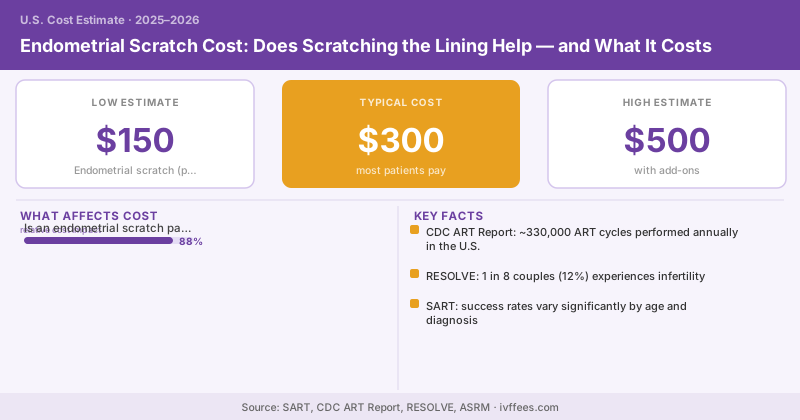
“What does an endometrial scratch actually cost, and does it even work?” That’s the two-part question every patient should ask before agreeing to this one. The answer to the first part is modest — usually a few hundred dollars. The answer to the second part is where things get complicated, because a large clinical trial threw cold water on the whole idea.
Here’s the full picture, cost and evidence together.
What an Endometrial Scratch Is
An endometrial scratch — also called endometrial injury or scratching — is a quick procedure where a thin catheter is passed into the uterus to make a small, deliberate scratch on the lining. The theory is that this minor injury triggers a healing response that makes the lining more receptive to an embryo.
It’s usually done in the cycle before a transfer. It’s brief, performed in the office, and feels similar to a mock embryo transfer or an endometrial biopsy.
What It Costs
| Endometrial Scratch Scenario | Low | Typical | High |
|---|---|---|---|
| Endometrial scratch (per procedure) | $150 | $300 | $500 |
| Bundled into IVF cycle package | $0 | $0 | $0 |
| With pre-procedure ultrasound | $250 | $450 | $700 |
Compared with the overall cost of IVF, it’s a small charge. But small charges are exactly the ones worth scrutinizing, because they add up and the evidence behind them varies.
An endometrial scratch costs $150–$500. It was popular for years on the theory that minor injury improves implantation, but a major 2019 trial found no benefit for most patients. Many clinics have scaled back offering it.
The Evidence That Changed the Conversation
This add-on is a cautionary tale about IVF extras. For years, smaller studies suggested endometrial scratching might boost implantation, and it became widely offered.
Then in 2019, a large randomized controlled trial published in The New England Journal of Medicine — involving over 1,300 women — found that endometrial scratching did not significantly improve live birth rates compared with no scratch. That result undercut the earlier enthusiasm.
The HFEA’s add-on rating system reflects this: endometrial scratching is rated at the cautious end, with the regulator noting the evidence doesn’t show it improves birth rates for most patients. The ASRM has similarly emphasized that many popular add-ons lack strong supporting evidence and shouldn’t be assumed to help.
Does Anyone Still Benefit?
Some researchers argue there may be a narrow group — for example, patients with repeated implantation failure — who could see a benefit, but even that is uncertain and debated. The honest summary is that the big trial didn’t support routine use, and the burden is on the clinic to explain why it’s recommending the procedure for your specific situation.
How to Decide
Before agreeing to an endometrial scratch, ask:
- Why are you recommending it for me specifically?
- What’s the cost, and is it bundled or separate?
- Are you aware of the 2019 trial that found no benefit for most patients?
If the answer is “we do it for everyone,” that’s a flag. This is a procedure where the default should probably be skipping it unless there’s a clear, individualized reason. That kind of scrutiny is part of understanding why IVF gets so expensive — a stack of low-evidence extras quietly inflates the bill.
Frequently Asked Questions
Does an endometrial scratch improve IVF success? For most patients, the best evidence says no. A large 2019 NEJM trial of more than 1,300 women found no significant improvement in live birth rates. Some researchers think a narrow group with repeated implantation failure might benefit, but that’s uncertain.
Is an endometrial scratch painful? It’s usually brief and feels like a strong cramp, similar to a pap smear or endometrial biopsy. Most patients tolerate it without sedation, though some find it uncomfortable. It’s done in the office in the cycle before transfer.
Should I pay for an endometrial scratch? Given the 2019 trial results, many experts wouldn’t recommend it routinely. If your doctor suggests it, ask for a specific reason tied to your history. At $150–$500, it’s a small cost, but spending on a procedure with weak evidence may not be the best use of your money.
Be skeptical of any clinic that offers an endometrial scratch to every patient. The strongest evidence found no benefit for the general IVF population, so a routine recommendation isn’t supported by the data.