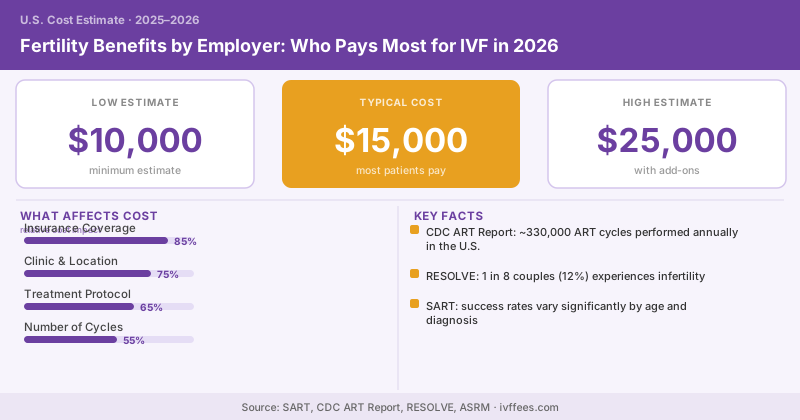
A new job could be worth more than a raise. Some employers now offer $20,000 to $75,000-plus in lifetime fertility benefits — enough to cover a full IVF cycle or two outright. For a treatment that costs $15,000–$20,000 per round out of pocket, the right employer’s benefit can be the single biggest factor in what you actually pay.
The catch is that coverage varies wildly by company and industry. Here’s where the money is.
Coverage is growing — but unevenly
Employer fertility coverage has expanded fast. Mercer’s 2024 survey found a rising share of large employers (those with 500+ workers) offering IVF, though it still sat under a quarter overall — and far fewer small employers do. Tech, finance, law, and consulting lead; retail, hospitality, and small businesses lag.
The most generous benefits often route through fertility-benefits managers (Progyny, Carrot, Maven, Kindbody) that employers contract with. These can offer “smart cycles” or large dollar maximums rather than the stingy caps of older plans.
| Employer tier | Typical fertility benefit | Common industries |
|---|---|---|
| Top-tier (FAANG, big finance) | $40,000–$75,000+ or unlimited cycles | Tech, banking, consulting |
| Mid-tier large employer | $20,000–$40,000 lifetime | Pharma, insurance, large corp |
| Modest benefit | $10,000–$20,000 lifetime | Mixed |
| No fertility benefit | $0 | Small biz, retail, hospitality |
How to find an IVF-covering employer
If you’re job hunting, fertility benefits are negotiable and researchable. Look for employers that contract with Progyny, Carrot, Maven, or Kindbody — that’s a strong signal. Ask HR directly during interviews (it’s a legitimate benefits question). And note that some companies extend benefits to part-time workers or after a waiting period.
Watch for waiting periods and “actively at work” rules. Some fertility benefits don’t kick in until you’ve been employed 6-12 months, and many require you to be enrolled in the company’s medical plan. Don’t quit your current coverage before the new benefit is active, or you could face a gap mid-cycle.
What to ask your HR department
- Is there a lifetime dollar max or a cycle count?
- Does it require a fertility-benefits manager (Progyny, Carrot, etc.)?
- Are medications included, or only the procedure?
- Is there a “medical necessity” or prior-diagnosis requirement?
- Does it cover egg freezing, donor gametes, or surrogacy?
Our deeper employer fertility benefits guide breaks down how to read your specific plan.
Employer fertility benefits range from $0 to $75,000+, with tech, finance, and consulting leading. If you can choose or negotiate, a job with a Progyny/Carrot/Maven-managed benefit can cover an entire IVF cycle — making employer coverage the most valuable lever for cutting your IVF cost.
When you can’t switch jobs
Not everyone can change employers to chase a benefit. If you’re staying put with limited or no coverage, stack other strategies: a grant, the tactics in how to reduce IVF cost, and a refund program to cap your downside. Check whether your state has a coverage mandate that forces some insurers to cover IVF regardless of employer generosity. And compare every financing option for the balance.
Frequently Asked Questions
Which companies have the best fertility benefits? Large tech, finance, consulting, and pharma firms typically lead, especially those that contract with fertility-benefits managers like Progyny, Carrot, Maven, or Kindbody. Specific generosity changes yearly, so ask HR for the current plan details rather than relying on old “best employer” lists.
Can I negotiate fertility benefits when accepting a job? Benefits are usually set company-wide and harder to negotiate than salary, but it never hurts to ask HR about waiting periods, what’s covered, and whether enhancements are possible. At minimum, factor the benefit’s dollar value into your overall compensation comparison.
Do fertility benefits cover medications too? It depends on the plan. Fertility-benefits-manager programs often include medications, but traditional insurance riders may cover only the procedure and leave you paying $3,000–$7,000 per cycle for drugs. Always confirm whether meds are in or out before assuming you’re fully covered.