Here’s something most patients don’t expect when they get their protocol: you’ll be taking a second injection for 4–6 days that has nothing to do with growing follicles. Ganirelix or Cetrotide is the drug your RE adds to prevent premature ovulation — without it, your follicles could release their eggs before retrieval.
These GnRH antagonists have replaced Lupron as the standard suppression method in most IVF protocols. They’re more convenient, require fewer injection days, and produce comparable outcomes. Here’s what they cost and why they’ve become the default.
What GnRH Antagonists Do
Ganirelix (Orgalutran) and Cetrotide (cetrorelix) are GnRH antagonists — they block your pituitary’s GnRH receptors, immediately stopping LH production. This prevents the LH surge that would otherwise trigger premature ovulation.
Unlike Lupron (a GnRH agonist) which takes 2–4 weeks to suppress the pituitary through overstimulation, antagonists work within hours. You start them mid-stimulation — typically when your lead follicle reaches 13–14mm — and continue daily until your trigger shot.
A 2020 meta-analysis in Human Reproduction Update, covering 45 randomized trials and more than 7,500 IVF cycles, found that antagonist protocols produce equivalent live birth rates to long Lupron protocols while significantly reducing OHSS risk. That evidence base is why antagonist protocols have become standard for most patients.
Price Per Injection
| Medication | Unit | Low End | Typical | High End |
|---|---|---|---|---|
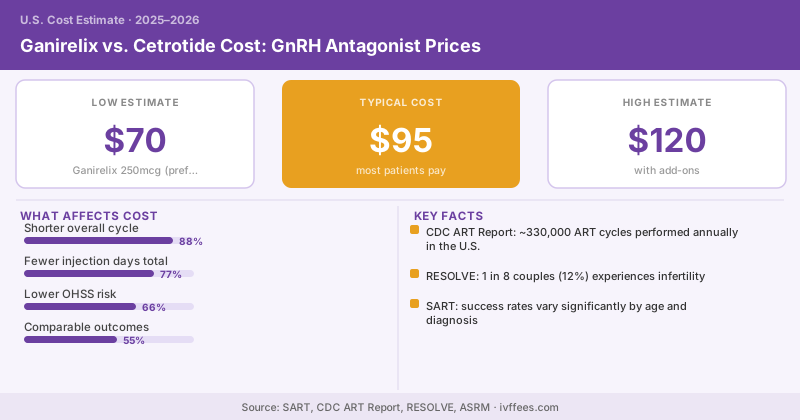
| Ganirelix 250mcg (prefilled syringe) | Per syringe | $70 | $95 | $120 |
| Cetrotide 0.25mg (kit with syringe) | Per kit | $80 | $105 | $130 |
| Cetrotide 3mg (single-dose kit) | Per kit | $250 | $320 | $420 |
| 4-day course (ganirelix) | Per cycle | $280 | $380 | $480 |
| 5-day course (ganirelix) | Per cycle | $350 | $475 | $600 |
| 6-day course (ganirelix) | Per cycle | $420 | $570 | $720 |
| 5-day course (cetrotide 0.25mg) | Per cycle | $400 | $525 | $650 |
The number of injection days varies based on your response to stimulation. Patients with more follicles developing quickly may need only 4 days; others with slower development may need 6 or more. Your nurse coordinator will call with daily instructions based on your monitoring ultrasound results.
Ganirelix vs. Cetrotide: Is There a Difference?
Clinically, ganirelix and Cetrotide are essentially interchangeable. Both are GnRH receptor antagonists with similar pharmacodynamics, half-lives, and outcomes in head-to-head trials.
The differences are practical:
- Ganirelix comes as a prefilled, ready-to-inject syringe — no mixing required
- Cetrotide 0.25mg comes as a kit: a powder vial plus a syringe of liquid that you mix yourself before injecting
- Cetrotide also comes in a 3mg single-dose option for protocols calling for intermittent (every-3-day) dosing rather than daily injections
Cost difference: Cetrotide is typically $10–$15 more per dose than ganirelix in the US market. Over a 5-day course, that’s $50–$75 — not a large difference but worth knowing if you’re paying out of pocket.
Most clinics pick one based on their pharmacy relationships and protocol preferences, not because one is meaningfully better.
Some protocols use Cetrotide 3mg every 3–4 days instead of 0.25mg daily. This every-3-day protocol can simplify the injection schedule and requires fewer total injections. If your clinic uses this approach, you’ll need 1–2 kits instead of 4–6. Check whether this option is available before assuming you need daily dosing.
Why Antagonist Protocols Are Now Preferred
The shift from Lupron long protocols to GnRH antagonist protocols happened across most major IVF centers between 2010 and 2020. The reasons:
Shorter overall cycle: No 2–4 week Lupron downregulation phase. Antagonist cycles start stimulation earlier in the menstrual cycle.
Fewer injection days total: Lupron long protocol can involve 30+ days of injections before retrieval. Antagonist protocols typically involve 14–16 days total.
Lower OHSS risk: Because a Lupron trigger can be used in place of hCG when GnRH antagonist is the suppression method, high-risk patients can avoid OHSS almost entirely.
Comparable outcomes: Meta-analyses show equivalent live birth rates.
The main setting where Lupron long protocols persist: endometriosis suppression before transfer, uterine preparation for frozen embryo transfers, and certain complex protocols.
Organon Patient Support for Ganirelix
Ganirelix (brand name Orgalutran) is manufactured by Organon. The company offers patient support through its fertility patient access program for uninsured or underinsured patients.
Organon Connect: 1-800-631-1253 or organonconnect.com. Your physician’s office typically initiates the application. Income-based eligibility; free or discounted ganirelix for qualifying patients.
For commercially insured patients, Organon’s co-pay assistance card can reduce out-of-pocket costs. Ask your clinic’s financial coordinator whether there’s a current co-pay card program active — these launch and expire periodically.
Insurance Coverage
GnRH antagonists are generally covered by insurance plans that include fertility medication benefits, but coverage varies. Because these drugs are specifically for IVF, plans that exclude IVF-related medications may not cover them even if other fertility drugs are covered.
Prior authorization is typically required. Your RE’s office submits the PA request — give them 7–10 business days before your expected start date.
GoodRx pricing for ganirelix at retail pharmacies typically shows list prices of $85–$110 per syringe. Specialty fertility pharmacies may offer slightly lower prices; it’s worth calling Mandell’s, CNY Fertility Pharmacy, or your clinic’s preferred specialty pharmacy for a quote.
Total Antagonist Protocol Medication Budget
Ganirelix or Cetrotide is just one component of your stimulation costs:
| Drug | Typical Cost |
|---|---|
| Gonal-F or Follistim (stimulation) | $2,000–$5,000 |
| Menopur (if used) | $700–$2,000 |
| Ganirelix or Cetrotide | $280–$780 |
| Trigger shot (hCG or Lupron) | $50–$300 |
| Progesterone (post-retrieval) | $100–$700 |
| Total | $3,200–$8,780 |
The antagonist itself is typically 6–15% of total medication cost — meaningful but not the dominant expense. Gonadotropins (Gonal-F, Menopur) are where the largest savings opportunities exist.
Ganirelix and Cetrotide must be stored at room temperature (up to 77°F / 25°C) and protected from light. Do not refrigerate or freeze. Take your injection at the same time each day to maintain steady drug levels — even a few hours’ delay can allow LH levels to begin rising. If you miss a dose, contact your clinic immediately rather than waiting for the next scheduled time.
Bottom Line
Ganirelix and Cetrotide are essentially equivalent drugs for IVF suppression. At $70–$130 per injection and 4–6 doses needed per cycle, total cost runs $280–$780 — a manageable component of the overall IVF medication budget. The antagonist protocol they’re used in is now the standard of care for most patients, offering a shorter cycle and lower OHSS risk than the older Lupron long protocol. Ask your clinic whether Organon’s patient support program applies if you’re paying out of pocket.