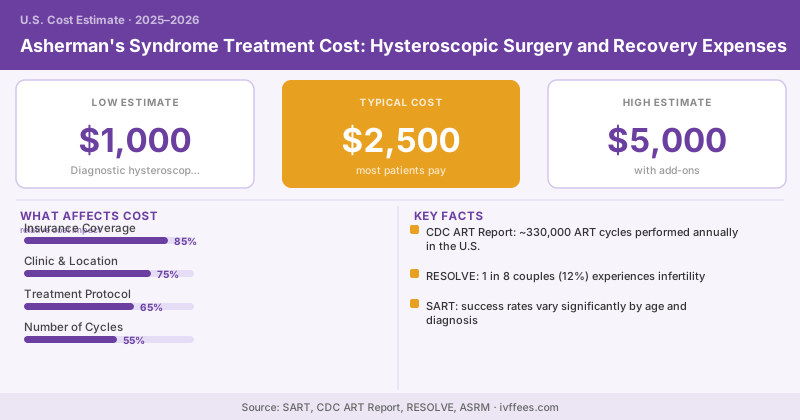
Scar tissue inside the uterus can be invisible on a routine exam and still be the reason a woman can’t get pregnant — or keeps losing pregnancies. That’s Asherman’s syndrome, and treating it usually means hysteroscopic surgery that runs $3,000 to $12,000, often across more than one procedure.
The condition forms when the uterine walls develop adhesions, typically after a D&C, infection, or surgery. ACOG notes that intrauterine adhesions most commonly follow uterine procedures, particularly D&Cs performed for pregnancy-related complications. The good news: the cavity can often be restored. The catch: it can take several surgeries and careful aftercare.
What the Treatment Involves
The core treatment is operative hysteroscopy — a thin scope passed through the cervix to see inside the uterus, with instruments to cut the scar tissue and reopen the cavity. Mild adhesions might clear in a single procedure. Dense, extensive scarring can require staged surgeries spread over months.
| Cost Component | Low | Typical | High |
|---|---|---|---|
| Diagnostic hysteroscopy / sonohysterogram | $1,000 | $2,500 | $5,000 |
| Operative hysteroscopy (adhesion removal) | $3,000 | $6,000 | $12,000 |
| Anesthesia | $500 | $1,200 | $2,500 |
| Balloon/stent + estrogen aftercare | $300 | $800 | $1,500 |
| Repeat hysteroscopy (severe cases) | $3,000 | $6,000 | $12,000 |
| Total (moderate–severe case) | $7,000 | $15,000 | $30,000+ |
Why It Often Takes More Than One Surgery
This is the part that surprises patients budgeting for a single operation. Scar tissue tends to re-form, especially in severe cases. After removing adhesions, surgeons often place a balloon or stent in the cavity temporarily and prescribe estrogen to help the lining regrow and keep the walls apart while healing.
For dense adhesions, a follow-up hysteroscopy is frequently scheduled weeks later to check for and remove any new scar tissue before it matures. Each round adds to the bill. Severe Asherman’s can realistically mean two or three procedures.
Budget for more than one procedure if your adhesions are moderate to severe. The single-surgery price tag of $3,000–$12,000 is best-case. Reformation is common, so plan financially for a possible repeat hysteroscopy plus the estrogen-and-balloon aftercare that prevents the walls from re-fusing. Asking your surgeon to estimate the severity grade up front helps you budget realistically.
How It Connects to Fertility
Asherman’s blocks fertility in a few ways: scarring can thin or destroy the lining so embryos can’t implant, distort the cavity, or block the entry of sperm and the passage to the tubes. Many women with Asherman’s also notice lighter or absent periods, which is a clinical clue.
Once the cavity is restored and the lining regrows, some women conceive naturally. Others still need IVF — but a healthy cavity is a prerequisite for any embryo transfer to succeed, so this surgery often comes before fertility treatment rather than instead of it. If a thin lining persists after treatment, you may also be navigating thin uterine lining therapy on top of the structural repair.
Asherman’s syndrome should be treated by a surgeon experienced specifically in hysteroscopic adhesiolysis. Aggressive or inexpert surgery can create more scarring, and severe cases handled poorly can worsen the very damage you’re paying to fix. Don’t choose on price alone here — surgeon experience directly affects both your outcome and how many (expensive) repeat procedures you’ll need.
Testing First
Diagnosis usually starts with a saline sonohysterogram or diagnostic hysteroscopy, which is part of a thorough fertility testing workup when there’s a history of D&C or unexplained recurrent loss. Imaging like an HSG can also reveal cavity defects. Getting the diagnosis right matters because the symptoms (light periods, miscarriage, infertility) overlap with other conditions.
Insurance Coverage
Operative hysteroscopy for Asherman’s is frequently covered under surgical/gynecological benefits, since it treats a structural disease of the uterus rather than being a fertility procedure per se. This applies even on many plans that exclude infertility coverage. Confirm the coding with your clinic. If you go on to need IVF after the cavity is restored, that portion follows your state mandate, and you can review IVF financing options for the treatment side.
Frequently Asked Questions
Can Asherman’s syndrome be cured permanently? Mild cases often resolve fully after one hysteroscopy. Severe cases can be treated successfully but carry a higher chance of adhesion reformation, which is why aftercare and follow-up hysteroscopy matter. “Cured” depends largely on the original severity.
Will my periods return to normal after treatment? Often, yes. Many women see periods return or get heavier as the cavity and lining are restored. The degree of recovery tracks with how much healthy lining remains and the original severity of scarring.
Do I still need IVF after Asherman’s treatment? Not necessarily. Some women conceive naturally once the cavity is restored. Others need IVF for separate reasons, but in all cases a healthy cavity is required first — the surgery enables conception rather than replacing it.
Bottom Line
Asherman’s syndrome treatment costs $3,000 to $12,000 per hysteroscopic procedure, and moderate-to-severe cases often need more than one — pushing total costs toward $15,000–$30,000 with aftercare. The investment restores the uterine cavity so pregnancy (natural or via IVF) becomes possible. Choose an experienced hysteroscopic surgeon, budget for possible repeats, and confirm your surgical coverage before scheduling.