Clomid is best known as a woman’s fertility pill. But for men with low testosterone and impaired sperm production, the same cheap generic — clomiphene citrate — can do something remarkable: raise testosterone while actually boosting sperm production instead of shutting it down. And it costs about as much as lunch.
Male factor contributes to roughly 40–50% of infertility cases per the American Urological Association, and clomiphene is one of the most cost-effective first-line treatments when the cause is hormonal. Here’s what you’ll actually pay.
What Clomid for Men Costs
Clomiphene is a long-established generic, which keeps it cheap. The real cost is the prescribing visit and the monitoring labs around it.
| Item | Low | Typical | High |
|---|---|---|---|
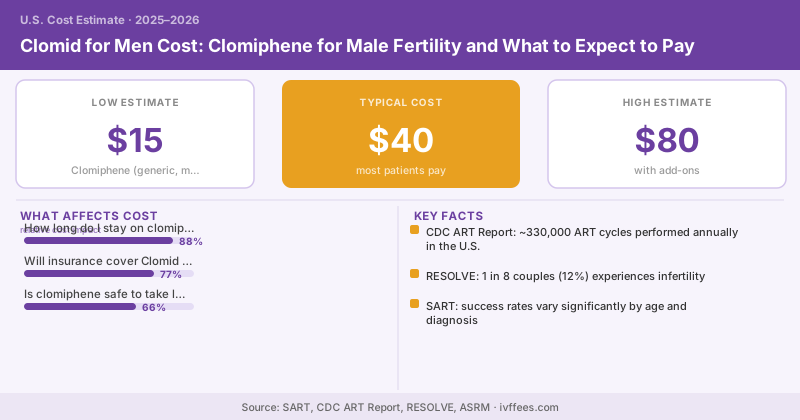
| Clomiphene (generic, monthly) | $15 | $40 | $80 |
| Brand Clomid (monthly) | $50 | $100 | $150 |
| Reproductive urologist visit | $150 | $300 | $600 |
| Baseline hormone panel | $100 | $250 | $600 |
| Follow-up monitoring labs (each) | $80 | $150 | $400 |
Clomid (clomiphene) for men costs $20–$150 a month — often the cheapest path for hormonally-driven low sperm production. A full course with monitoring runs a few hundred to about $1,000 over several months, a fraction of IVF cost. It only helps men whose problem is a low brain signal, which a hormone panel identifies.
How It Works
Clomiphene blocks estrogen receptors in the brain. The brain reads that as “low estrogen” and ramps up FSH and LH — the two hormones that drive testosterone production and sperm production in the testicles. So instead of giving you testosterone directly (which suppresses fertility), it tells your own body to make more.
That’s the crucial difference from testosterone replacement therapy. TRT raises testosterone but tanks sperm counts. Clomiphene raises both. For a man who wants kids, that’s the whole game.
Who It Helps — and Who It Doesn’t
Clomiphene works best for men with secondary hypogonadism: low testosterone with low or normal FSH/LH, meaning the brain’s signal is the bottleneck. A male hormone panel reveals this pattern.
It does not help men with primary testicular failure (high FSH, the testicles simply can’t respond) — those men get no benefit and need a different plan. This is exactly why you don’t start clomiphene blind; the hormone workup tells you whether it has any chance of working.
Clomiphene for male fertility is prescribed off-label — the FDA approved it for women. That’s common and well-supported by urology practice, but it means insurance coverage is inconsistent. Side effects can include mood changes, visual disturbances, and breast tenderness; report visual symptoms immediately, as they’re a reason to stop.
The Cost Math
A typical course is 3 to 6 months with periodic monitoring. Add it up: roughly $150–$500 in medication plus $300–$1,500 in visits and labs. Even at the high end, that’s around $2,000 total. Compare that to one IVF cycle at $15,000–$30,000, or even a few IUI cycles. If clomiphene improves your semen analysis enough to conceive naturally or with cheaper assisted methods, the savings are dramatic.
After 3–4 months, you’ll repeat the semen analysis to see if it’s working. Sperm production runs on a ~72-day cycle, so earlier retesting is premature.
Frequently Asked Questions
How long do I stay on clomiphene? Treatment is typically a trial of 3 to 6 months, reassessed with hormone labs and a repeat semen analysis. If it’s working and well-tolerated, some men continue longer under supervision. If there’s no improvement after a fair trial, your doctor will pivot to other options.
Will insurance cover Clomid for men? Because it’s off-label for men, coverage is hit or miss — but the generic is cheap enough that many men just pay cash for the medication. The visits and monitoring labs are the larger expense, and those may be partially covered when investigating a diagnosed hormonal condition.
Is clomiphene safe to take long-term? It’s generally well-tolerated, but long-term use should be monitored by a physician with periodic labs and symptom checks. Visual side effects, though rare, warrant stopping the medication. Discuss the risk-benefit with your reproductive urologist rather than self-prescribing.