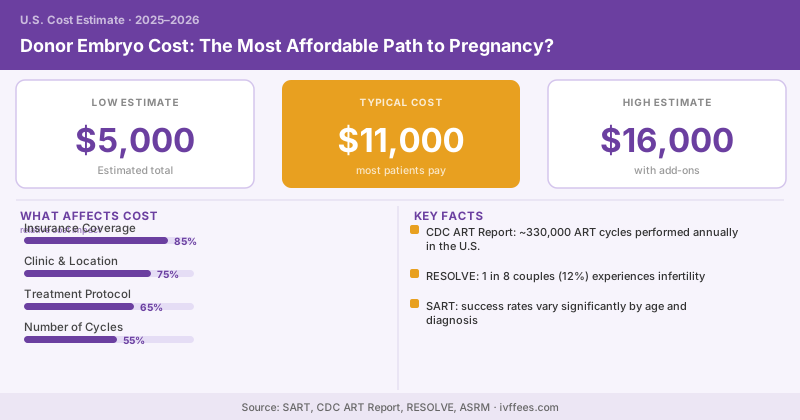
Roughly 1.5 million embryos sit frozen in U.S. storage tanks, a figure RESOLVE and reproductive researchers have cited as the supply grows every year. Many were created by families who finished building theirs and chose to donate the rest. For intended parents, that surplus is one of the most affordable doors into pregnancy — a donor embryo cycle can cost as little as $5,000.
Here’s how the numbers work and why this path is so much cheaper than the alternatives.
Why Donor Embryos Cost So Little
The expensive part of any donor egg IVF cycle is creating the embryo: the donor’s stimulation drugs, retrieval, egg compensation, and lab fertilization. With a donor embryo, all of that already happened — and someone else paid for it. You inherit a ready-to-transfer embryo.
That’s why the price collapses. You’re essentially paying for the transfer and the legal and screening overhead, not the creation.
Cost Breakdown
| Cost Component | Low | Typical | High |
|---|---|---|---|
| Embryo donation / program fee | $0 | $2,500 | $8,000 |
| Recipient medical screening | $500 | $1,000 | $2,000 |
| Legal agreement | $1,000 | $2,000 | $4,000 |
| Frozen embryo transfer (FET) | $3,000 | $4,500 | $6,500 |
| Recipient meds (lining prep) | $500 | $1,200 | $2,500 |
| Embryo shipping (if needed) | $0 | $400 | $1,000 |
| Estimated total | $5,000 | $11,000 | $16,000 |
Compare that to $35,000–$60,000 for a fresh donor egg cycle or $80,000+ for gestational carrier arrangements, and the appeal is obvious.
Two Models: Anonymous Programs vs. Clinic Matching
Donor embryos come through a few channels. Some agencies and faith-based programs run formal “embryo adoption” processes with home studies and matching — these add cost and time but offer structure and donor-recipient relationships. Other clinics maintain anonymous donated-embryo banks where you simply select from available embryos with minimal matching overhead, which keeps costs at the low end.
This overlaps heavily with embryo adoption, though “adoption” is a social term — legally, embryo donation is treated as a transfer of property in most states, not a child adoption.
Donor embryos are the lowest-cost path to pregnancy using assisted reproduction, often $5,000 to $16,000 versus $35,000+ for donor eggs. You save because the embryo is already created. The tradeoff is less genetic connection and limited selection — you choose from existing embryos rather than picking egg and sperm donors separately.
What You Give Up
The savings come with real tradeoffs. The child won’t be genetically related to either intended parent. You’re selecting from embryos that already exist, so the donor profiles, genetics, and embryo quality are fixed — you can’t customize. And availability fluctuates; embryos matching specific ethnic or physical traits can have waitlists.
There’s also a known-history advantage and disadvantage. Many donated embryos come with detailed family medical history because the donating family knows their own background — but you’re also accepting whatever genetic factors come with them.
Embryo quality varies, and donated embryos are sometimes lower-grade or from older eggs, which can affect success rates. Ask for the embryo grade, the age of the egg provider at creation, and whether genetic testing (PGT-A) was done. A cheap embryo that doesn’t implant isn’t cheap once you’ve paid for a failed transfer. Always review the embryo’s clinical history before committing.
Success Rates
Frozen embryo transfer success depends heavily on embryo quality and the egg provider’s age at creation. SART data shows FET live birth rates are strong when embryos are good-quality blastocysts from younger egg providers. Because most donated embryos were created during another family’s successful IVF, many are high-quality — but always confirm grading and history with your clinic.
The Legal Side
Even though it’s cheaper, you still need a legal agreement. The contract transfers all rights to you, releases the donating family from parental responsibility, and addresses future contact. Reproductive attorneys typically charge $1,000 to $4,000, similar in principle to the protections in surrogacy legal fees. Don’t skip this to save money — it’s the document that makes you the legal parent.
Is It Right for You?
A donor embryo makes sense if cost is your biggest barrier, genetic connection isn’t a priority, and you’re comfortable selecting from existing embryos. If you want a genetic link to at least one parent, look at donor egg or donor sperm options instead. Either way, IVF financing options can cover the modest costs of a donor embryo cycle.
Frequently Asked Questions
Is a donor embryo the same as embryo adoption? Functionally similar, but legally distinct. “Embryo adoption” usually describes a program with matching and home studies, while embryo donation is a medical/property transfer. The cost difference: formal adoption programs add fees and time; anonymous clinic donation is cheaper and faster.
Will the child be genetically related to me? No. A donor embryo was created from another couple’s or donors’ egg and sperm, so there’s no genetic link to either intended parent. The carrying parent does experience pregnancy and birth, which many find deeply meaningful.
How do donor embryo success rates compare to fresh IVF? They can be very competitive when the embryos are high-grade blastocysts from younger egg providers. Quality matters more than the “donor” label, so always review the embryo grade and history against your clinic’s IVF cost and outcome data.