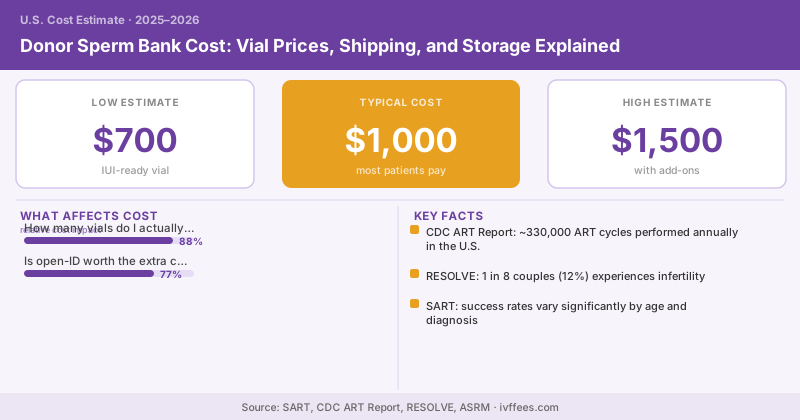
A single vial of donor sperm costs between $400 and $1,500. That’s the number most people don’t expect — and it’s per vial, not per pregnancy. Since you often need multiple vials to conceive, the donor sperm bank bill adds up faster than the per-vial price suggests. Then come shipping, storage, and processing fees layered on top.
Here’s the full cost picture before you order your first vial.
Per-Vial Pricing
Sperm bank vials are priced by how they’ll be used and by the donor’s profile. A vial intended for intrauterine insemination (IUI) is processed differently than one for IVF or intracervical insemination (ICI), and pricing reflects that. “Open ID” donors (whose identity can be released to the child at 18) often cost more than anonymous donors, and donors with detailed profiles, photos, or audio interviews can carry premiums.
| Vial Type / Service | Low | Typical | High |
|---|---|---|---|
| IUI-ready vial | $700 | $1,000 | $1,500 |
| ICI vial | $400 | $700 | $1,100 |
| ART/IVF vial | $600 | $900 | $1,400 |
| Open-ID donor premium | $0 | $100 | $300 |
| Shipping (overnight cryo tank) | $200 | $350 | $600 |
| Annual storage at bank | $300 | $500 | $800 |
| Donor profile/photo upgrades | $0 | $50 | $200 |
How Many Vials Will You Need?
This is the question that determines your real cost. A single insemination doesn’t guarantee pregnancy. IUI success rates per cycle are modest — often in the 10% to 20% range depending on age and circumstances — so many people budget for three to six vials before conceiving. At $1,000 a vial, that’s $3,000 to $6,000 in sperm alone, before any clinic fees.
Many banks let you reserve additional vials from the same donor, which matters if you want full genetic siblings later. Selling out of a popular donor is real, so families often buy and store extra vials up front.
Plan for the full vial count, not a single vial. At $400–$1,500 each and often 3–6 vials needed to conceive, the sperm itself can run $3,000–$6,000 before clinic, shipping, and storage fees. If you want genetic siblings later, reserve extra vials from the same donor early — popular donors sell out.
Bank Vials vs. a Known Donor
Buying from a bank is more expensive per vial than using a known donor, but it comes with rigorous screening and legal clarity that informal arrangements lack. The American Society for Reproductive Medicine and FDA require infectious disease testing and quarantine for sperm donors, and reputable banks include genetic screening. That screening is baked into the vial price.
A known donor can be cheaper, but it requires its own legal agreement and independent screening to be safe — and the legal risks of an informal arrangement can dwarf the savings.
Shipping and Storage
If you’re not inseminating at the bank’s facility, vials ship in a specialized cryogenic tank that keeps the sperm frozen for several days. Overnight shipping of these tanks runs $200 to $600 per shipment. Many clinics also charge a vial-receipt and thaw fee on their end.
Storage is the recurring cost people forget. If you buy extra vials to bank for future siblings, you’ll pay $300 to $800 a year to store them, either at the bank or your clinic.
Confirm where the vials are going and who’s storing them before you order. Shipping to a home address versus a clinic has different rules, and some clinics won’t accept vials they didn’t receive directly. A miscommunication can mean a wasted overnight shipment or a refused delivery — and a thawed, ruined vial. Coordinate shipping logistics with your clinic in advance.
Total Cost in Context
For at-home or IUI use, donor sperm is one of the more affordable assisted-reproduction paths. A few vials plus IUI cycles can total a few thousand dollars — far less than donor egg IVF or surrogacy cost. But if IUI fails and you move to IVF, the IVF cost becomes the dominant expense and the sperm vial becomes a minor line. Either way, IVF financing options and clinic packages can cover the combined sperm-and-cycle costs.
Frequently Asked Questions
Why are donor sperm vials so expensive? The price reflects rigorous FDA-required infectious disease testing, quarantine periods, genetic screening, donor recruitment, and processing. You’re paying for a screened, documented, frozen product — not just the sperm itself.
How many vials do I actually need? There’s no guarantee, but because IUI success per cycle is modest, many people budget for three to six vials. If you want genetic siblings later, buy and store extra vials from the same donor up front, since popular donors can sell out.
Is open-ID worth the extra cost? That’s a personal choice. Open-ID donors allow the child to obtain the donor’s identity at adulthood, which many families value for the child’s sake. The premium is usually modest ($100–$300 per vial), so it’s often worth it if identity disclosure matters to you.