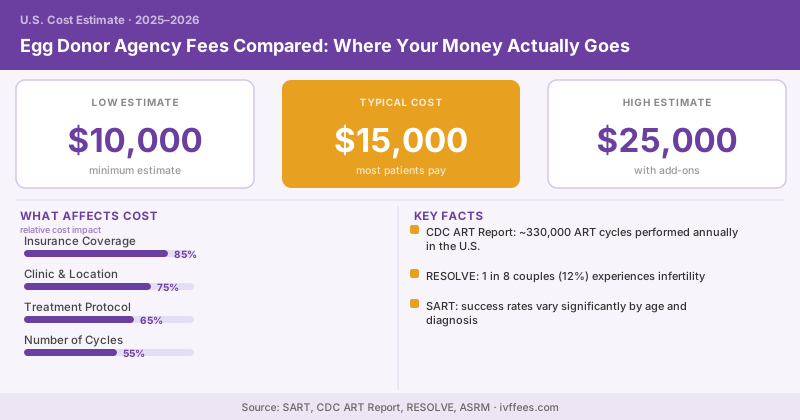
Why does one agency charge $8,000 and another $18,000 for what looks like the same basic service — finding and coordinating an egg donor? The answer isn’t marketing markup. It’s genuinely different bundles of services hiding behind similar-sounding fee structures.
If you’re comparing egg donor agencies, here’s what that fee actually buys you at each price point.
What Different Fee Tiers Actually Include
| Agency Fee Tier | Typical Range | What’s Usually Included |
|---|---|---|
| Matching-only | $4,000 – $8,000 | Donor profile access, initial matching |
| Standard full-service | $8,000 – $14,000 | Matching, screening coordination, legal referrals |
| Premium full-service | $14,000 – $20,000+ | Matching, full screening, legal, insurance, case management |
| Donor compensation (separate) | $6,000 – $15,000 | Paid directly to the donor, not the agency |
Notice that donor compensation is listed separately — it’s the part patients often assume is baked into the agency fee, and it usually isn’t.
Matching-Only Agencies: Cheapest, But More Work for You
At the lowest tier, you’re paying primarily for access to a donor database and introduction coordination. Everything after the match — psychological screening, legal contract negotiation, medical clearance, insurance for the donor’s retrieval cycle — is arranged separately, often through providers you find and pay independently. This can work well if you already have a fertility attorney and clinic experienced in donor cycles, but it adds coordination work and potential gaps if something falls through the cracks between providers.
Full-Service Agencies: Paying for Fewer Failure Points
Mid-tier and premium agencies bundle donor psychological screening (often following ASRM-recommended protocols, including a mental health evaluation by a licensed professional), legal contract templates, and dedicated case management through the entire cycle. The premium held here is largely about reducing your risk of a match falling apart mid-process — a real and costly problem, since a donor who backs out after a partial cycle can mean lost time and, in some cases, lost non-refundable costs.
Never compare two agencies’ headline fees without asking each to itemize exactly what’s included — psychological screening, legal fees, insurance, and donor compensation are sometimes bundled and sometimes separate. A “cheaper” agency that excludes legal and screening costs may end up costing the same or more once you add those services independently.
Donor Compensation Varies by Experience and Demand
Separate from the agency’s own fee, donor compensation itself typically ranges $6,000 to $15,000, with first-time donors generally on the lower end and donors with proven successful retrieval history, specific educational backgrounds, or in-demand physical traits commanding more. ASRM ethics guidelines caution against compensation structures that pay significantly more for specific traits in a way that commodifies donors, and reputable agencies generally follow compensation ranges tied to time, effort, and risk rather than genetic characteristics alone.
Be wary of any agency offering egg donors at a price dramatically below the typical range for your area, particularly if psychological screening and legal representation for the donor aren’t clearly included. Skimping on donor screening protections isn’t just an ethical concern — it increases your practical risk of a match falling through or facing legal complications later.
Making the Comparison Fair
When you’re comparing agency quotes, build a simple spreadsheet listing agency fee, donor compensation, legal fees, screening costs, and insurance for each option — then total them independently rather than trusting each agency’s own “total package” framing. This is the only reliable way to compare apples to apples across genuinely different fee structures.
The Bottom Line
Egg donor agency fees range from roughly $4,000 for matching-only services up to $20,000-plus for full-service premium coordination, with donor compensation typically an additional $6,000–$15,000 on top. The price difference reflects real differences in screening, legal support, and case management — ask each agency to itemize exactly what you’re paying for before assuming a lower number is automatically the better deal.