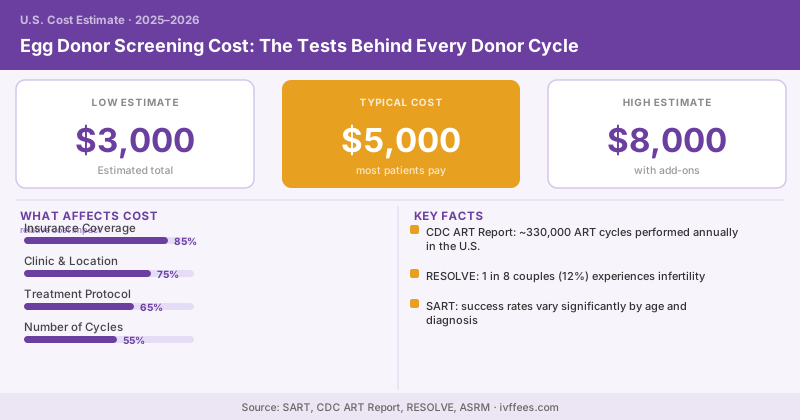
What does it cost to make sure an egg donor is healthy enough to donate? Between $3,000 and $8,000 — a layer of testing that happens before a single egg is retrieved. It’s one of the least visible line items in donor egg IVF, and one of the most important. Skipping it isn’t an option; the FDA and ASRM require it.
Here’s every test in the screening stack and what it costs.
Why Screening Exists
Egg donor screening protects three people: the recipient, the future child, and the donor herself. It confirms the donor doesn’t carry transmissible infections, screens for inheritable genetic conditions, verifies she’s fertile enough to produce eggs, and confirms she’s psychologically prepared for the process. The FDA mandates infectious disease testing for all reproductive tissue donors under its tissue regulations, and ASRM publishes detailed guidance on genetic and psychological screening.
This isn’t bureaucratic box-checking. A missed carrier-gene match between donor and the sperm source can result in a child with a serious inherited disorder.
The Screening Cost Breakdown
| Screening Type | Low | Typical | High |
|---|---|---|---|
| Infectious disease panel (FDA-required) | $400 | $700 | $1,200 |
| Genetic carrier screening | $300 | $600 | $1,500 |
| Ovarian reserve testing (AMH, AFC) | $200 | $400 | $700 |
| General medical exam & bloodwork | $300 | $600 | $1,000 |
| Psychological evaluation | $400 | $800 | $1,500 |
| Genetic counseling consult | $200 | $400 | $800 |
| Family / personal history review | Included | Included | $300 |
| Estimated total | $3,000 | $5,000 | $8,000 |
In an agency-matched cycle, much of this is bundled into the program fee. In a known egg donor arrangement, you’ll often see these costs itemized separately.
What the Infectious Disease Panel Covers
The FDA-mandated panel screens for communicable diseases including HIV, hepatitis B and C, syphilis, and other transmissible infections. For non-known donors, the FDA requires this testing within a specific window before retrieval, and frozen donor eggs require a repeat test after a quarantine period. That quarantine-and-retest requirement is part of why frozen donor banks are heavily regulated.
Genetic Carrier Screening
This is the test that’s expanded the most in recent years. Modern panels screen for dozens to hundreds of recessive conditions — cystic fibrosis, spinal muscular atrophy, fragile X, Tay-Sachs, and many more. The goal is to ensure the donor and the sperm source aren’t both carriers of the same recessive gene, which is what creates risk for the child.
Egg donor screening costs $3,000 to $8,000 and is legally and medically required — there’s no skipping it. It covers FDA-mandated infectious disease testing, genetic carrier screening, ovarian reserve, a medical exam, and a psychological evaluation. In agency cycles it’s usually bundled; with a known donor it’s often itemized on top.
Ovarian Reserve and Fertility Testing
Before a donor is accepted, clinics test her ovarian reserve — typically AMH (anti-Müllerian hormone) bloodwork and an antral follicle count by ultrasound. This predicts how many eggs she’s likely to produce in a stimulation cycle. A donor with low reserve might produce too few eggs to make the cycle worthwhile, so this test protects the recipient’s investment.
Screening doesn’t always lead to acceptance, and you may pay for screening on a donor who’s then disqualified. Ask your agency or clinic: if a donor fails screening after you’ve paid, are those costs refunded or credited toward the next donor? In a known-donor cycle especially, factor in the possibility that your chosen donor won’t pass — and that the screening fee may not be recoverable.
The Psychological Evaluation
Often overlooked, the psychological screen confirms the donor understands the process, isn’t being coerced, and has realistic expectations about her relationship (or lack of one) with any resulting child. ASRM specifically recommends mental health consultation for donors. For known donors — a sister or friend — this evaluation is even more important because the emotional stakes are higher.
Where Screening Fits in Your Budget
Screening is a small but unavoidable slice of a donor cycle. A fresh donor egg IVF cycle runs $35,000 to $60,000 all-in, with screening representing roughly 5% to 15% of that. If the total feels out of reach, IVF financing options typically roll screening into the financed cycle cost rather than treating it as a separate bill.
Frequently Asked Questions
Can I skip screening if my donor is a healthy relative? No. The FDA requires infectious disease testing for all donors, and genetic and psychological screening are standard regardless of relationship. A healthy-looking relative can still be a silent carrier of a recessive genetic condition, which is exactly what screening catches.
Is screening included in the agency fee? Usually some of it is. Agencies typically fold initial vetting and basic screening into their fee, but full medical, genetic, and psychological screening at the clinic may be billed separately. Always confirm what’s bundled versus itemized.
What happens if a donor fails screening after I’ve paid? That depends on your contract. Some programs credit screening costs toward a replacement donor; others don’t. Clarify the re-match and refund policy before you commit, just as you would when comparing overall IVF cost.