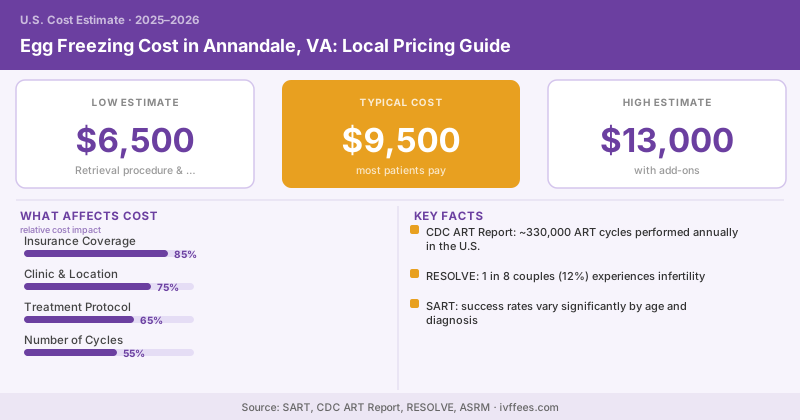
Maria, 32, drove twenty minutes from Annandale to a Fairfax fertility clinic for her “free consultation” — and left with a $9,800 quote before medications were even added in.
That’s a common story for patients in this part of Northern Virginia. Annandale itself doesn’t have its own fertility clinic, so anyone freezing eggs here is commuting into Fairfax, Arlington, or DC proper for both the procedure and the frequent monitoring visits leading up to it. Here’s what that actually costs.
What Annandale-Area Patients Actually Pay
| Cost Component | Low End | Typical | High End |
|---|---|---|---|
| Retrieval procedure & lab fees | $6,500 | $9,500 | $13,000 |
| Anesthesia | $500 | $800 | $1,200 |
| Stimulation medications | $3,000 | $4,500 | $6,500 |
| Annual egg storage | $300 | $500 | $700 |
| Total (cycle 1, no storage) | $10,300 | $14,800 | $20,700 |
Northern Virginia and DC-metro clinic pricing runs comparable to national averages for major metro areas — noticeably higher than smaller cities in the South or Midwest, but generally below what patients pay in Manhattan or the Bay Area.
Why Location Still Matters Even Without a Local Clinic
Even though you’re driving to Fairfax or DC, where you live still shapes your real cost. Traffic on I-395 or the Beltway during morning monitoring appointments means factoring in commute time, not just clinic fees, when you’re comparing options. Some Annandale patients choose a clinic slightly farther away in DC because it offers early-morning monitoring hours that better fit a work schedule — a soft cost that doesn’t show up on the price sheet but matters just as much.
According to the CDC’s National ART Surveillance data, elective egg freezing has grown substantially among women in their early-to-mid 30s in the DC metro area and other major East Coast markets, driven partly by delayed childbearing and partly by employer fertility benefits becoming more common at government contractors and consulting firms concentrated in Northern Virginia.
Pricing between Fairfax, Arlington, and DC clinics for a comparable protocol can vary by $2,000–$4,000. Ask each clinic for a full itemized quote — retrieval, anesthesia, lab fees, and expected medication range — not just a headline “starting at” number, since medication costs depend heavily on your individual stimulation response and can’t be quoted with certainty upfront.
Employer Benefits Are More Common Than You’d Think
If you work for a federal contractor, consulting firm, or larger employer with a corporate headquarters in the DC metro area, check your benefits package carefully — fertility benefits, including egg freezing coverage or a lifetime maximum reimbursement, have expanded significantly among larger employers in this region over the past several years. Some plans cover a meaningful chunk of the retrieval cost even without an infertility diagnosis.
Don’t assume a clinic’s advertised “package price” includes medications — it usually doesn’t. Stimulation drugs are billed separately through a specialty pharmacy and can add $3,000–$6,500 depending on your dose and how your ovaries respond. Ask for a full cost breakdown, including a realistic medication range based on your age and AMH level, before you commit to a specific clinic.
Making the Commute Work for You
If you’re weighing multiple DC-metro clinics, ask specifically about monitoring flexibility — some clinics offer satellite monitoring locations closer to Northern Virginia so you’re not driving all the way into DC every other day during stimulation. This can meaningfully cut the time cost of the roughly 8–10 monitoring appointments a typical cycle requires, even if it doesn’t change the sticker price.
The Bottom Line
Egg freezing for Annandale-area patients runs $10,000–$21,000 for a first cycle including medications, landing in line with broader DC-metro and major East Coast pricing. Since there’s no clinic in Annandale itself, budget the drive time into Fairfax, Arlington, or DC as part of your decision, and get itemized quotes from at least two or three clinics before choosing — the range between them is wider than you’d expect for what’s essentially the same procedure.