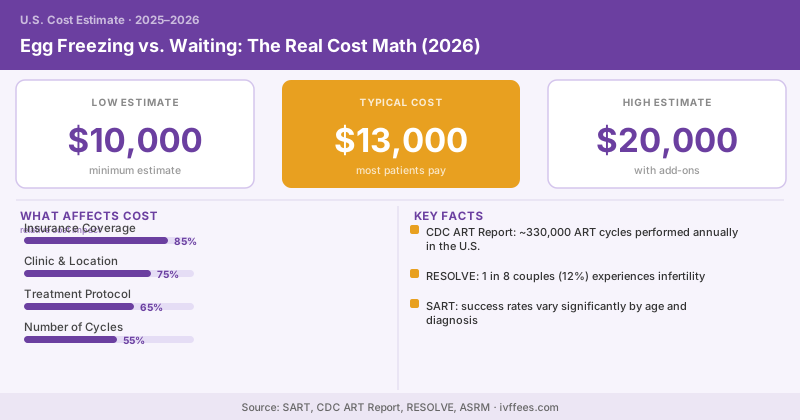
Pay now or pay more later—that’s the real choice behind egg freezing. Freezing eggs in your early 30s costs $8,000 to $16,000 plus annual storage. Waiting and rolling the dice on natural conception is free, but if your fertility declines and you end up needing IVF or donor eggs in your 40s, you could spend $40,000 or more. This guide walks through the actual cost math so you can decide whether freezing is an investment or an unnecessary expense for you.
ASRM no longer considers egg freezing experimental, and SART data shows egg quantity and quality decline measurably through the 30s, with a steeper drop after 37. Those facts are the backbone of the whole “freeze vs. wait” calculation.
The Two Scenarios, Priced
| Scenario | Cost |
|---|---|
| Freeze now (per cycle) | $8,000–$16,000 |
| Annual egg storage | $500–$1,000 |
| Later thaw + transfer | $5,000–$8,000 |
| Wait, then need IVF at 40+ | $30,000–$60,000+ |
| Wait, then need donor eggs | $25,000–$45,000 |
The pitch for freezing is insurance: spend a known amount now to lower the odds you’ll spend a much larger, uncertain amount later. But it’s only worth it if you actually use the eggs—and not everyone does. Our egg freezing cost guide breaks down the per-cycle expense in detail.
When Freezing Pays Off
The math favors freezing most clearly if you’re in your early-to-mid 30s, don’t plan to try for a baby for several years, and have a reasonable ovarian reserve. Freezing eggs at 32 preserves younger, healthier eggs that thaw and fertilize better than eggs retrieved at 40. That’s the whole point: you’re banking time-stamped fertility.
Egg freezing is “fertility insurance,” and like any insurance, it only pays off in certain scenarios. It makes the most financial sense if you’re 30–35, want kids eventually but not soon, and want to avoid the steep cost and lower odds of IVF or donor eggs later. If you plan to try naturally within a year or two, freezing may be money you don’t need to spend.
When Waiting Is the Smarter Bet
If you’re planning to conceive within the next year or two, freezing is often an unnecessary expense—you’d likely never thaw the eggs. Many people freeze and then conceive naturally, meaning they paid for storage they didn’t use. There’s no shame in that (it’s insurance you were glad not to need), but it’s a real cost to weigh.
Don’t assume frozen eggs guarantee a baby. Not every egg survives thawing, not every survivor fertilizes, and not every embryo implants. A common guideline is that you may want 15–20 eggs frozen for a strong chance at one live birth—which can mean more than one retrieval cycle. Freeze with realistic expectations, not a false sense of certainty.
The Donor-Egg Backstop
The most expensive version of “waiting too long” is needing donor eggs. If your own eggs decline past the point of viable IVF, donor eggs become the path—at $25,000–$45,000 per cycle. Compared to that, freezing your own younger eggs for $8,000–$16,000 looks cheap. Our donor egg IVF cost guide explains when donor eggs become necessary, and IVF financing options covers paying for any of these routes.
Frequently Asked Questions
Is egg freezing worth the money if I might conceive naturally? It’s a personal risk calculation. If you’re confident you’ll try for a baby within a year or two, freezing is often unnecessary. If you want to delay parenthood several years and want to reduce the chance of expensive IVF or donor eggs later, freezing your younger eggs can be worthwhile insurance.
How many eggs do I need to freeze for a good chance at a baby? A common clinical guideline suggests 15–20 mature eggs for a strong shot at one live birth, though younger women’s eggs perform better per egg. Depending on your response to stimulation, hitting that number can take more than one retrieval cycle, which affects your total cost.
What if I freeze eggs and never use them? You’ll have paid for the retrieval and ongoing storage without a return—essentially insurance you were glad not to need. Many people who freeze eggs end up conceiving naturally. That’s a real cost to factor in when deciding whether freezing makes sense for your timeline.