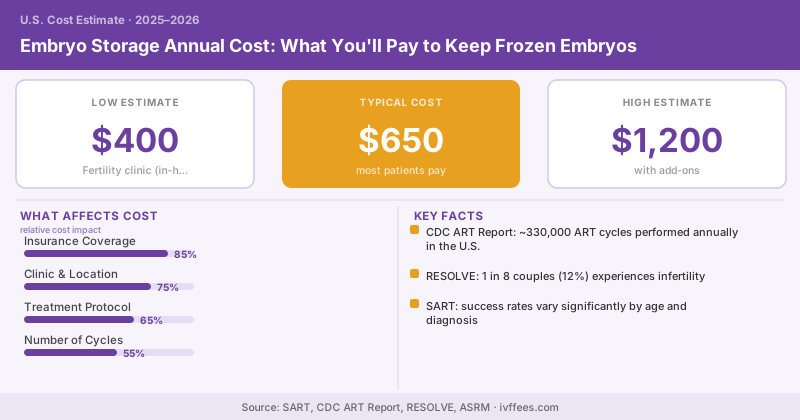
$600 a year. That’s roughly the median bill for keeping a batch of frozen embryos in liquid nitrogen at a US fertility clinic — a quiet, recurring charge that catches a lot of patients off guard long after their IVF cycle wrapped up.
Nobody explains embryo storage billing very well during treatment. You’re focused on retrieval numbers and transfer dates, not a line item that shows up every January for years afterward. Here’s what it actually costs, why prices vary so much, and what happens if you fall behind.
What Embryo Storage Actually Costs
| Storage Option | Low End | Typical | High End |
|---|---|---|---|
| Fertility clinic (in-house tank) | $400 | $650 | $1,200 |
| Third-party cryobank | $300 | $500 | $800 |
| Multi-year prepaid plan (per year, 3–5 yr) | $250 | $400 | $600 |
| Transfer fee (clinic to cryobank) | $500 | $900 | $1,500 |
Clinics often bundle storage with “convenience” — you never have to think about a separate facility, and your embryologist has everything on-site for your next transfer. Third-party cryobanks strip that convenience away but usually beat clinic pricing because storage at scale is their entire business, not a side service.
Why the Price Varies So Much
Three things drive the number on your invoice: geography, tank capacity at your clinic, and how many embryos you’re storing. Storing four embryos typically costs the same as storing one — you’re paying for a slot in the tank, not per-embryo space — so consolidating vials from multiple cycles into one facility can save money if you’re paying separate fees at two locations.
An estimated well over a million frozen embryos are currently sitting in storage across US clinics and cryobanks, according to figures cited by the American Society for Reproductive Medicine — a number that’s grown steadily as frozen embryo transfer has become the dominant approach in IVF. SART data shows the majority of embryo transfers today are frozen rather than fresh, which means more embryos sitting in long-term storage than at any point before.
Most clinics and cryobanks offer discounted multi-year storage plans — often 15–25% cheaper per year than paying annually. If you know you’ll attempt another transfer within the next few years, ask about a 3-year or 5-year prepaid rate before your first annual bill comes due.
The Billing Trap Nobody Warns You About
Storage invoices usually arrive by mail or email once a year, often years after your last appointment. If you’ve moved, changed your email, or switched insurance, that invoice can slip through the cracks. Miss enough notices and your embryos can end up flagged for disposition review under the terms you signed at retrieval — even though you never intended to abandon them.
Update your contact information with your clinic or cryobank every time you move, and confirm in writing (email counts) that your storage account is current at least once a year. Some clinics will attempt to reach you through your original OB or RE if bills go unpaid for an extended period, but don’t count on that safety net — the responsibility to stay current is yours under the storage agreement.
Splitting the Cost With a Partner (Or Not)
If you and a partner separated after banking embryos together, storage billing gets more complicated — and expensive disagreements over who pays, and who has decision-making rights, aren’t rare. Courts have ruled differently across states on embryo disposition disputes, so any storage agreement involving joint ownership should specify what happens if one party stops paying or wants to discontinue storage. This is worth a conversation with a reproductive law attorney before it becomes a problem, not after.
Can You Reduce the Bill?
A few realistic options: consolidate embryos from multiple retrieval cycles into a single storage account, compare clinic pricing against a dedicated cryobank before you accept the default option offered at retrieval, and ask specifically about multi-year discounts. Donating unused embryos to research or another family, or arranging disposition, ends the annual fee entirely if you’ve completed your family and don’t plan to use remaining embryos — a decision that deserves its own careful timeline, not a rushed one driven by an unpaid invoice.
The bottom line: budget $500–$700 a year for as long as you’re keeping embryos frozen, and treat it like any other recurring bill you don’t want to accidentally lapse on.