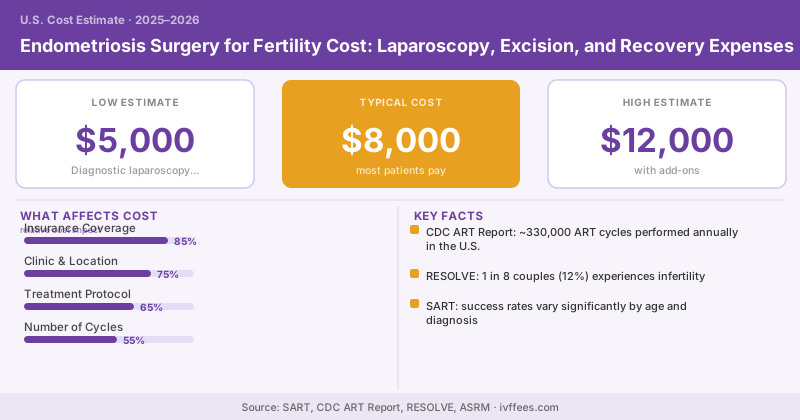
Most women assume surgery is the obvious first move for endometriosis-related infertility. Not so fast. Whether to operate before trying to conceive — and whether it’s worth the $5,000 to $25,000 price tag — is one of the most debated decisions in reproductive surgery, and the right answer depends heavily on your stage and goals.
Endometriosis is common. ACOG reports it’s found in 30–50% of women with infertility. But “found” doesn’t always mean “operate.” Here’s how the costs break down and when surgery actually moves the needle.
What the Surgery Is and Why It Costs What It Does
Endometriosis surgery for fertility is almost always done laparoscopically — small incisions, a camera, and instruments to remove or destroy endometriotic implants. There are two main techniques: ablation (burning lesions) and excision (cutting them out). Excision is generally considered more thorough for deep disease, and it’s more expensive because it takes a more skilled surgeon and more operating-room time.
The price swings on three factors: the stage and extent of disease, the surgeon’s specialization (a general OB-GYN versus a fellowship-trained excision specialist), and whether you’re inpatient or outpatient.
| Cost Component | Low | Typical | High |
|---|---|---|---|
| Diagnostic laparoscopy only | $5,000 | $8,000 | $12,000 |
| Laparoscopic ablation (mild disease) | $6,000 | $10,000 | $15,000 |
| Excision surgery (stage III–IV) | $12,000 | $18,000 | $25,000+ |
| Endometrioma (cyst) removal | $8,000 | $13,000 | $20,000 |
| Anesthesia | $800 | $1,500 | $3,000 |
| Facility/OR fees | $2,000 | $5,000 | $10,000 |
Stage Matters More Than Anything
Endometriosis is staged I to IV. For minimal-to-mild disease (stage I–II), the fertility benefit of surgery is real but modest — older studies showed roughly a 4–5% absolute improvement in pregnancy rates. For that small gain, you’re paying thousands. Many REs now skip surgery for mild disease and move straight to IUI or IVF.
For severe disease (stage III–IV) with endometriomas, adhesions, or anatomical distortion, surgery can make a bigger difference — both for natural conception and for improving access during a future egg retrieval.
The Ovarian Reserve Trade-Off
Here’s the expensive catch nobody mentions up front: removing endometriomas (chocolate cysts) can damage healthy ovarian tissue and lower your egg supply. Repeat surgeries compound the risk. ASRM guidance cautions against routine endometrioma removal before IVF unless there’s a specific access or symptom concern.
So the cost calculation isn’t just dollars — it’s eggs. Operating on a 38-year-old with diminished reserve might cost you both money and your remaining fertility window.
Surgery isn’t automatic. For mild endometriosis, many specialists now bypass the $10,000 operation and go straight to fertility treatment. Surgery makes the most financial and medical sense for severe disease with anatomical distortion, large endometriomas affecting retrieval access, or significant pain. Get a second opinion before consenting to surgery on the ovaries.
Surgery vs. Going Straight to IVF
This is the core money question. A single IVF cycle and a thorough excision surgery cost roughly the same — both land in the $12,000 to $25,000 range. So which do you spend on first?
If your tubes are open and you’re young with good reserve, surgery for moderate disease might restore natural conception, saving you IVF entirely. If you’re older, have diminished reserve, or have a coexisting factor like male-factor or tubal disease, spending on surgery first may just delay IVF and burn months — and money.
“Diagnostic-only” laparoscopy that finds endometriosis but doesn’t treat it still costs $5,000–$12,000 and provides limited fertility benefit on its own. If you and your surgeon agree to operate, make sure the plan is “see and treat” — diagnose and excise in the same procedure — so you don’t pay twice.
Insurance and Endometriosis Surgery
Good news here: endometriosis is a recognized surgical/gynecological diagnosis, so the operation is frequently covered under surgical benefits even when a plan excludes infertility treatment. That’s a meaningful distinction — the surgery may be covered while a subsequent IVF cycle isn’t. Always confirm whether the procedure is coded as treatment for pain/disease versus fertility, because that coding can change your out-of-pocket dramatically.
Frequently Asked Questions
Does endometriosis surgery guarantee pregnancy? No. Surgery can improve the odds of natural conception, especially in moderate-to-severe disease, but it’s not a guarantee. Some women still need IVF afterward, which is why the surgery-first decision should be made carefully.
How long is recovery before trying to conceive? Most women recover from laparoscopy in 1–2 weeks and can attempt conception within a cycle or two. Fertility benefit is generally highest in the 6–12 months after surgery, then declines as disease can recur.
Is repeat surgery worth it if endometriosis comes back? Usually not for fertility. Repeat ovarian surgery further reduces egg reserve, and most specialists recommend moving to IVF rather than re-operating when disease recurs in someone trying to conceive.
Bottom Line
Endometriosis surgery for fertility costs $5,000 to $25,000 and is genuinely worth it for some women — and a waste of money and ovarian tissue for others. The deciding factors are stage, age, reserve, and whether you have other fertility obstacles. Talk to a fellowship-trained reproductive surgeon and weigh surgery honestly against simply spending the same money on treatment.