What if a handful of cheap estrogen patches could make your expensive IVF cycle work better? That’s the pitch behind the estrogen priming protocol — and it’s one of the rare fertility add-ons that doesn’t blow up your budget. It’s used mostly for poor responders, the patients whose ovaries don’t cooperate with standard stimulation.
Here’s what it costs, how it works, and where the money goes.
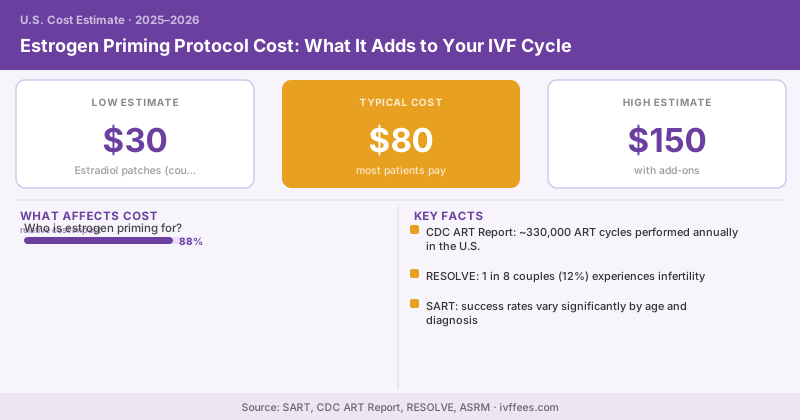
What Estrogen Priming Costs
The protocol means taking estrogen — usually patches or oral estradiol — in the weeks or days before stimulation, sometimes paired with an antagonist injection. The estrogen itself is cheap. The drugs that come after it are where IVF gets pricey.
| Component | Form | Low End | Typical | High End |
|---|---|---|---|---|
| Estradiol patches (course) | Transdermal | $30 | $80 | $150 |
| Oral estradiol (course) | Tablets | $15 | $40 | $90 |
| Antagonist add-on (Ganirelix/Cetrotide) | Injection | $0 | $150 | $400 |
| Priming protocol add-on total | Per cycle | $50 | $200 | $400 |
That add-on cost is small compared to the gonadotropins you’ll still need for stimulation. The priming isn’t a replacement for those drugs — it’s a tune-up before them.
How the Protocol Works
Here’s the logic. In poor responders, follicles can grow at uneven rates, so some are mature while others lag. Giving estrogen in the luteal phase before your cycle suppresses early FSH rise and helps follicles start more in sync. The goal is a more uniform cohort of eggs at retrieval.
A 2024 ASRM-affiliated review noted estrogen priming may improve follicular synchronization in poor responders, though it doesn’t help everyone equally. Your RE will recommend it based on your reserve and prior cycle history — not as a default for every patient.
Estrogen priming is one of the cheapest IVF protocol adjustments — often under $200 in extra meds. It won’t fix a low ovarian reserve, but for poor responders it can improve follicle synchronization at minimal added cost. Ask your RE if you’re a candidate.
Where It Fits Among Protocols
Estrogen priming usually pairs with an antagonist protocol rather than a long agonist one. If your clinic is building your plan, you may hear it discussed alongside the antagonist protocol cost and compared to the longer, more medication-heavy options. The priming step is what differentiates it from a plain antagonist cycle.
Don’t start or stop estrogen on your own timeline. The priming window is calibrated to your luteal phase and stimulation start date — getting it wrong can defeat the purpose. Follow your clinic’s exact start and stop dates, and report any unusual bleeding.
Keeping Costs Reasonable
The good news: estradiol patches and tablets are inexpensive generics, often available with a GoodRx coupon for well under $100 a course. The variable cost is the antagonist injection, if your protocol includes one. Price-shop that the same way you’d shop any trigger shot or gonadotropin.
Because the estrogen itself is cheap, the priming protocol rarely needs assistance funding — but if your overall cycle is straining the budget, check fertility drug assistance programs for the bigger-ticket drugs. For the full strategy, see our guide on how to reduce IVF cost.
One more thing worth knowing: the priming step usually doesn’t add days to your overall timeline in a way that costs more. The estrogen is taken in the cycle before stimulation, so it overlaps with the waiting period you’d have anyway. You’re not paying for extra clinic time — just the inexpensive estradiol. That’s part of why it’s such a low-friction add-on for the patients who are candidates. If your RE suggests it, the cost barely registers next to your injectables, so the real question is whether it’s clinically right for you, not whether you can afford it.
Frequently Asked Questions
How much does estrogen priming add to an IVF cycle? Usually $50–$400. The estradiol patches or tablets are cheap generics; the bigger variable is whether your protocol also includes an antagonist injection, which can run $150–$400.
Who is estrogen priming for? It’s mainly used for poor responders — patients with diminished ovarian reserve or prior cycles where follicles grew unevenly. It’s not a standard step for everyone.
Does estrogen priming improve IVF success rates? It may improve follicle synchronization in poor responders, which can help egg yield, but it’s not a guaranteed boost and doesn’t work for everyone. Your RE will base the recommendation on your history.