Two weeks after her breast cancer diagnosis, Jenna had five days to decide whether to freeze her eggs before chemotherapy started — and no idea what it would cost or whether her insurance would help.
That’s the reality for a lot of cancer patients: a fertility decision squeezed into an already overwhelming diagnosis timeline, often without a clear cost picture. Here’s what fertility preservation actually costs before cancer treatment, and where the discounts hide.
What Fertility Preservation Costs Before Cancer Treatment
| Preservation Option | Low End | Typical | High End |
|---|---|---|---|
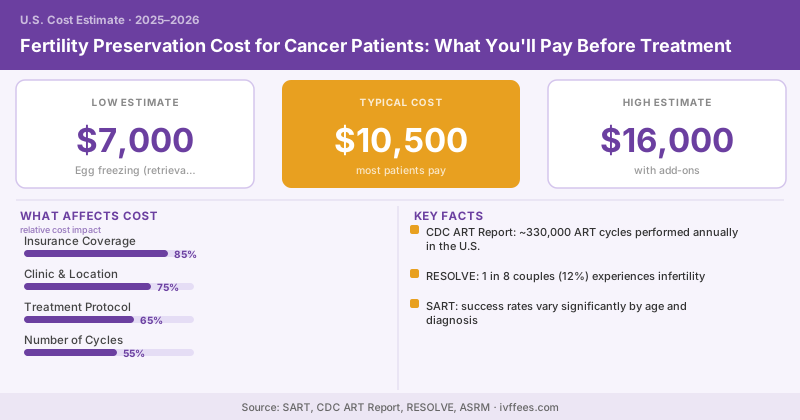
| Egg freezing (retrieval + meds) | $7,000 | $10,500 | $16,000 |
| Embryo freezing (retrieval + meds + fertilization) | $8,000 | $12,000 | $18,000 |
| Sperm banking (per sample, initial) | $300 | $600 | $1,200 |
| Ovarian/testicular tissue freezing (specialized) | $10,000 | $18,000 | $25,000 |
Ovarian or testicular tissue freezing is a more specialized, less widely available option, typically reserved for prepubescent patients or those who can’t delay treatment even briefly for a standard stimulation cycle.
Why Time Pressure Makes This Different From Standard Egg Freezing
Unlike elective egg freezing, where patients often have months to plan, cancer-related preservation frequently happens on a compressed timeline — sometimes just one to two weeks between diagnosis and the start of chemotherapy or radiation. The American Society of Clinical Oncology’s 2018 clinical practice guideline update explicitly recommends that oncologists raise fertility preservation as early as possible with every reproductive-age patient, and many cancer centers now employ dedicated oncofertility coordinators specifically to compress the usual weeks-long fertility clinic intake process into days.
Organizations like Livestrong Fertility partner with fertility clinics and pharmaceutical companies nationwide to offer significantly reduced-cost cycles and discounted or free medications specifically for patients about to start cancer treatment. Ask your oncology team or a fertility clinic directly about oncofertility discount programs before assuming standard egg freezing prices apply to your situation — many patients qualify without realizing it.
Insurance Coverage Is Better Than It Used to Be — But Still Inconsistent
A growing number of states have passed laws specifically requiring insurance coverage for fertility preservation when infertility is an expected side effect of necessary medical treatment — often called “iatrogenic infertility” coverage laws, which are distinct from broader IVF mandates and have passed in more states than general IVF coverage requirements. These laws typically apply regardless of whether you’re diagnosed with infertility independently — the trigger is that your cancer treatment itself is expected to affect fertility. Even so, coverage specifics vary by state and by whether your plan is fully insured or self-funded, so confirm your actual plan’s terms rather than assuming a state law guarantees your coverage.
Sperm Banking Is Fast, Affordable, and Often Overlooked
For male cancer patients, sperm banking is comparatively quick (often same-day) and inexpensive at $300–$1,200 for initial processing, plus modest annual storage after that. Despite the low cost and speed, it’s sometimes not raised with male patients as consistently as egg or embryo freezing is with female patients — if you’re a male cancer patient and it hasn’t come up, ask your oncology team directly before treatment starts.
Don’t delay contacting a fertility clinic while you weigh the decision — even a few days matters when chemotherapy or radiation has an urgent start date. Most academic cancer centers can arrange an expedited fertility consultation within 24–48 hours specifically because oncofertility timelines are so tight; ask your oncologist for a same-week referral rather than waiting for a routine appointment slot.
The Bottom Line
Fertility preservation before cancer treatment typically costs $7,000–$18,000 for egg or embryo freezing, or a few hundred dollars for sperm banking — but discounted oncofertility programs and a growing number of state insurance mandates can meaningfully reduce what you actually pay. Ask about Livestrong Fertility and similar programs immediately after diagnosis, and don’t let the financial question delay contacting a fertility clinic — most can move within days when cancer treatment timing requires it.