A fresh transfer looks cheaper on paper — it’s part of the cycle you already paid for. A frozen transfer adds a whole separate fee. So fresh wins on cost, right? Not so fast. Once you factor in freezing, storage, and the way modern clinics actually run cycles, the math gets a lot less obvious.
Let’s compare fresh versus frozen embryo transfers on cost — and on outcomes, because the cheaper option isn’t always the smarter one.
The Two Approaches
In a fresh transfer, an embryo is transferred a few days after egg retrieval, in the same cycle. The transfer is usually included in the base IVF package price.
In a frozen embryo transfer (FET), all embryos are frozen after retrieval, and one is thawed and transferred in a later cycle. This is the frozen embryo transfer you’ve probably seen quoted as a separate line item.
More and more U.S. clinics now favor a “freeze-all” approach, transferring frozen rather than fresh, for medical reasons we’ll get to.
How the Costs Compare
| Transfer Approach | Low | Typical | High |
|---|---|---|---|
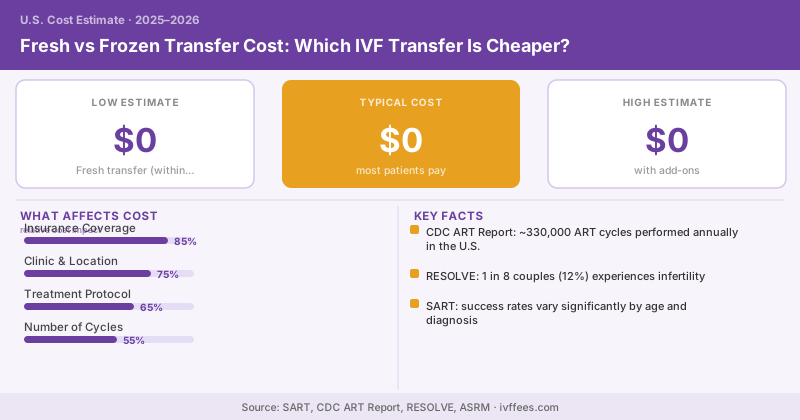
| Fresh transfer (within base IVF cycle) | $0 | $0 | $0 |
| Embryo freezing/vitrification (one-time) | $1,000 | $1,800 | $3,000 |
| Annual embryo storage | $300 | $600 | $1,200 |
| Frozen embryo transfer (separate cycle) | $3,000 | $4,500 | $6,500 |
On the surface, fresh is cheaper because the transfer is bundled. But there’s a catch: if you have extra embryos, you’ll freeze and store them anyway, and any future attempt will be a frozen transfer regardless.
A fresh transfer is usually included in your base IVF cycle, so it appears free. A frozen transfer adds $3,000–$6,500 plus freezing ($1,000–$3,000) and storage. But if you have extra embryos to freeze anyway, the cost gap narrows — and many clinics now prefer frozen transfers on medical grounds.
Why Many Clinics Now Prefer Frozen
This is where cheaper and better diverge. A fresh transfer happens right after the high-hormone stimulation of egg retrieval, when the uterine lining may not be at its best. Freezing all embryos lets the body recover, so the transfer happens in a more natural hormonal environment.
Research has shown that for certain patients — particularly those at risk of ovarian hyperstimulation syndrome (OHSS) or with high hormone levels — frozen transfers can produce comparable or better outcomes and lower OHSS risk. The ASRM has acknowledged that freeze-all strategies are appropriate in specific clinical situations, though it does not recommend freezing for everyone.
CDC ART surveillance data has documented a steady rise in frozen transfers as a share of all IVF transfers over the past decade, reflecting this shift in practice.
So Which Is Cheaper Overall?
If you transfer fresh, get pregnant on the first try, and have no embryos to freeze, fresh is clearly cheapest. But most patients end up with extra embryos to freeze, and many need more than one transfer. In those common scenarios, you’ll be paying freezing, storage, and FET fees no matter what, which closes much of the gap.
Don’t pick fresh purely to dodge the FET fee. The right choice depends on your hormone levels, OHSS risk, and embryo numbers — a medical decision first, a cost decision second. To see how transfers fit the bigger budget, review what’s included in IVF cost and the overall IVF cost.
Frequently Asked Questions
Is a fresh transfer cheaper than a frozen transfer? Upfront, yes — a fresh transfer is usually bundled into your base IVF cycle, while a frozen transfer adds $3,000–$6,500 plus freezing and storage. But if you have extra embryos to freeze and store anyway, or need more than one attempt, the real-world cost gap shrinks.
Why do some clinics freeze all embryos instead of transferring fresh? After egg retrieval, hormone levels are high and the uterine lining may not be ideal. Freezing lets your body recover for a better-timed transfer. For patients at risk of OHSS or with high hormone levels, frozen transfers can lower risk and match or beat fresh outcomes.
Does a frozen transfer have lower success rates than fresh? Not necessarily. For many patients, frozen transfers produce comparable outcomes, and for some they’re better. CDC data shows frozen transfers have become a large and growing share of IVF, reflecting confidence in the approach. The best choice depends on your specific situation.
The “fresh is free” framing can be misleading. If you’ll have extra embryos to freeze and store regardless, you’re paying those fees anyway. Choose fresh vs frozen based on your medical situation, not just the transfer line item.