$14,000 sounds like a lot — until you compare it to the $25,000+ a full IVF cycle with your own eggs can run for a patient with diminished ovarian reserve or advanced maternal age. That gap is why frozen donor embryos, sometimes called embryo adoption, have become one of the more overlooked cost-saving paths in fertility treatment.
What a Frozen Donor Embryo Costs, Line by Line
| Cost Component | Low End | Typical | High End |
|---|---|---|---|
| Embryo acquisition fee (per embryo or batch) | $2,500 | $5,000 | $9,000 |
| Shipping & cryo-transport | $500 | $800 | $1,500 |
| Legal contract review | $300 | $600 | $1,200 |
| Recipient prep (medications) | $300 | $600 | $1,000 |
| Frozen embryo transfer procedure | $3,000 | $4,500 | $6,500 |
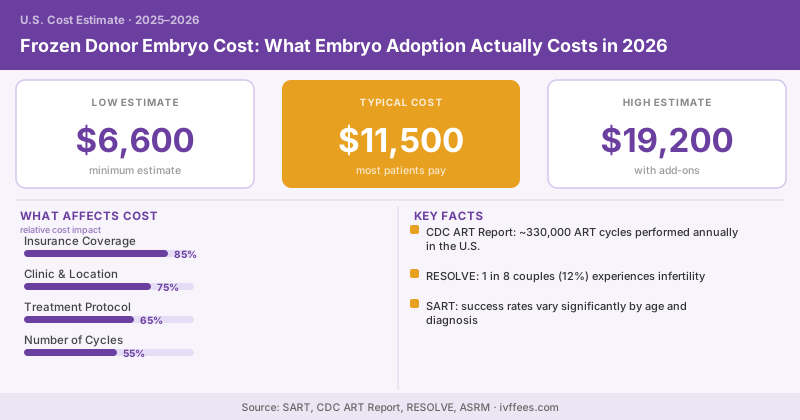
| Total | $6,600 | $11,500 | $19,200 |
Where the embryos come from matters for price. Nonprofit embryo donation programs, often run through embryo banks or religious organizations, tend to charge lower acquisition fees than for-profit matching services, sometimes in exchange for a more involved application and matching process.
Where Frozen Donor Embryos Come From
Most frozen donor embryos available today are surplus embryos from other patients’ IVF cycles — couples or individuals who completed their family and chose to donate remaining frozen embryos rather than discard them or donate to research. According to the CDC’s most recent National ART Surveillance data, several thousand donor embryo transfer cycles are performed in the U.S. each year, a small but meaningful share of total ART cycles.
Embryo banks like the National Embryo Donation Center and several regional programs maintain catalogs of available embryos with donor medical history, genetic screening results, and sometimes physical characteristics, letting recipients review options before committing.
Why This Route Is Cheaper Than IVF With Your Own Eggs
The cost savings come from skipping the most expensive parts of a standard IVF cycle: there’s no egg retrieval, no gonadotropin stimulation medications (often $3,000–$6,000 alone), and no fertilization/embryology lab work to create new embryos. You’re paying for the embryo itself, minimal preparation medication, and the transfer procedure — a much shorter list of expensive steps.
Many embryo donation programs offer a batch of embryos (often 2–6, since donor families frequently have multiple frozen embryos from one retrieval) for one acquisition fee, giving you more than one attempt without paying the fee again. Ask specifically whether the quoted price covers one embryo or the full available batch — this can change your effective cost per attempt substantially.
Legal and Logistical Costs to Budget For
Embryo donation involves a legal contract between you and the donor family (or the bank acting on their behalf), addressing parental rights, future contact preferences, and disposition terms. Budget $300–$1,200 for an attorney experienced in third-party reproduction to review this contract — skipping it to save money is a real risk given the legal complexity of embryo relinquishment and parentage.
Shipping frozen embryos between facilities also requires specialized cryogenic transport, typically arranged through the embryo bank, adding $500–$1,500 depending on distance and the shipping vendor used.
Don’t assume a lower embryo acquisition fee means a lower total cost. Some lower-fee programs pass more of the shipping, legal, and matching-service costs onto the recipient separately. Get a complete, itemized quote covering acquisition, shipping, legal review, and the transfer procedure before comparing programs on price alone.
The Bottom Line
Frozen donor embryos typically cost $6,600–$19,200 all-in, meaningfully less than a full IVF cycle using your own eggs, especially for patients facing diminished ovarian reserve or advanced age. Compare embryo banks on both acquisition fee and what’s bundled, budget separately for legal review, and ask about batch pricing if you may want more than one attempt.