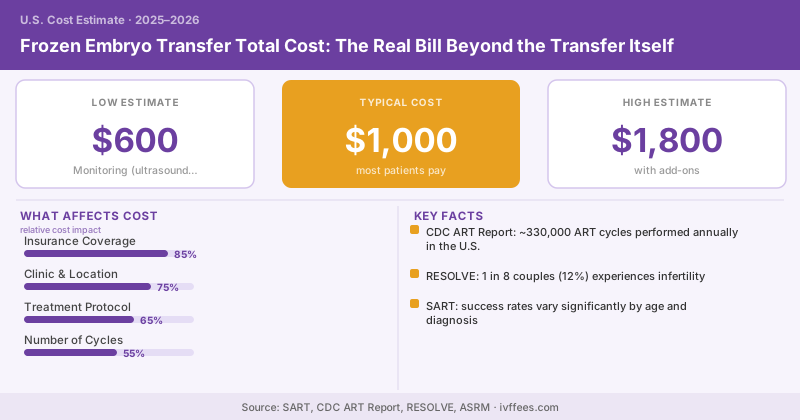
62% is the rough share of US embryo transfers that are now frozen rather than fresh, according to SART data — a shift that’s changed how most IVF patients actually budget for treatment. But “frozen transfer” pricing gets quoted misleadingly often, and the sticker number rarely matches what patients actually pay.
What a Frozen Transfer Cycle Really Costs
| Cost Component | Low End | Typical | High End |
|---|---|---|---|
| Monitoring (ultrasounds & bloodwork) | $600 | $1,000 | $1,800 |
| Endometrial prep medications | $500 | $1,200 | $2,500 |
| Embryo thaw fee | $300 | $500 | $900 |
| Transfer procedure | $1,200 | $1,800 | $2,800 |
| Total per FET cycle | $2,600 | $4,500 | $8,000 |
Clinics often advertise “transfer fee: $1,800” in marketing materials — technically accurate, but only one line of the actual bill. The monitoring and medication costs are just as real, and they’re rarely mentioned in the same breath.
Why the Medication Line Varies So Much
Endometrial prep for a frozen transfer usually means several weeks of estrogen (patches, pills, or injections) followed by progesterone (injections, suppositories, or both) to build and time your uterine lining correctly. Progesterone in oil injections in particular can run higher than expected depending on dose and how long you need to continue them post-transfer — sometimes 10 weeks or more if you get a positive result and continue through early pregnancy.
Some clinics use a “natural cycle” FET protocol — timing the transfer to your own ovulation instead of medicating your lining artificially — which cuts medication costs substantially for patients who ovulate regularly. Ask your RE whether you’re a candidate; it’s a meaningful line-item difference.
When a clinic quotes a “transfer cost,” always ask them to itemize monitoring, medications, and the thaw fee separately. The transfer procedure itself is often the smallest single line item in the total FET bill — monitoring and medications combined usually cost more than the transfer appointment.
Why FET Became the Default, Not the Exception
Several factors pushed frozen transfers ahead of fresh ones over the past decade: better vitrification (freezing) techniques that preserve embryo quality nearly identically to fresh, the ability to complete PGT-A genetic testing before transfer (which requires freezing while results come back), and research suggesting frozen transfers may reduce risks associated with ovarian hyperstimulation for high responders. The cost angle is real too — a frozen transfer runs a fraction of a full fresh retrieval cycle, which matters enormously if you’re planning multiple embryo transfers from one retrieval.
Don’t skip your progesterone doses to stretch a prescription and save money — inconsistent progesterone support during the luteal phase is one of the more preventable reasons a frozen transfer fails. If cost is a genuine barrier, talk to your clinic about generic options or patient assistance programs before you consider adjusting your dosing schedule yourself.
Multiple Transfers From One Retrieval
If your retrieval produced several viable frozen embryos, each subsequent transfer attempt is a new FET cycle with its own monitoring and medication costs — the retrieval itself doesn’t need to be repeated. This is the financial argument for banking multiple embryos in one retrieval when possible: the expensive part happens once, while each transfer attempt costs a fraction of that in comparison.
The Bottom Line
Budget $3,000–$6,500 for a full frozen embryo transfer cycle, not just the $1,500–$3,000 “transfer fee” clinics often lead with. Ask for monitoring and medication estimates upfront, ask whether a natural-cycle protocol fits your situation, and remember that even at the higher end, a single FET typically costs far less than a fresh retrieval cycle — one reason it’s become the default path for most IVF patients today.