A single blood test on day three of your cycle can reshape your entire fertility budget. That’s the power — and the anxiety — of an FSH reading. When follicle-stimulating hormone comes back high, it signals your ovaries are working harder to recruit eggs, often a sign of diminished reserve. And that one number can push your costs from a standard $12,000 IVF cycle toward a $35,000 donor-egg path.
FSH is part of the ovarian reserve picture alongside AMH and antral follicle count. ASRM emphasizes that no single test perfectly predicts outcomes, but a consistently elevated FSH does change the conversation about protocols, success rates, and cost.
What High FSH Actually Tells You
FSH rises when the ovaries become less responsive — the brain pumps out more of it to coax follicles to grow. A high day-3 FSH (often flagged above roughly 10–12 mIU/mL, with thresholds varying by lab and clinic) suggests reduced reserve and can predict a poorer response to stimulation.
The cost implication is real: a poor responder may need higher medication doses, more monitoring, and sometimes multiple egg retrieval cycles to bank enough embryos — all of which add up.
| Treatment Path | Low | Typical | High |
|---|---|---|---|
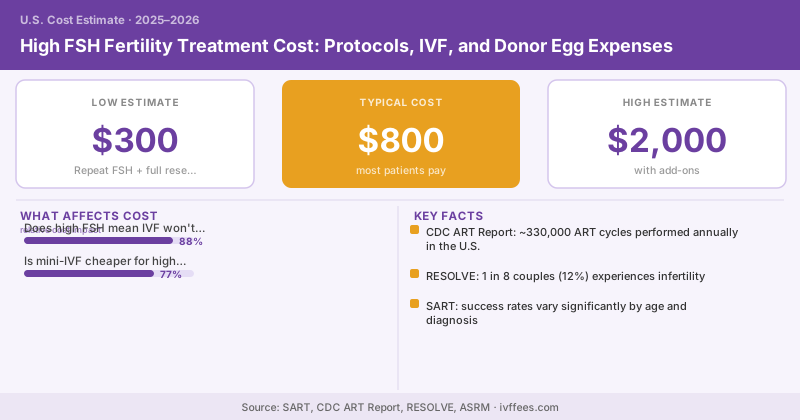
| Repeat FSH + full reserve workup | $300 | $800 | $2,000 |
| IUI cycle (if reserve allows) | $500 | $1,200 | $4,000 |
| IVF with high-dose protocol | $14,000 | $20,000 | $30,000 |
| Mini/mild stimulation IVF | $7,000 | $11,000 | $16,000 |
| Embryo banking (multiple retrievals) | $24,000 | $40,000 | $60,000 |
| Donor-egg IVF | $20,000 | $28,000 | $45,000 |
Protocol Choices and Their Costs
For women with high FSH, REs choose between two philosophies. The first is aggressive stimulation — high-dose fertility medications to squeeze out as many eggs as possible — which raises the drug bill substantially. The second is mild or “mini” IVF, using lower medication doses on the logic that poor responders won’t make many eggs regardless, so why pay for expensive high doses.
Mini-IVF cycles cost less per cycle but may yield fewer eggs, so you might need more cycles. There’s no universally cheaper option — it depends on how your ovaries respond.
A single high FSH isn’t a verdict. Levels fluctuate month to month, and a high reading should be repeated and viewed alongside AMH and antral follicle count before any expensive decisions. Don’t let one elevated number rush you into donor eggs — but also don’t ignore it, because age plus diminished reserve makes time the most valuable currency in this scenario.
When Donor Eggs Enter the Conversation
If FSH is very high and stimulation cycles yield few or no usable eggs, donor eggs become the highest-success path. The hard reality: donor-egg IVF success depends mostly on the donor’s age, not yours, which is why it offers dramatically better odds for women with severely diminished reserve. It’s also $20,000 to $45,000.
Many women try a limited number of own-egg cycles first, then transition to donor eggs rather than spending repeatedly on low-yield attempts. The financial and emotional calculus is personal, and a frank discussion of realistic per-cycle success is essential before committing.
High FSH plus advancing age is the scenario where chasing own-egg cycles can quietly drain tens of thousands of dollars with little to show for it. Ask your RE for honest, age-and-reserve-specific live-birth odds per cycle before you commit to repeated retrievals. Sometimes the most cost-effective decision is moving to donor eggs sooner rather than later.
Don’t Skip the Full Workup
FSH is only one data point. A complete reserve assessment — repeat FSH, AMH, estradiol, and antral follicle count via ultrasound — gives a fuller picture and is part of any thorough fertility testing workup. Sometimes a single high reading isn’t confirmed on repeat, which can change the whole plan and save you from premature expensive decisions.
Insurance Considerations
Diagnostic hormone testing is frequently covered, even on plans that exclude fertility treatment, because it’s basic bloodwork. The IVF and donor-egg portions follow your state mandate — and donor fees are usually out of pocket. Because high-FSH treatment can involve multiple cycles or a pivot to donor eggs, mapping IVF financing options early helps you avoid mid-treatment cash crunches.
Frequently Asked Questions
Can high FSH be lowered with treatment? You can’t reliably “fix” high FSH — it reflects ovarian reserve, which doesn’t increase. Some supplements and lifestyle changes are marketed for this, but the evidence is weak. Treatment focuses on working around reduced reserve, not reversing it.
Does high FSH mean IVF won’t work? Not necessarily. Some women with elevated FSH still respond to stimulation and conceive with their own eggs, especially when younger. It does generally predict a tougher, sometimes costlier road, which is why protocol choice and realistic expectations matter.
Is mini-IVF cheaper for high FSH? Per cycle, yes — mini-IVF uses fewer medications. But because it often yields fewer eggs, you may need more cycles, so the total cost isn’t always lower. The best value depends on your individual response.
Bottom Line
High FSH fertility treatment spans a wide cost range, from a tailored $14,000 IVF protocol to $20,000–$45,000 donor-egg cycles, with embryo banking across multiple retrievals running highest. The key moves are confirming the high reading, getting a full reserve workup, and having an honest conversation about realistic per-cycle success before committing tens of thousands to own-egg attempts. Work with an RE experienced in poor-responder protocols to spend wisely.