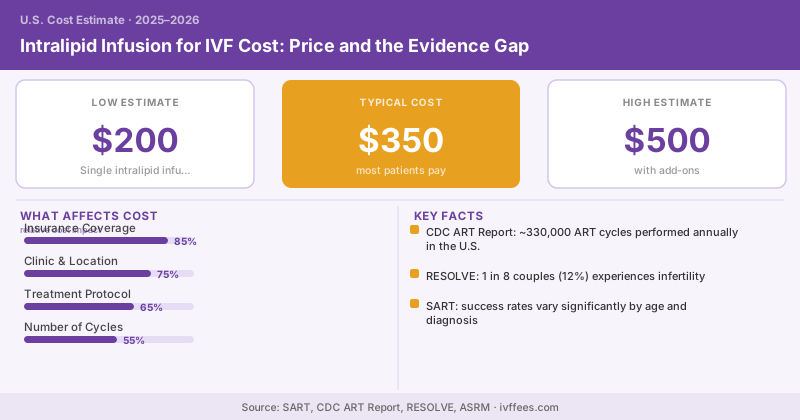
Intralipid started life as IV nutrition for hospital patients who couldn’t eat. Somewhere along the way it became a controversial fertility add-on, marketed to patients with recurrent implantation failure or repeated miscarriage. The idea is that this fat emulsion can calm an overactive immune system that might be rejecting an embryo. The price tag runs $200 to $500 per infusion — and you may need several.
Here’s the cost, the theory, and the uncomfortable truth about the evidence.
What an Intralipid Infusion Costs
Intralipid is administered as an IV drip, usually before transfer and sometimes repeated in early pregnancy. The cost stacks with each session.
| Item | Detail | Low End | Typical | High End |
|---|---|---|---|---|
| Single intralipid infusion | One IV session | $200 | $350 | $500 |
| Pre-transfer + early pregnancy course | 2–4 infusions | $500 | $1,000 | $2,000 |
| Extended protocol | 4+ infusions | $1,200 | $1,800 | $3,000+ |
Like most immune add-ons, this is almost always out of pocket and stacks on top of your IVF cost and standard fertility medications. A multi-infusion course can quietly become one of your bigger elective expenses.
The Immune Theory
The pitch goes like this: some patients with repeated failed transfers may have elevated natural killer (NK) cell activity, and the theory is that intralipid’s fat content modulates that immune response, making the uterus more “welcoming” to an embryo. It sounds plausible, and that’s part of why it’s marketed so aggressively.
But here’s the problem. A 2023 review and multiple professional society statements have concluded the evidence for intralipid improving live birth rates is weak and inconsistent. Many reproductive immunology add-ons fall into this category — appealing theory, thin data. The ASRM has cautioned against unproven immune therapies in routine IVF.
Intralipid infusions cost $200–$500 each and the evidence that they improve live birth rates is weak. They’re an unproven immune add-on, not a standard treatment. Before paying for a multi-infusion course, ask your RE for the actual data supporting it in your specific case.
Why Patients Try It Anyway
When you’ve had multiple failed transfers, the emotional pull toward “trying everything” is powerful and completely understandable. Clinics that offer intralipid know this. That’s exactly why you should slow down and ask hard questions about cost versus proven benefit before signing up for repeated infusions.
A frank conversation with your RE about whether your specific history justifies it — versus whether the money is better spent on a proven step like PGT testing or another transfer — can save you thousands.
Be cautious of clinics that recommend intralipid (or broad “immune panels”) to nearly every patient with a failed cycle. These are not standard, evidence-backed treatments for most patients. Get the total cost in writing and a clear, honest explanation of the expected benefit before committing.
Managing the Cost
There’s no manufacturer coupon for an off-label infusion protocol, so the main lever is deciding whether to do it at all. If you and your RE agree it’s worth a try, ask whether fewer infusions might suffice and get the full course cost upfront.
Because immune add-ons aren’t covered, they rarely qualify for fertility drug assistance programs, which focus on core medications. If your budget is tight, our how to reduce IVF cost guide can help you prioritize proven steps over speculative ones — and our piece on why IVF medication is so expensive explains where your dollars genuinely go.
Frequently Asked Questions
Does intralipid infusion improve IVF success? The evidence is weak and inconsistent. Professional societies including ASRM have cautioned against routine use of unproven immune therapies. It’s not a standard, evidence-backed treatment for most patients.
How much does a course of intralipid cost? Each infusion runs roughly $200–$500. A typical pre-transfer and early-pregnancy course of 2–4 infusions can total $500–$2,000, almost always out of pocket.
Should I try intralipid after failed transfers? Only after a candid talk with your RE about the limited evidence and whether your specific history justifies it. The money may be better spent on proven steps. Be wary of clinics that recommend it to nearly everyone.