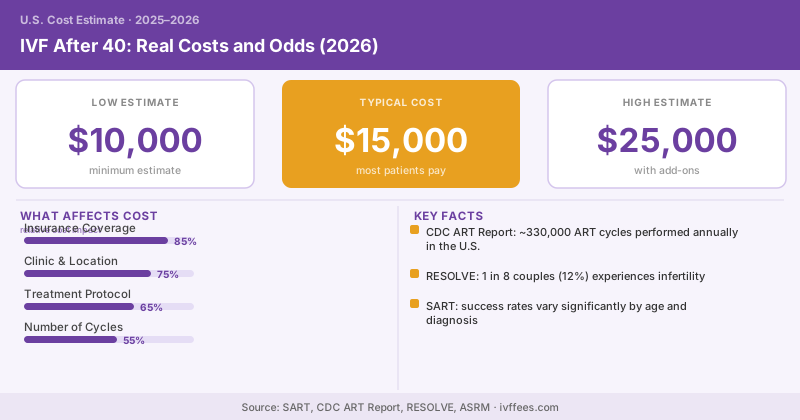
“How many cycles will I need?” That’s the question that really determines what IVF after 40 costs you. A single cycle runs $15,000 to $25,000 with medications, but the brutal truth of fertility math is that women over 40 usually need several attempts—so the real budget is often $40,000 to $70,000 or more. Knowing the odds upfront helps you plan financially instead of getting surprised one failed cycle at a time.
SART’s national data tells the story bluntly: live birth rates per IVF cycle using a woman’s own eggs fall steeply after age 40, dropping into the single digits by the mid-40s. That’s not a reason to give up—it’s a reason to budget realistically and make informed choices early.
What One Cycle Costs at 40+
| Item | Typical Cost |
|---|---|
| Base IVF cycle | $12,000–$20,000 |
| Medications (higher doses after 40) | $4,000–$8,000 |
| PGT-A genetic testing | $3,000–$6,000 |
| Frozen embryo transfer | $3,000–$6,000 |
Medications cost more after 40 because your ovaries often need higher stimulation doses. Many clinics also recommend PGT-A genetic testing, since the rate of chromosomally abnormal embryos rises sharply with age—testing helps avoid transferring embryos unlikely to result in a healthy birth. Our full IVF cost breakdown explains each line item.
The Multi-Cycle Reality
Because per-cycle success falls with age, most clinics counsel women over 40 to budget for two or three retrievals. This is exactly where multi-cycle packages and refund programs earn their keep—they cap your downside if you need repeated attempts. Our IVF success rates by age guide lays out the per-age numbers so you can plan around your own odds.
Don’t budget for one cycle—budget for the journey. If you’re 40, plan for at least two retrievals ($30,000–$50,000 all-in). If you’re 43 or older with your own eggs, have a frank conversation about donor eggs before spending heavily on low-odds cycles. The cheapest path to a baby is sometimes the one that uses younger eggs from the start.
When Donor Eggs Become the Smarter Spend
It feels counterintuitive, but donor eggs can be the more economical route after 43. Donor-egg IVF carries success rates in the 40–55% range per transfer regardless of your age, because the eggs come from women in their 20s. Spending $25,000–$40,000 on a donor cycle with strong odds can beat spending the same money on multiple own-egg cycles with low odds. Our donor egg IVF cost guide covers when this math flips in your favor.
Beware clinics that quote a single low cycle price without discussing your realistic odds. After 40, a $15,000 cycle with a 10% success rate isn’t a bargain. Ask any clinic for their age-specific live birth rates—the SART and CDC reporting system makes these public—before committing to a multi-cycle plan.
Financing the Long Game
When you anticipate multiple cycles, financing structure matters as much as the sticker price. Refund programs, multi-cycle bundles, and fertility loans can turn an unpredictable series of bills into a fixed cost. See IVF financing options for how shared-risk programs and loans work for older patients.
Frequently Asked Questions
How many IVF cycles do most women over 40 need? It varies widely, but many clinics counsel patients over 40 to plan for two to three egg retrievals to bank enough viable embryos. By the mid-40s with your own eggs, even more may be needed, which is why donor eggs are often discussed as an alternative.
Is PGT-A genetic testing worth it after 40? Often, yes. The share of chromosomally abnormal embryos rises sharply with age, so testing helps you avoid the cost and heartbreak of transferring embryos that can’t result in a healthy birth. It adds $3,000–$6,000 but can save money by reducing failed transfers.
At what age should I consider donor eggs instead? There’s no hard cutoff, but many doctors raise donor eggs as a serious option around 43–44, when own-egg success rates drop into the low single digits. Because donor-egg odds stay high regardless of your age, the cost per baby can actually be lower despite the donor fees.