A 27-year-old and a 43-year-old pay roughly the same price for one IVF cycle—but they’ll often spend wildly different totals to bring home a baby. That’s the paradox of IVF cost by age: the per-cycle sticker barely changes, but the number of cycles you’ll likely need climbs with each decade. Understanding how your life stage shapes total spend helps you budget for the real journey, not just the first invoice. Here’s the breakdown across your 20s, 30s, and 40s.
SART’s national data shows live birth rates per cycle declining with age—high in the 20s and early 30s, dropping after 35, and falling steeply past 40. Since success per cycle drives how many cycles you need, age is the single biggest factor in your total IVF cost.
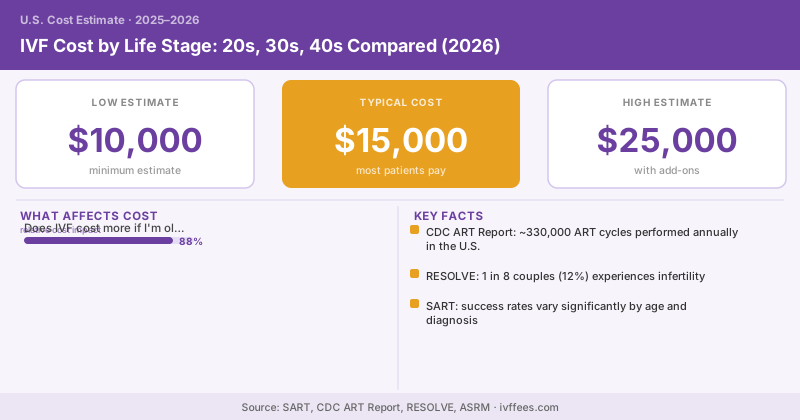
Per-Cycle Cost Is Steady; Total Cost Isn’t
| Life Stage | Cost Per Cycle | Likely Cycles | Estimated Total |
|---|---|---|---|
| 20s–early 30s | $15,000–$25,000 | 1–2 | $15,000–$35,000 |
| Mid-to-late 30s | $15,000–$25,000 | 2–3 | $30,000–$50,000 |
| 40s (own eggs) | $15,000–$25,000 | 3+ | $45,000–$75,000+ |
The cycle price holds fairly steady across ages—the variable is how many you’ll need. Our IVF cost guide details what’s in a single cycle, and IVF success rates by age shows the odds that drive these totals.
Your 20s and Early 30s
This is fertility’s sweet spot. High egg quality and quantity mean strong per-cycle success, so many people conceive in one or two cycles. If you’re doing IVF young—often for male-factor infertility, blocked tubes, or as a single or LGBTQ+ parent—your total cost tends to be the lowest. It’s also the ideal window to bank extra embryos for future siblings.
The cost per IVF cycle stays roughly constant with age, but your total spend rises because older patients usually need more cycles. Doing IVF younger generally means a lower total cost and the chance to bank embryos for later. If you’re in your 40s, budget for multiple cycles—or consider donor eggs, which keep success rates high regardless of your age.
Your Mid-to-Late 30s
After 35, egg quality begins its gradual decline, and per-cycle success dips. Many people in this stage need two or three cycles, and clinics increasingly recommend PGT-A genetic testing to identify viable embryos. Plan a total budget closer to $30,000–$50,000, and consider multi-cycle packages that cap your downside.
Your 40s
Here the math changes hardest. Own-egg success per cycle drops into the low teens and then single digits, so totals can exceed $50,000 across multiple attempts. This is where donor eggs become a serious value play—their success rates stay in the 45–55% range regardless of your age. Our donor egg IVF cost guide explains when switching to donor eggs is actually the cheaper path to a baby.
Don’t let a single-cycle quote lull you into under-budgeting. A clinic quoting “$18,000 for IVF” is quoting one cycle—not your likely total. In your late 30s or 40s, planning for just one cycle is the most common reason patients run out of money mid-journey. Build a realistic multi-cycle budget from the start.
Planning Around Your Stage
Whatever your age, the smart move is budgeting for the expected number of cycles, not one. Multi-cycle bundles, refund programs, and fertility loans all help spread or cap the cost. See IVF financing options for structures that fit longer journeys, and if you’re freezing eggs now to do IVF later, our egg freezing cost guide covers preserving younger eggs to lower your future total.
Frequently Asked Questions
Does IVF cost more if I’m older? The price per cycle is roughly the same at any age. What rises with age is your total cost, because older patients typically need more cycles to succeed. A single cycle at 25 and at 42 costs about the same—but the 42-year-old is likelier to need several.
Why do clinics recommend more cycles for older patients? Because live birth rates per cycle decline with age as egg quality decreases. SART data shows the drop is gradual after 35 and steep after 40. To reach a successful pregnancy, older patients statistically need more attempts, which is why total cost climbs even though the per-cycle price doesn’t.
When does it make sense to switch from own eggs to donor eggs? Many clinics raise donor eggs as a strong option in the early-to-mid 40s, when own-egg success rates fall into the single digits. Because donor-egg success stays high regardless of your age, switching can lower your cost per baby despite the donor fees—often making it the more economical route.