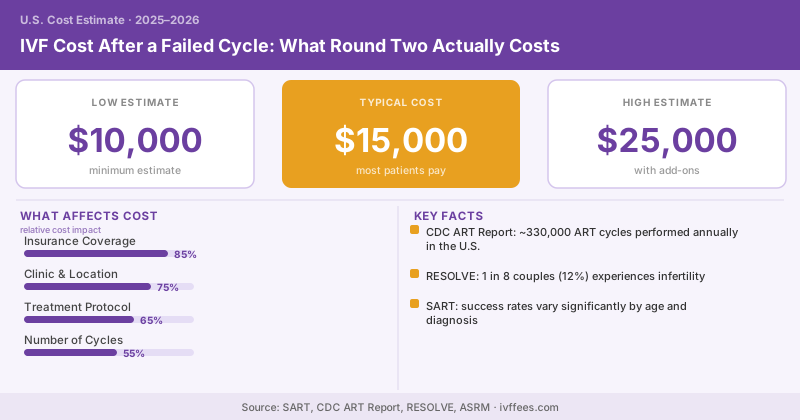
Roughly 7 in 10 IVF patients don’t take home a baby after their first cycle, according to national SART data — meaning the real budget question for most people isn’t “what does IVF cost,” it’s “what does IVF cost after it doesn’t work the first time.” That’s a much harder number to plan for, and clinics rarely lead with it.
What Changes in Price for Cycle Two
| Scenario | Typical Cost | Notes |
|---|---|---|
| Second fresh cycle (no discount) | $15,000 | $25,000 |
| Second fresh cycle (clinic repeat discount) | $13,000 | $21,000 |
| Frozen embryo transfer (using banked embryos) | $3,000 | $6,000 |
| Multi-cycle / refund package (2–3 cycles) | $20,000 | $30,000 |
If you have frozen embryos remaining from your first retrieval, a frozen embryo transfer is by far your cheapest path forward — often a third or less of a new fresh cycle. If your first cycle produced no viable embryos, you’re looking at another full retrieval, and that’s where costs climb back to first-cycle levels.
Why a Second Cycle Isn’t Always the Same Price
Clinics adjust protocols after a failed cycle based on what went wrong — poor egg yield might mean a higher medication dose (and higher pharmacy bill) next time, while implantation failure might trigger additional testing like an endometrial receptivity assay or immunological workup, both added costs not present in cycle one. A 2022 ASRM patient education summary noted that repeat-cycle protocol changes are common and can shift the medication cost significantly in either direction depending on what the RE is trying to correct.
Before committing to another full-price cycle, ask your RE for a specific explanation of what likely went wrong and what will change this time. If the answer is “we’re not sure, let’s just try again,” get a second opinion — sometimes additional (and sometimes cheaper) diagnostic testing can identify a fixable issue before you spend another $15,000+ on an unmodified repeat attempt.
Refund and Shared-Risk Programs
Multi-cycle refund programs, sometimes called shared-risk or 100%-refund programs, let you pay a larger sum upfront — often $20,000–$30,000 — for a guaranteed 2 to 3 cycle attempts, with some or all of your money refunded if none result in a live birth. These programs typically have eligibility requirements: usually under age 38, no severe male factor infertility, and a reasonable AMH/AFC. Read the fine print closely — refund percentages, what counts as a qualifying attempt, and exclusions for cancelled cycles vary a lot between programs.
Reducing the Cost of Repeat Attempts
- Ask about the repeat-cycle discount explicitly — it’s not always advertised
- Check your embryo bank first before assuming you need a new retrieval
- Consider a different clinic if your current one’s SART numbers for your diagnosis are weak — a failed cycle is a reasonable moment to shop around, per our clinic comparison guide
- Look into grants again — several IVF grants and scholarships specifically prioritize patients on a second or third attempt
- Revisit your insurance — some plans have annual, not lifetime, fertility benefit caps that reset
Don’t sign a multi-cycle refund package under emotional pressure right after a failed cycle. Run the math first: if your realistic per-cycle success rate is 45%, paying for three cycles upfront may cost more than paying cycle-by-cycle if you’re likely to succeed on the second attempt. These programs work best for patients with a lower per-cycle success probability, not a higher one.
The Bottom Line
A failed first cycle doesn’t mean starting from zero financially, but it also isn’t automatically cheaper the second time. Check for banked embryos first, ask directly about repeat-cycle discounts, get a real explanation of what’s changing in your protocol, and run the numbers before committing to a multi-cycle refund program.