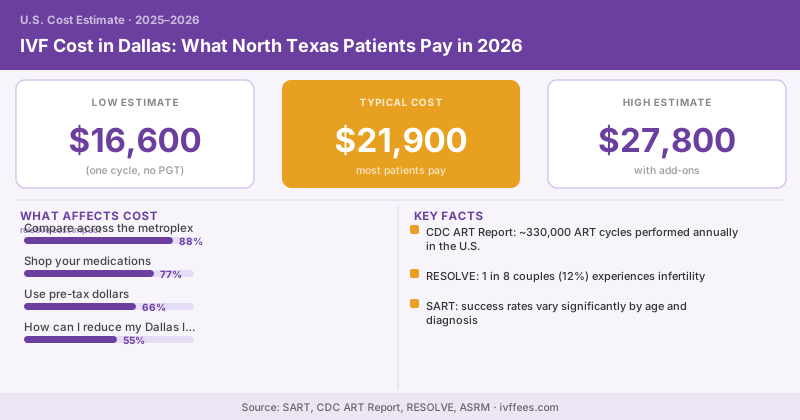
Roughly 1 in 8 U.S. couples deals with infertility, according to the CDC — and a lot of them live in the Dallas-Fort Worth metroplex, one of the fastest-growing regions in the country. If you’re among them, the first thing you’ll want to know is the number. In Dallas, base IVF runs $11,500 to $16,500 per cycle before medications, which makes North Texas noticeably cheaper than the coasts.
That affordability comes with a catch on the insurance side. Let’s walk through both.
What IVF Actually Costs in Dallas
Base IVF procedure fees across DFW — Dallas, Fort Worth, Plano, Frisco — run $11,500 to $16,500. Add medications, monitoring, and optional genetic testing, and an uninsured first cycle typically totals $16,000 to $24,000.
| Cost Component | Low End | Typical | High End |
|---|---|---|---|
| Base IVF procedure (Dallas) | $11,500 | $14,000 | $16,500 |
| Fertility medications | $3,500 | $5,000 | $7,000 |
| Monitoring & labs | $1,000 | $1,500 | $2,500 |
| Anesthesia | $600 | $900 | $1,300 |
| PGT-A genetic testing (optional) | $3,500 | $5,000 | $7,500 |
| Frozen embryo transfer (if needed) | $3,000 | $4,500 | $6,500 |
| Total (one cycle, no PGT) | $16,600 | $21,900 | $27,800 |
Texas’s moderate cost of living keeps clinic overhead — and base fees — below coastal metros. The fixed costs like medications stay roughly national, but the procedure itself comes in lower than you’d pay in San Francisco or New York.
Texas Has a Mandate — But It Doesn’t Force IVF Coverage
Here’s the nuance Texans get wrong all the time. Texas has an infertility insurance law, but it’s narrow. The state mandate requires certain insurers to offer IVF coverage — it does not require them to include it, and there are significant exemptions. Employers can decline the benefit, and self-funded plans aren’t bound by it at all.
The practical result: most Texas patients pay out of pocket for IVF despite the state having a law on the books. It functions more like Georgia or Arizona than like New York or New Jersey. For the full state-by-state picture and where Texas really lands, see the IVF insurance mandate by state overview.
DFW’s enormous corporate base softens the blow somewhat. The metroplex hosts a large concentration of Fortune 500 headquarters, and many of those employers have added voluntary fertility benefits as RESOLVE has tracked the broader corporate trend. If you work for a major DFW employer, that voluntary benefit — not the state mandate — is your best shot at coverage.
Texas has an IVF mandate, but it only requires insurers to OFFER coverage, not include it — and self-funded plans are exempt. Most Dallas patients still pay out of pocket. Your real coverage path is a voluntary employer benefit, common among DFW’s many large corporate headquarters. Ask HR directly.
Dallas’s Clinic Market
DFW supports a deep, competitive fertility market spread across Dallas, Fort Worth, and the booming northern suburbs of Plano and Frisco. As one of the largest metros in the country, it concentrates plenty of clinics, reproductive endocrinologists, and lab capacity — and it draws patients from across North Texas, Oklahoma, and the wider region.
That scale works in your favor. According to CDC ART surveillance data, Texas clinics perform a high volume of cycles each year, and DFW is one of the two anchors of that activity alongside Houston. High volume keeps clinics efficient and gives patients real room to compare prices.
How to Keep Dallas IVF Costs Down
Compare across the metroplex. Quotes vary by thousands of dollars between DFW clinics. Get itemized estimates from several before deciding.
Shop your medications. At $3,500–$7,000, drugs are a big line item. National specialty pharmacies often beat local retail — comparing fertility medication costs is one of the simplest ways to save.
Ask about multi-cycle and refund programs. Several DFW clinics offer bundled or money-back packages that reduce per-cycle exposure.
Use pre-tax dollars. Texas has no state income tax, so the HSA/FSA benefit here is federal-only — still worth maxing before your cycle.
If a gap remains, Dallas clinics widely offer IVF financing options through partnered lenders.
Per SART national data, the live birth rate per egg retrieval for women under 35 is around 49% and declines with age. A single-cycle price isn’t a single-cycle promise. Ask your Dallas clinic for success rates specific to your age and diagnosis, and budget for the possibility of more than one cycle.
Frequently Asked Questions
Does Texas require insurance to cover IVF? Not really. Texas’s mandate only requires certain insurers to offer IVF coverage, and self-funded employer plans are exempt. Most Dallas patients pay out of pocket — confirm your IVF coverage for 2025 with your insurer and HR.
Is IVF cheaper in Dallas than on the coasts? Yes. Texas’s lower cost of living keeps clinic overhead and base fees below metros like San Francisco or New York, typically saving several thousand dollars per cycle.
How can I reduce my Dallas IVF bill? Compare clinics across DFW, shop medications, ask about package programs, and use HSA dollars. See how to reduce IVF cost for more.
Cost data based on DFW-area clinic fee schedules, CDC ART surveillance data, SART national data, RESOLVE analysis, and Texas insurance mandate status. Individual costs vary by clinic, protocol, and employer coverage.