In 2010, an IVF cycle in Milwaukee cost several thousand dollars less than one in Chicago, just 90 minutes south. In 2026, that price gap still holds — Wisconsin’s largest city remains one of the more affordable Midwest fertility markets for patients willing to skip the drive to Illinois.
What IVF Costs in Milwaukee
| Cost Component | Low End | Typical | High End |
|---|---|---|---|
| Base IVF procedure fee | $10,800 | $13,500 | $16,200 |
| Fertility medications | $2,800 | $4,200 | $6,000 |
| Monitoring & labs | $800 | $1,300 | $2,000 |
| Anesthesia | $500 | $750 | $1,200 |
| PGT-A genetic testing (optional) | $2,900 | $4,500 | $6,700 |
| Frozen embryo transfer (if needed) | $2,700 | $4,000 | $5,700 |
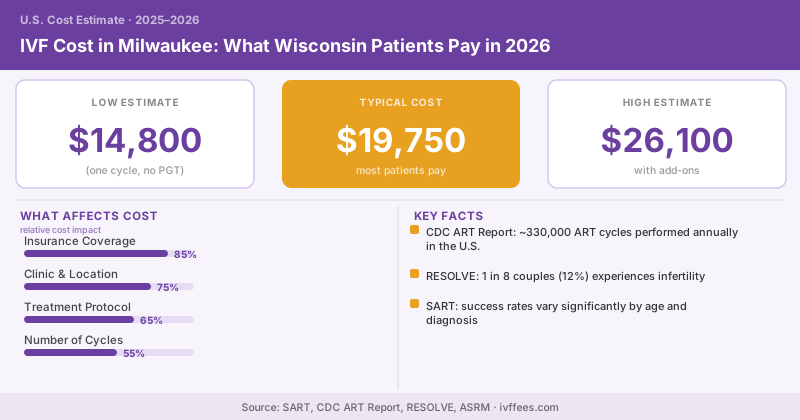
| Total (one cycle, no PGT) | $14,800 | $19,750 | $26,100 |
Milwaukee pricing runs below neighboring Chicago, and comparable to other Midwest metros like Cincinnati and Indianapolis.
No State Mandate — Wisconsin Employer Landscape
Wisconsin has no law requiring insurers to cover IVF, so most Milwaukee-area patients pay out of pocket unless their employer offers voluntary fertility benefits. Milwaukee’s economy has a strong manufacturing and healthcare base — Froedtert Health, Advocate Aurora Health (now part of Advocate Health), and several large manufacturing employers anchor the local job market. Larger regional healthcare and manufacturing employers here have gradually added fertility benefits in recent years, following broader Midwest and national trends toward more competitive benefits packages.
Milwaukee’s large hospital systems, including Froedtert and Advocate Health, periodically update employee benefits, sometimes including fertility-related coverage for clinical and administrative staff. If you work within the region’s substantial healthcare sector, confirm current benefits directly with HR rather than assuming a standard external insurance plan applies to you.
Milwaukee-Area Fertility Clinics
- Midwest Fertility Specialists (Milwaukee area) — established regional practice
- Froedtert & the Medical College of Wisconsin Reproductive Endocrinology — academic-affiliated program with research infrastructure
- Aurora Reproductive Medical Center — part of the Advocate Health network
The presence of both an academic program through the Medical College of Wisconsin and hospital-network options gives Milwaukee patients a genuine range of care models to compare, from research-driven academic care to more streamlined network-based treatment.
Why Milwaukee Remains a Value Option in the Region
Wisconsin’s generally lower cost of living compared to neighboring Illinois translates into lower overhead for local fertility practices, which helps keep Milwaukee’s base procedure fees below Chicago’s. For patients in southeastern Wisconsin, this means real savings without sacrificing access to academic-quality care through the Medical College of Wisconsin’s affiliated program.
Milwaukee also benefits from a shorter typical wait time for a new patient consultation than larger metros nearby. Several local patients report being seen within two to three weeks of a referral, compared to longer waits reported at some high-demand Chicago practices — a practical consideration when age or diagnosis makes timely treatment a priority.
Reducing IVF Costs in Milwaukee
Milwaukee already prices below the national average, so additional savings come from standard national strategies: compare specialty pharmacy pricing for medications, check IVF grants, and request itemized quotes from both the academic Froedtert/MCW program and independent local practices before deciding.
Don’t assume Milwaukee’s lower average pricing compared to Chicago reflects lower quality care. Compare each specific clinic’s SART-reported, age-matched live birth rates directly — regional cost-of-living differences affect overhead and pricing far more than they affect embryology lab quality or physician expertise.
The Bottom Line
Milwaukee IVF runs roughly $14,800–$26,100 all-in for most uninsured patients, below the national average and below nearby Chicago. Check regional healthcare-employer benefits, and compare the academic Medical College of Wisconsin program against independent and network clinics before choosing.