$28,000. $14,000. $6,000. Three real prices, three different NYC-area fertility clinics, for what’s marketed as the same basic IVF cycle. The gap isn’t a typo — it reflects genuinely different bundles, locations, and what counts as “included.”
If you’re starting IVF in New York City, here’s what actually drives that spread and what to budget realistically.
What a Cycle Costs Across the NYC Metro
| Clinic Type/Location | Low End | Typical | High End |
|---|---|---|---|
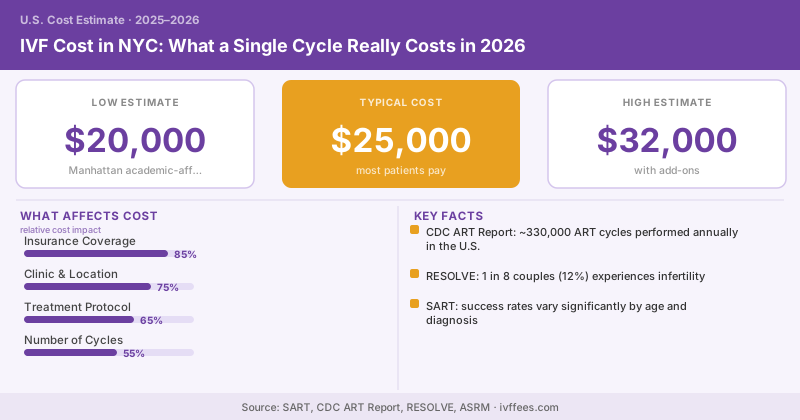
| Manhattan academic-affiliated clinic | $20,000 | $25,000 | $32,000 |
| Manhattan private practice | $18,000 | $23,000 | $28,000 |
| Outer boroughs (Brooklyn, Queens) | $14,000 | $18,000 | $23,000 |
| NJ/Westchester suburban clinic | $12,000 | $16,000 | $20,000 |
| Medications (any location) | $4,000 | $5,500 | $7,000 |
The “$6,000” figure that sometimes gets quoted usually refers to a stripped-down mini-IVF or minimal stimulation protocol, not a standard cycle — always confirm exactly which protocol a low quoted price refers to before assuming it’s comparable.
New York’s Insurance Mandate Changes the Math for Some Patients
New York is one of a relatively small number of states requiring large-group insurance plans (generally 100+ employees) to cover up to three IVF cycles. This is a meaningful mandate compared to most of the country, where IVF coverage remains rare. But it only applies to fully-insured large group plans — many NYC employers use self-insured plans exempt from the state mandate, and smaller employers aren’t covered by the requirement at all. Check your specific plan document rather than assuming coverage because you work in New York.
When a Manhattan clinic quotes a cycle price, ask explicitly whether it includes anesthesia, the embryology lab fee, and baseline monitoring — some clinics bundle these, others itemize them separately and the “package price” only covers the retrieval and transfer procedures themselves. A lower headline number can end up costing more once everything is added.
Why the Outer Boroughs and Suburbs Cost Less
Clinics in Brooklyn, Queens, and nearby New Jersey or Westchester generally face lower real estate and overhead costs than Manhattan practices, and that difference shows up directly in pricing. Success rates between comparable clinics in these areas and Manhattan are often statistically similar — location drives overhead cost more than it drives outcomes, though it’s still worth checking a clinic’s SART-reported success rates for patients your age before choosing based on price alone.
PGT-A and Other Add-Ons Widen the Gap Further
PGT-A genetic testing — increasingly common for patients over 35 or with a history of miscarriage — adds $2,000 to $6,000 depending on how many embryos are tested, and NYC clinics vary widely on whether it’s mentioned in the base quote at all. The same applies to assisted hatching, ICSI, and extended embryo culture — ask for a full add-on menu before comparing headline prices between clinics.
Don’t choose a clinic based purely on the lowest quoted cycle price without checking its SART-reported live birth rate for your age group. A cheaper cycle that ends in a failed transfer often costs more overall than a pricier cycle with a meaningfully higher success rate for your specific situation — ask your RE to walk you through both numbers together, not separately.
Making NYC IVF More Affordable
If Manhattan pricing feels out of reach, ask about clinics with outer-borough or suburban satellite locations that share the same physicians and lab — you may get comparable care at a lower price without switching providers entirely. Confirm your specific insurance plan’s IVF coverage in writing rather than assuming the state mandate applies to you, and ask every clinic for a full itemized quote covering medications, anesthesia, and lab fees before comparing across providers.
The Bottom Line
Budget $18,000–$30,000 for a single NYC IVF cycle before medications, with location within the metro area explaining much of that spread. Confirm what’s actually included in any quoted price, check your insurance plan against New York’s large-group mandate, and compare SART success rates alongside cost before choosing where to start treatment.