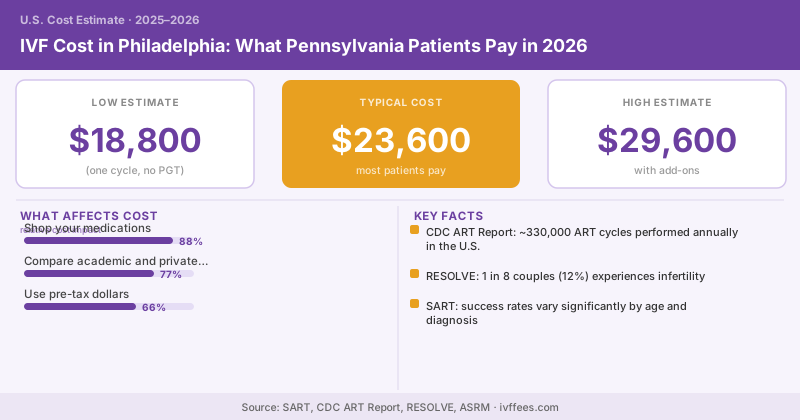
Here’s something that catches Philly couples off guard: drive 20 minutes across the Delaware River into New Jersey and you may land in a state that legally mandates IVF coverage. Stay in Pennsylvania, and you don’t. Same metro area, very different insurance rules — and for some Philadelphia-area patients, where you work and which state your insurance is based in genuinely matters.
Let’s start with the Philly number, then unpack that border quirk.
What IVF Actually Costs in Philadelphia
Base IVF procedure fees across the Philadelphia metro run $13,000 to $18,000. Add medications, monitoring, and optional genetic testing, and an uninsured first cycle typically totals $18,000 to $26,000.
| Cost Component | Low End | Typical | High End |
|---|---|---|---|
| Base IVF procedure (Philadelphia) | $13,000 | $15,500 | $18,000 |
| Fertility medications | $4,000 | $5,500 | $7,500 |
| Monitoring & labs | $1,100 | $1,600 | $2,600 |
| Anesthesia | $700 | $1,000 | $1,500 |
| PGT-A genetic testing (optional) | $4,000 | $5,500 | $8,000 |
| Frozen embryo transfer (if needed) | $3,500 | $5,000 | $7,000 |
| Total (one cycle, no PGT) | $18,800 | $23,600 | $29,600 |
Philadelphia’s cost of living sits above the national average but below New York or Boston, and that’s roughly where its IVF base fees land too — pricier than the South or Mountain West, gentler than the Northeast’s most expensive metros.
Pennsylvania Has No IVF Mandate — New Jersey Next Door Does
This is the part Philly residents really need to understand. Pennsylvania does not require insurers to cover IVF. There’s no statewide fertility mandate, so most Pennsylvania patients pay out of pocket unless their employer voluntarily provides a benefit.
New Jersey, just across the river, is a different story. New Jersey is one of the states that genuinely mandates IVF coverage for certain plans. So a couple living in South Jersey but treating at a Philadelphia clinic, or a Philly resident whose employer’s insurance is New Jersey-based, could have coverage that a neighbor across the street does not. It all comes down to which state your insurance plan is regulated under. For the full map of who mandates and who doesn’t, see the IVF insurance mandate by state overview.
Philadelphia’s large healthcare, pharma, and university employer base also means a healthy share of voluntary fertility benefits, consistent with the national employer trend RESOLVE has tracked. Between PA employer benefits and NJ-based plans, more Philly-area patients have coverage than the no-mandate label suggests.
Pennsylvania has no IVF mandate, but neighboring New Jersey does. If you live or work across the river, or your employer’s plan is NJ-regulated, you may have mandated coverage a Philadelphia neighbor lacks. Check which state your insurance plan is based in before assuming you’ll pay out of pocket.
Philadelphia’s Clinic Market
Philadelphia is a major academic medicine hub, home to several large university health systems, and its fertility market reflects that depth. The metro supports a strong mix of academic reproductive programs and well-established private clinics, with options spread across the city, the Main Line suburbs, and into South Jersey.
That academic backbone matters for complex cases — recurrent loss, donor egg IVF, and other complicated diagnoses are well served here. The metro also draws patients from across eastern Pennsylvania, Delaware, and South Jersey, giving clinics enough volume to stay competitive on price.
How to Keep Philadelphia IVF Costs Down
Figure out which state regulates your plan. This is the highest-leverage step in Philly. If your coverage runs through a New Jersey-regulated plan, you may have mandated benefits worth tens of thousands.
Shop your medications. At $4,000–$7,500, drugs are a big line item. National specialty pharmacies often beat local retail — comparing fertility medication costs saves real money.
Compare academic and private clinics. Pricing and approach vary between university programs and private practices; get itemized quotes from both.
Use pre-tax dollars. Pennsylvania has a state income tax, so HSA and FSA contributions cut both federal and state tax. Fund an HSA before your cycle.
If a gap remains, Philadelphia clinics widely offer IVF financing options.
Per SART national data, the live birth rate per egg retrieval for women under 35 is around 49% and declines with age. A single-cycle quote isn’t a single-cycle promise. Ask your Philadelphia clinic for age- and diagnosis-specific success rates and budget for the possibility of more than one round.
Frequently Asked Questions
Does Pennsylvania require insurance to cover IVF? No. Pennsylvania has no IVF mandate, so coverage depends on your employer. However, neighboring New Jersey does mandate coverage, which can matter if your plan is NJ-based. Confirm your IVF coverage for 2025.
Can Philadelphia patients get New Jersey’s mandated coverage? Possibly. If you live or work in New Jersey or your employer’s insurance is regulated by New Jersey, you may benefit from NJ’s IVF mandate even while treating at a Philly clinic. Check which state governs your plan.
How do I lower my Philadelphia IVF bill? Verify your plan’s home state, shop medications, compare academic vs. private clinics, and use HSA dollars. See how to reduce IVF cost.
Cost data based on Philadelphia-area clinic fee schedules, SART national data, RESOLVE analysis, and Pennsylvania and New Jersey insurance mandate status. Individual costs vary by clinic, protocol, and employer coverage.