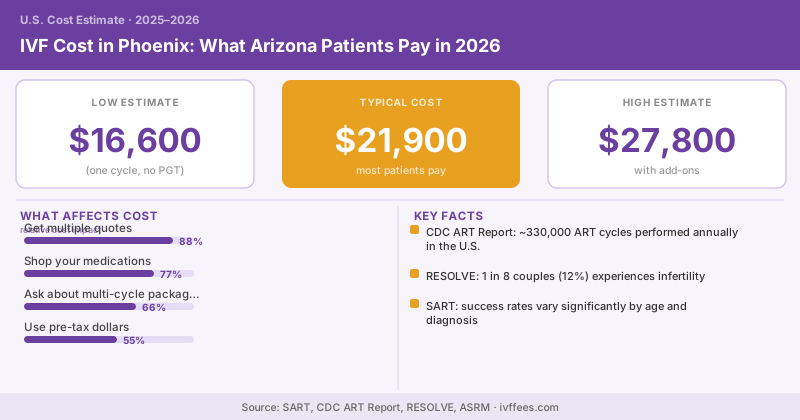
In 2010, a round of IVF in Phoenix might have run you $9,000 to $11,000. Today the base procedure starts north of $11,500 and climbs toward $16,500 — and that’s before a single vial of medication. Costs have crept up everywhere, but the Valley of the Sun has stayed more affordable than coastal markets, thanks to a steadily growing roster of clinics competing for a booming population.
If you’re starting fertility treatment in Phoenix, here’s the real math.
What IVF Actually Costs in Phoenix
Base IVF procedure fees across the Phoenix metro — including Scottsdale, Mesa, and Tempe — run $11,500 to $16,500. Once you layer in medications, monitoring, and optional genetic testing, an uninsured first cycle typically totals $16,000 to $24,000.
| Cost Component | Low End | Typical | High End |
|---|---|---|---|
| Base IVF procedure (Phoenix) | $11,500 | $14,000 | $16,500 |
| Fertility medications | $3,500 | $5,000 | $7,000 |
| Monitoring & labs | $1,000 | $1,500 | $2,500 |
| Anesthesia | $600 | $900 | $1,300 |
| PGT-A genetic testing (optional) | $3,500 | $5,000 | $7,500 |
| Frozen embryo transfer (if needed) | $3,000 | $4,500 | $6,500 |
| Total (one cycle, no PGT) | $16,600 | $21,900 | $27,800 |
Phoenix benefits from a moderate cost of living compared to West Coast metros. Arizona clinic overhead — rent, wages, lab space — runs lower than in California or Seattle, and that keeps base procedure fees more reasonable for Valley patients.
Arizona Has No IVF Insurance Mandate
Arizona does not require insurers to cover IVF. There’s no statewide fertility mandate, which means most Arizona patients pay out of pocket. That puts Arizona alongside Texas, Georgia, and Florida — states where any meaningful coverage comes from an employer’s voluntary benefits rather than state law.
Want to see how that compares to states that do mandate coverage? The IVF insurance mandate by state overview lays it out. The takeaway for Arizonans: don’t count on your insurer unless your employer has specifically added a fertility benefit.
Phoenix’s fast-growing economy has brought more national employers — and some of them import the fertility benefits they offer in California or the Northeast. RESOLVE has tracked the national rise of voluntary employer fertility coverage, and large Arizona employers in tech, healthcare, and finance are increasingly part of that wave.
Arizona has no IVF mandate, so coverage depends on your employer. The Valley’s rapid corporate growth means more large employers now offer voluntary fertility benefits — confirm with HR whether ‘infertility treatment’ is covered before assuming you’ll pay the full $16,000+.
Phoenix’s Clinic Market Is Growing Fast
Phoenix is one of the fastest-growing major metros in the country, and its fertility market has grown with it. The Valley now supports a solid cluster of clinics spread from Scottsdale to the East Valley, including both independent practices and national network locations.
That growth helps patients. More clinics mean more competition and more room to compare itemized quotes. According to CDC ART surveillance data, Arizona clinics perform thousands of cycles a year, and Phoenix accounts for the lion’s share. As a regional hub, the metro also draws patients from smaller Arizona cities and parts of New Mexico and Nevada.
How to Keep Phoenix IVF Costs Down
Get multiple quotes. Phoenix clinic prices span several thousand dollars. With a growing market, you have real leverage to compare.
Shop your medications. At $3,500–$7,000, drugs are a major line item. National specialty pharmacies often beat local retail — comparing fertility medication costs is one of the highest-payoff moves you can make.
Ask about multi-cycle packages. Several Valley clinics bundle two or three retrievals at a discount, lowering your per-cycle cost if you anticipate needing more than one round.
Use pre-tax dollars. Arizona has a state income tax, so HSA and FSA contributions cut both your federal and state tax bill. Fund an HSA before your cycle to maximize the savings.
If a gap remains, most Phoenix clinics partner with lenders for IVF financing options.
According to SART national data, the live birth rate per egg retrieval for women under 35 is roughly 49% and falls with age. One cycle isn’t a guarantee of a baby. Ask your Phoenix clinic for age- and diagnosis-specific success rates, and plan financially for the possibility of a second round.
Frequently Asked Questions
Does insurance cover IVF in Arizona? Not by law — Arizona has no IVF mandate. Coverage exists only if your employer voluntarily offers a fertility benefit, so check your plan and verify whether IVF is covered in 2025 with HR.
Is Phoenix cheaper than California for IVF? Usually, yes. Arizona’s lower cost of living keeps clinic overhead and base procedure fees below California metros. Expect to pay several thousand dollars less per cycle in the Valley.
How can I lower my Phoenix IVF costs? Compare multiple clinics, shop medications through specialty pharmacies, ask about package programs, and use HSA dollars. See how to reduce IVF cost for a full rundown.
Cost data based on Phoenix-area clinic fee schedules, CDC ART surveillance data, SART national data, RESOLVE analysis, and Arizona insurance mandate status. Individual costs vary by clinic, protocol, and employer coverage.