What does IVF actually cost when Joint Base San Antonio sits in your backyard? For the city’s large military and veteran population, the honest answer involves TRICARE eligibility rules most patients have never had to read closely — plus a fertility clinic market that runs a bit cheaper than Texas’s bigger metros.
What IVF Costs in San Antonio
| Cost Component | Low End | Typical | High End |
|---|---|---|---|
| Base IVF procedure fee | $11,000 | $14,000 | $16,500 |
| Fertility medications | $2,900 | $4,400 | $6,300 |
| Monitoring & labs | $850 | $1,350 | $2,100 |
| Anesthesia | $500 | $800 | $1,250 |
| PGT-A genetic testing (optional) | $2,900 | $4,600 | $6,900 |
| Frozen embryo transfer (if needed) | $2,700 | $4,100 | $5,900 |
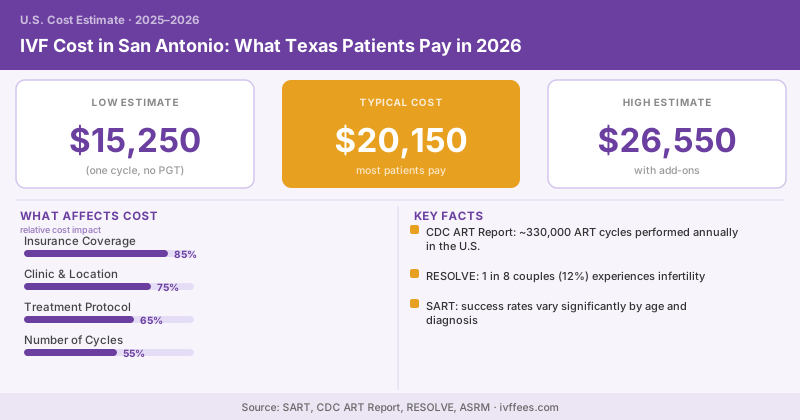
| Total (one cycle, no PGT) | $15,250 | $20,150 | $26,550 |
San Antonio pricing runs somewhat below Houston and Dallas, part of why some patients from smaller South Texas communities travel here rather than to the state’s larger metros.
Texas Has No Mandate — And an Older Coverage-Offer Law
Texas does not require insurers to cover IVF directly. The state does have an older law requiring certain group health plans to offer infertility treatment coverage, including IVF, as an option to employers — but employers are not required to actually purchase that coverage for their employees, which means the practical effect on most patients is limited. Most San Antonio patients should assume they’re paying out-of-pocket unless they’ve confirmed otherwise with their specific plan.
TRICARE and Military Family Considerations
San Antonio is home to one of the largest concentrations of military installations in the country, including Joint Base San Antonio, and a substantial share of the local population has TRICARE coverage. TRICARE’s fertility treatment coverage is notably limited: standard IVF for general infertility generally isn’t covered, but service members with documented combat-related or service-connected infertility injuries may qualify for coverage of IVF and related procedures under a narrower benefit category, sometimes described as the Assisted Reproductive Technology (ART) benefit for eligible active-duty service members.
Don’t assume TRICARE won’t cover any part of your treatment without checking your specific eligibility category first. Combat-related infertility injuries can open access to a meaningfully different coverage tier than standard TRICARE infertility benefits. Contact TRICARE directly or work with your base’s family support services to confirm your category before budgeting your full cycle as entirely out-of-pocket.
San Antonio-Area Fertility Clinics
- San Antonio Fertility Center — established local practice serving the broader South Texas region
- Alamo Fertility & Reproductive Medicine — independent San Antonio program
- University Health/UT Health San Antonio fertility services — academic-affiliated option
San Antonio’s clinic market is smaller than Houston’s or Dallas’s, so patients with complex diagnoses sometimes travel to those larger metros for specialized care, while more routine cases are well-served locally.
Reducing IVF Costs in San Antonio
Military families should start with a direct TRICARE eligibility check before assuming full self-pay. Beyond that, standard national strategies apply: compare specialty pharmacy pricing, check IVF grants (several specifically prioritize military families and veterans), and request itemized quotes from at least two local clinics before committing.
Don’t rely on general information about TRICARE and IVF found online without confirming with an official TRICARE representative or your base’s military family life counselor. Eligibility categories and covered services have changed over time, and getting this wrong can mean an unexpected five-figure bill.
The Bottom Line
San Antonio IVF runs roughly $15,250–$26,550 all-in for most uninsured patients, below Texas’s larger metros, with Texas offering no state insurance mandate. Military families should confirm their specific TRICARE eligibility category directly before assuming they’re entirely self-pay, since combat-related infertility injuries can open a meaningfully different coverage path.