The $18,000 first-cycle quote a Seattle clinic just handed you isn’t a typo, and it isn’t gouging. It’s what fertility care costs in one of the most expensive metro areas in the country. Seattle’s tech salaries pull everything upward — rent, groceries, and yes, the price of a single round of IVF.
The good news? Seattle tech workers also tend to have unusually generous fertility benefits. Whether you pay full freight or almost nothing comes down to who signs your paycheck.
What IVF Actually Costs in Seattle
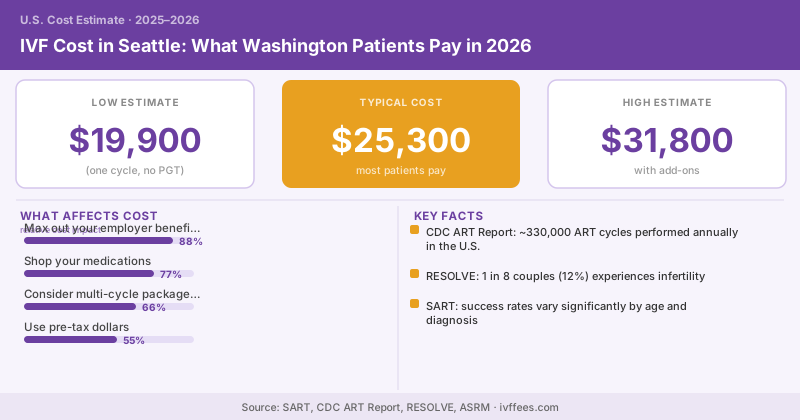
Base IVF procedure fees in the Seattle metro run $14,000 to $20,000 before you add anything. Medications, monitoring, and genetic testing stack on top. An all-in first cycle for an uninsured Seattle patient typically lands between $19,000 and $30,000.
| Cost Component | Low End | Typical | High End |
|---|---|---|---|
| Base IVF procedure (Seattle) | $14,000 | $17,000 | $20,000 |
| Fertility medications | $4,000 | $5,500 | $7,500 |
| Monitoring & labs | $1,200 | $1,800 | $2,800 |
| Anesthesia | $700 | $1,000 | $1,500 |
| PGT-A genetic testing (optional) | $4,000 | $5,500 | $8,000 |
| Frozen embryo transfer (if needed) | $3,500 | $5,000 | $7,000 |
| Total (one cycle, no PGT) | $19,900 | $25,300 | $31,800 |
Seattle’s prices sit above the national average partly because of cost of living. According to data published by the Council for Community and Economic Research, the Seattle metro consistently ranks among the priciest large U.S. cities. Clinic overhead — staff wages, lab space, downtown rents — gets baked into what you pay.
Washington Has No IVF Mandate — But Tech Benefits Fill the Gap
Here’s the part that surprises a lot of people. Washington State does not require insurers to cover IVF. There’s no statewide fertility mandate, unlike states such as New York and New Jersey. So on paper, most Washington residents are on their own.
In practice, Seattle is different. Amazon, Microsoft, Starbucks, and dozens of mid-size tech firms have voluntarily added fertility benefits that often cover $20,000 or more in treatment plus medication. RESOLVE, the national infertility association, has tracked the steady expansion of voluntary employer fertility benefits, and the Seattle tech corridor is squarely at the leading edge of that trend.
Washington has no state IVF mandate, but Seattle’s tech employers often provide $20,000+ in voluntary fertility coverage. Before you assume you’re paying out of pocket, ask your HR team specifically about ‘fertility’ or ‘infertility treatment’ benefits — many workers don’t realize they’re covered until they ask.
Seattle’s Clinic Market
Seattle has a relatively dense fertility market for its size, which helps competition. You’ll find established programs across the metro — from downtown Seattle to the Eastside (Bellevue, Kirkland) where many tech workers live, plus options in Tacoma to the south. Academic care is available through the University of Washington’s reproductive program, which tends to handle complex cases and research participation.
That density matters. More clinics competing for the same well-paid patient base means pricing stays somewhat in check, and patients have room to compare. If you want to learn why IVF is so expensive in the first place, clinic overhead and lab technology are the biggest drivers — and Seattle has plenty of both.
How to Keep Seattle IVF Costs Down
Max out your employer benefit first. If you work for a large Seattle employer, the difference between using your benefit and not could be $20,000 per cycle. This is the single biggest lever you have.
Shop your medications. Fertility drugs are $4,000–$7,500 in Seattle, and prices vary a lot by pharmacy. National specialty pharmacies often undercut local retail. If you’re paying out of pocket, comparing fertility medication costs across pharmacies can save four figures.
Consider multi-cycle packages. Several Seattle clinics offer bundled pricing for two or three retrievals, which lowers the per-cycle cost if you expect to need more than one round.
Use pre-tax dollars. Washington has no state income tax, so the HSA/FSA benefit here is federal-only — still worth it. Maxing an HSA before your cycle shields thousands from federal tax.
If none of that closes the gap, look into IVF financing options, which many Seattle clinics offer through third-party lenders.
According to SART’s national data, the live birth rate per egg retrieval for women under 35 is roughly 49%, and it drops sharply with age. Budget for the real possibility of needing more than one cycle. A clinic that quotes a single-cycle price isn’t promising a single-cycle outcome — ask for age-specific success rates before you commit.
Frequently Asked Questions
Does insurance cover IVF in Seattle? Not by law — Washington has no IVF mandate. But many large Seattle employers voluntarily cover fertility treatment. Check your specific plan and whether you can confirm IVF coverage for 2025 through your HR department before paying out of pocket.
Why is IVF more expensive in Seattle than the national average? Cost of living. Seattle ranks among the most expensive large metros in the U.S., and clinic overhead — wages, lab space, rent — gets passed to patients. The base procedure runs a few thousand dollars above the national median.
Can I lower my Seattle IVF bill if I have no coverage? Yes. Compare clinics across the metro, shop your medications through specialty pharmacies, ask about multi-cycle packages, and use HSA dollars. For more, see how to reduce IVF cost.
Cost data based on Seattle-area clinic fee schedules, SART national data, RESOLVE benefit analysis, and Washington State insurance mandate status. Individual costs vary by clinic, protocol, and employer coverage.