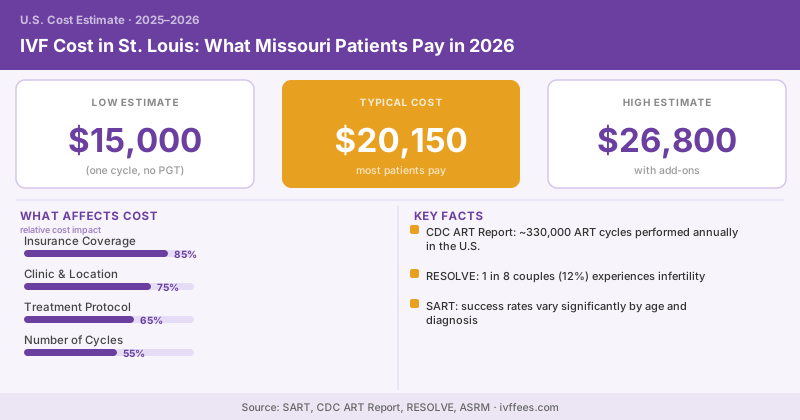
Why does a single Midwestern metro have one of the country’s most research-heavy fertility programs alongside some of the more affordable base pricing? St. Louis owes that combination to Washington University’s academic medical center, which has quietly built a national reputation without national-market pricing to match.
What IVF Costs in St. Louis
| Cost Component | Low End | Typical | High End |
|---|---|---|---|
| Base IVF procedure fee | $11,000 | $13,800 | $16,400 |
| Fertility medications | $2,800 | $4,300 | $6,200 |
| Monitoring & labs | $800 | $1,300 | $2,000 |
| Anesthesia | $500 | $750 | $1,200 |
| PGT-A genetic testing (optional) | $2,900 | $4,500 | $6,800 |
| Frozen embryo transfer (if needed) | $2,700 | $4,000 | $5,800 |
| Total (one cycle, no PGT) | $15,000 | $20,150 | $26,800 |
St. Louis pricing runs close to Kansas City and other Midwest metros, well below coastal averages.
No State Mandate — Missouri’s Employer-Dependent Landscape
Missouri has no law requiring insurers to cover IVF, so St. Louis patients, like those in Kansas City, depend entirely on their specific employer’s plan. St. Louis’s economy includes major employers like BJC HealthCare, Washington University itself, Boeing’s large regional operations, and several other Fortune 500 companies headquartered in the metro. Larger employers here, particularly in healthcare and aerospace, have in some cases added fertility benefits as part of broader efforts to remain competitive for skilled talent.
BJC HealthCare and Washington University, two of the region’s largest employers, have periodically updated employee health benefits, sometimes including fertility-related coverage for eligible staff. If you work for either institution or an affiliated practice, confirm your specific plan’s current benefits directly with HR.
St. Louis-Area Fertility Clinics
- Washington University Physicians Reproductive Endocrinology and Infertility — nationally recognized academic program with strong research infrastructure
- Sher Institute for Reproductive Medicine (St. Louis) — part of a multi-city national network
- Fertility clinics affiliated with Mercy and SSM Health — regional hospital-system options
Washington University’s academic program is frequently the first stop for St. Louis-area patients with complex diagnoses, given its research ties and typically strong SART-reported outcomes, though independent and network options provide real alternatives for more routine cases.
St. Louis as a Regional Fertility Hub
St. Louis draws patients from across Missouri, southern Illinois, and parts of Kentucky and Arkansas who don’t have local fertility specialists, similar to the regional role played by Kansas City on the other side of the state. The metro’s central Midwest location and major airport hub status make it a practical destination for regional travel.
Reducing IVF Costs in St. Louis
St. Louis already prices below the national average, so further savings come from standard strategies: compare specialty pharmacy pricing for medications, check IVF grants, and request itemized quotes from both the Washington University academic program and independent network practices before committing.
Don’t assume Washington University’s academic reputation automatically means it’s the right or most affordable fit for every patient. For routine cases without complex diagnoses, an independent or network clinic may offer comparable outcomes at a lower price — compare SART-reported, age-matched data across all your options before deciding.
The Bottom Line
St. Louis IVF runs roughly $15,000–$26,800 all-in for most uninsured patients, below the national average, with Washington University’s academic program offering a strong option for complex cases. Check large regional employer benefits, and compare academic, network, and independent clinics before choosing.