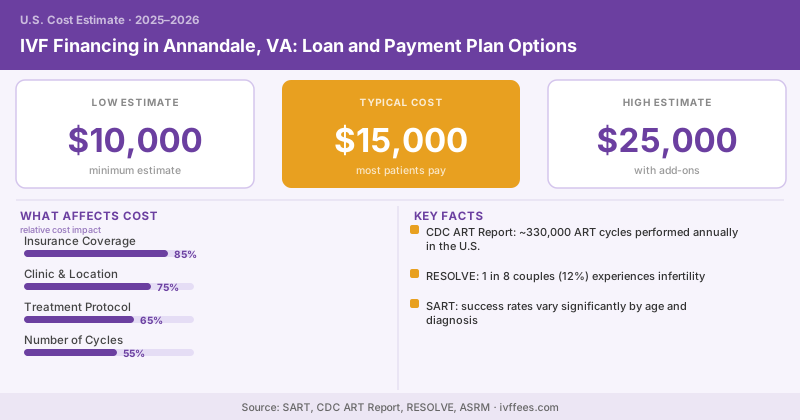
Ryan and Priya’s Fairfax clinic quoted $22,000 for a single IVF cycle — then handed them a stack of financing brochures before they’d even left the building. That’s the reality for a lot of Northern Virginia patients: the medical plan comes fast, but figuring out how to actually pay for it takes its own homework.
If you’re commuting from Annandale for treatment, here’s a realistic look at your financing options and what each one actually costs you over time.
Financing Options and What They Cost
| Financing Option | Typical APR | Term Length | Best For |
|---|---|---|---|
| Clinic in-house payment plan | 0%–8% | 6–24 months | Patients with strong credit, shorter terms |
| Medical lender (Sunfish, CapEx MD) | 6%–18% | 12–60 months | Larger loan amounts, flexible terms |
| CareCredit medical credit card | 0% promo / 26.99% standard | 6–24 months | Smaller balances, promo period discipline |
| Multi-cycle refund package | N/A (bundled price) | Per package | Patients likely to need 2+ cycles |
The 0% promotional offers — whether through a clinic’s in-house plan or a card like CareCredit — are only genuinely free if you pay the full balance before the promotional period ends. Miss that deadline and many of these plans apply retroactive interest on the entire original balance, not just the remaining amount, which can turn a “free” loan into an expensive one overnight.
Virginia Has No IVF Insurance Mandate
Unlike Maryland, which requires many insurers to cover a portion of infertility treatment, and DC, which has its own coverage requirements, Virginia currently has no state mandate requiring insurance companies to cover IVF. This puts most Annandale-area patients in a similar position to much of the country: paying out of pocket unless their specific employer has voluntarily added fertility benefits, which has become more common among larger federal contractors and consulting firms in Northern Virginia but is far from universal.
Some Annandale-area residents work for employers headquartered in Maryland or DC, where different insurance mandates may apply depending on how the plan is structured and where it’s regulated. It’s worth asking your HR benefits team directly whether your specific plan includes any fertility coverage — don’t assume Virginia’s lack of a mandate automatically means no coverage exists.
Multi-Cycle Packages: Do the Math First
Many DC-metro clinics offer bundled packages — for example, three IVF cycles for a set price with a partial refund if you conceive early. These can make financial sense if your RE believes, based on your age, diagnosis, and ovarian reserve, that you’re statistically likely to need more than one attempt. According to figures often cited from SART’s national data, live birth rates per cycle decline notably with age, particularly after 38 — a factor your RE should walk through with you when discussing whether a package or per-cycle payment makes more sense for your situation.
Read the fine print on any 0% promotional financing extremely carefully before signing. Many of these plans use deferred-interest structures where missing the payoff deadline by even one billing cycle triggers interest charged retroactively on the full original balance — not just what’s left owing. Set a calendar reminder well before the promotional period ends, not on the actual due date.
Stacking Financing With Other Cost Reductions
Financing shouldn’t be your only lever. Ask your clinic about compassionate care discounts, check whether your employer offers any fertility benefit stipend even without full insurance coverage, and compare specialty pharmacy pricing for medications separately from your loan — medication costs are sometimes financed separately and shopping them around can meaningfully reduce your total borrowed amount.
The Bottom Line
Annandale-area patients have the same core financing menu as most of the DC metro: clinic payment plans, third-party medical lenders, credit cards, and multi-cycle packages. Virginia’s lack of an insurance mandate makes financing a bigger part of the equation than it would be in Maryland or DC, so compare actual APRs and terms across at least two lenders before committing, and always ask your specific employer about fertility benefits before assuming you have none.