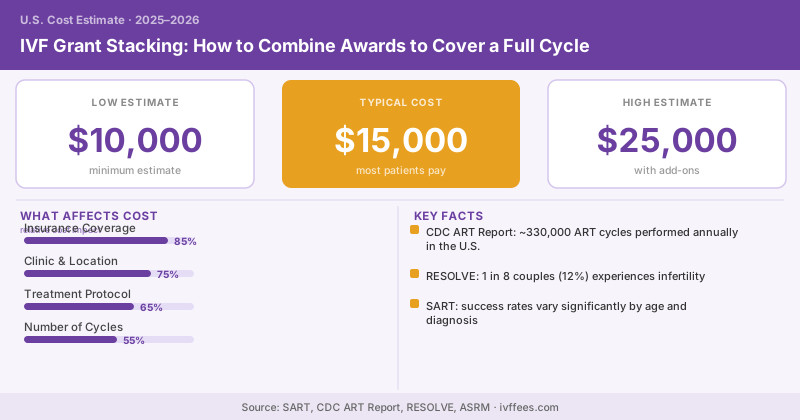
One grant rarely covers a whole IVF cycle. Stack two or three, though, and you can chip a $15,000–$20,000 bill down to nearly nothing — without borrowing a dime. Most patients apply to a single program, get a partial award, and assume that’s the ceiling. The patients who fund treatment debt-free are the ones who treat grant-hunting like a part-time job and layer awards strategically.
Here’s how grant stacking actually works.
Why one grant is rarely enough
Individual fertility grants typically award $2,000–$15,000 — meaningful, but often short of a full cycle. RESOLVE: The National Infertility Association lists dozens of programs, and ASRM notes the heavy out-of-pocket burden most patients carry since fewer than a quarter of large employers covered IVF in Mercer’s 2024 survey. The fix isn’t a bigger single grant; it’s combining several smaller ones plus discounts.
| Stacked source | Typical contribution | Notes |
|---|---|---|
| National fertility grant | $2,000–$15,000 | Competitive, essay-based |
| Regional/state grant | $1,000–$10,000 | Smaller applicant pool |
| Diagnosis-specific grant | $2,000–$10,000 | Cancer, military, faith-based |
| Medication assistance | 25%–75% off meds | Stacks on top |
| Clinic discount | 5%–15% off cycle | Ask financial counselor |
The stacking strategy
1. Cast a wide net. Apply to every grant you’re eligible for in the same season — national, regional, and diagnosis-specific. More applications means more chances and more potential awards to combine. Start with our grant programs guide for the master list.
2. Layer different types. A national grant for the procedure, a medication-assistance program for drugs, and a clinic discount on the base fee don’t compete with each other. They each attack a different slice of the bill.
3. Reuse your materials. Most applications want the same things: a medical-necessity letter, financial documents, and a personal essay. Build them once, tailor lightly, and reapply fast.
Read each grant’s rules on combining awards. A few programs prohibit stacking or require you to disclose other awards, and some reduce their grant if you receive others. Most allow stacking, but never assume — disclose honestly, because hiding awards can disqualify you entirely.
Timing and deadlines matter
Grant cycles open and close on fixed dates, and many award only a few times a year. Build a calendar of every program’s deadline, because missing one by a day means waiting months. Have your essay and documents ready before applications open so you can submit the moment they do.
No single grant covers a full IVF cycle, but stacking 2-3 awards plus medication assistance and a clinic discount can cover $10,000–$20,000 with little or no debt. Apply broadly in one season, layer grants that target different parts of the bill, and always confirm each program allows stacking.
Fill the remaining gap
Even great stacking may leave a balance. For that, use tax-advantaged dollars (an HSA or FSA), check what your insurance covers, and apply the tactics in how to reduce IVF cost. If a balance remains, weigh a refund program to cap your downside or compare financing options for the smallest possible loan. The goal: borrow as little as possible after grants do the heavy lifting.
Frequently Asked Questions
Can I really receive more than one fertility grant? Yes, most programs allow it as long as you disclose other awards honestly. Stacking is a legitimate, common strategy. A minority of grants prohibit combining or reduce their award if you’ve received others, so always read each program’s rules before applying.
How long does the grant application process take? Plan for months. Many grants award only a few times per year, applications take time to assemble, and review periods can run weeks. Start early, build your documents in advance, and don’t count on grant money for a cycle you need next month.
What documents do I need to apply for fertility grants? Most programs want a medical-necessity letter from your reproductive endocrinologist, financial documents (tax returns, pay stubs) proving need, and a personal essay. Prepare these once and reuse them across applications to apply to many grants quickly in the same season.