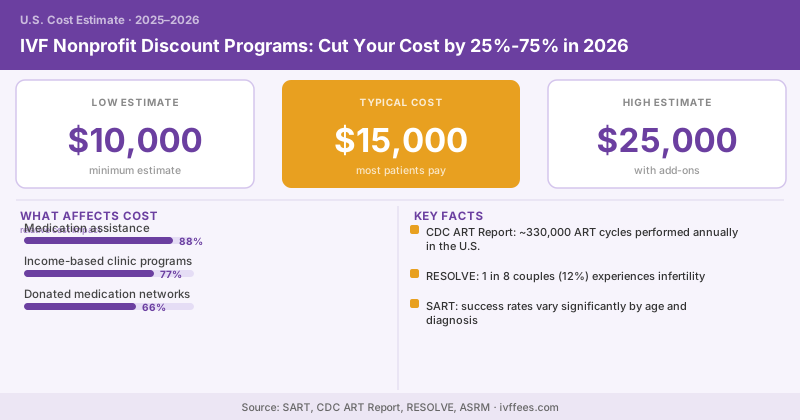
A $20,000 cycle dropping to $6,000 isn’t a fantasy — it’s what some nonprofit discount programs actually deliver. These programs aren’t grants you “win.” They’re standing arrangements between fertility clinics, nonprofits, and drug makers that quietly slash prices for patients who qualify, usually based on income.
Hardly anyone knows they exist. Let’s fix that.
How nonprofit discount programs differ from grants
A grant is a one-time award you apply and compete for. A discount program is more like a sliding-scale clinic or a partner network that offers reduced rates to anyone meeting the criteria — no lottery, no essay. Some are run by nonprofits that partner with specific clinics; others are pharmaceutical patient-assistance programs that cut medication costs by 25%–75%.
RESOLVE: The National Infertility Association catalogs many of these, and with fewer than a quarter of large employers offering IVF coverage per Mercer’s 2024 survey, demand for them keeps growing.
| Program type | Discount | What it covers |
|---|---|---|
| Income-based clinic program | 25%–75% off cycle | Procedure + lab |
| Pharma patient assistance | 25%–75% off meds | Stimulation drugs |
| Nonprofit clinic partnership | Reduced flat rate | Full cycle |
| Donated-meds program | Free / deeply discounted | Leftover medications |
The big categories
Medication assistance. Drug makers like those behind Gonal-f, Follistim, and Menopur run patient-assistance programs that can cut medication bills dramatically based on income. Since meds add $3,000–$7,000 to a cycle, this alone is huge. See our notes on why IVF medication is so expensive for context.
Income-based clinic programs. Some clinics and academic centers offer sliding-scale or reduced-fee IVF for lower-income patients. You apply, document income, and pay a fraction of standard rates.
Donated medication networks. Programs that collect unused, unexpired fertility drugs and redistribute them to patients in need — sometimes free.
Income limits are strict and vary by program. Some cap eligibility around 400% of the federal poverty level; others are tighter. Gather tax returns and pay stubs before applying, and don’t assume you earn too much to qualify — many programs have surprisingly generous thresholds.
How to find legitimate programs
Ask your clinic’s financial counselor directly — they often know which nonprofit partnerships and pharma programs you can tap. Check the manufacturer’s website for each medication you’re prescribed. And browse RESOLVE’s resource lists. Avoid any “program” that charges an upfront fee to “match” you with discounts; legitimate assistance never costs money to access.
Nonprofit and pharma discount programs can cut IVF costs 25%-75% based on income — no competitive application required. Start with medication patient-assistance programs (the easiest savings), ask your clinic about income-based pricing, and stack these with grants for maximum impact.
Stack everything
The smartest patients layer programs: a discount on the cycle, a pharma program for meds, and a grant on top. Combine that with the tactics in how to reduce IVF cost, and a full-price $20,000+ cycle can shrink to a manageable number. For whatever’s left, weigh your financing options against a refund program.
Who qualifies
- Lower- to middle-income patients (limits vary, often up to ~400% of poverty level)
- The uninsured or underinsured — check your coverage first
- Anyone prescribed brand-name fertility medications
Frequently Asked Questions
Do I have to be low-income to use a discount program? Not always. Medication patient-assistance programs and some clinic partnerships have generous income ceilings — sometimes around 400% of the federal poverty level, which covers many middle-income families. Always check the specific limit before assuming you earn too much.
Can I combine a discount program with a grant? Yes, and you should. Discounts and grants serve different parts of the bill. A pharma program might handle meds, a clinic discount the procedure, and a grant the remainder. Layering them is the single most effective way to lower out-of-pocket IVF costs.
How do I get free donated fertility medications? A few nonprofits run donated-medication networks that collect unused, unexpired drugs and redistribute them. Ask your clinic and search RESOLVE’s resources. Availability is unpredictable, so it’s a bonus, not a guaranteed plan — but it can save thousands when it works out.