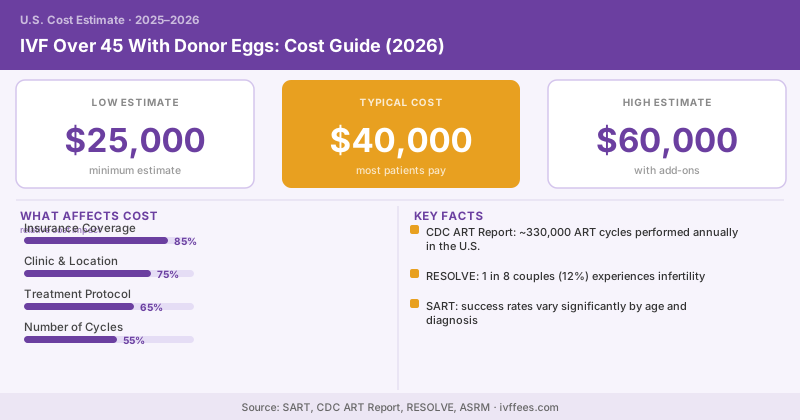
Here’s a number that reframes everything: by age 45, the live birth rate per IVF cycle using a woman’s own eggs is often under 2%, according to SART’s national reporting. That single statistic is why nearly every fertility specialist steers patients over 45 toward donor eggs. A donor-egg cycle costs $25,000 to $45,000—more than a standard cycle—but the odds are dramatically better, which often makes it the cheaper route to an actual baby. Let’s run the numbers.
Why Own-Egg IVF Rarely Makes Sense After 45
Egg quality, not uterine readiness, is the wall most women hit after 45. The uterus can usually carry a pregnancy well into the late 40s and beyond with hormonal support, but egg quality declines steeply. That’s the whole logic of donor eggs: keep your body as the carrier, but use eggs from a donor in her 20s.
| Donor Egg Option | Typical Cost |
|---|---|
| Fresh donor egg cycle | $30,000–$45,000 |
| Frozen donor egg cycle | $18,000–$30,000 |
| Frozen embryo transfer | $3,000–$6,000 |
| Recipient medications | $1,500–$4,000 |
Frozen donor eggs are usually cheaper and faster than a fresh cycle because you’re buying a set number of already-banked eggs. Fresh cycles cost more but can yield more eggs and embryos. Our donor egg IVF cost guide compares both in depth.
The Cost-Per-Baby Comparison
This is the math that matters. Spending $20,000 on an own-egg cycle at 46 with a ~2% success rate is, statistically, an expensive long shot. Spending $35,000 on a donor-egg cycle with a 45–55% success rate per transfer is a far better value per live birth—even though the sticker is higher.
After 45, donor-egg IVF usually wins on cost-per-baby despite its higher upfront price. Donor-egg success rates stay in the 45–55% range per transfer regardless of your age, because the eggs come from young donors. One donor cycle often costs less than several failed own-egg cycles combined.
See how the odds shift across ages in our IVF success rates by age guide, and the baseline cycle costs in the main IVF cost breakdown.
What Drives the Price
Fresh vs. frozen is the biggest lever. Beyond that: donor compensation (higher for proven or in-demand donors), agency fees, whether you do PGT-A on the resulting embryos, and how many transfers you need. Recipient medications to prep your uterine lining add a modest amount.
Some clinics impose age limits for embryo transfer—commonly 50 to 55—and require cardiac and maternal-health screening for older recipients. Pregnancy after 45 carries elevated risks of hypertension, gestational diabetes, and preterm birth. Get a full medical clearance before spending on a cycle, because a clinic can decline to transfer if screening turns up concerns.
Frozen Donor Eggs: The Budget Route
If cost is the priority, frozen donor eggs from an egg bank are the most economical donor path. You buy a guaranteed number of mature eggs (often 6–8), they’re shipped to your clinic, thawed, and fertilized. Total cost frequently lands $10,000–$15,000 below a fresh cycle. For financing any of these routes, IVF financing options covers loans and multi-cycle plans.
Frequently Asked Questions
Can I get pregnant over 45 with my own eggs? It’s possible but uncommon. SART data shows live birth rates per cycle with own eggs fall below a few percent by the mid-40s. Most clinics will discuss your specific ovarian reserve, but donor eggs are the route the vast majority of women over 45 ultimately choose.
Why are donor-egg success rates so high regardless of my age? Because the limiting factor in older patients is egg quality, not the uterus. Donor eggs come from women in their 20s, so embryo quality is excellent. Your uterus, supported with hormones, can typically carry a healthy pregnancy well into your late 40s.
Is a fresh or frozen donor egg cycle better value? Frozen is usually cheaper and faster, often $10,000–$15,000 less than fresh. Fresh cycles can produce more eggs and embryos, which may matter if you want multiple children or extra embryos to bank. For a single child on a budget, frozen donor eggs are typically the smarter spend.