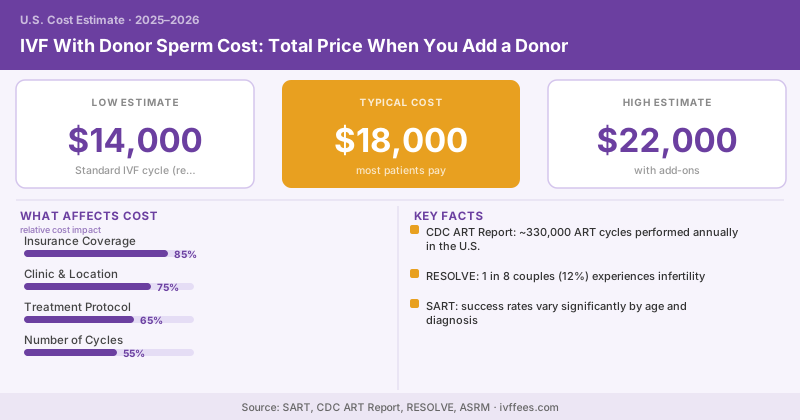
Add $1,000 to $2,400 in vials and shipping, and that’s roughly what donor sperm tacks onto a standard IVF cycle — a comparatively modest addition to what’s already a major expense.
The Full Cost Breakdown
| Cost Component | Low End | Typical | High End |
|---|---|---|---|
| Standard IVF cycle (retrieval + transfer) | $14,000 | $18,000 | $22,000 |
| Donor sperm vial(s), shipping, handling | $1,150 | $1,700 | $2,400 |
| Stimulation medications | $3,500 | $5,000 | $7,000 |
| Total | $18,650 | $24,700 | $31,400 |
Compared to the overall IVF cycle cost, donor sperm is a relatively small percentage addition — the retrieval, lab fees, and medications remain the dominant cost drivers whether you’re using a partner’s sperm or a donor’s.
Why Choose IVF Over IUI With Donor Sperm
Many patients using donor sperm start with IUI rather than IVF, since it’s dramatically cheaper — typically $1,500 to $3,500 per cycle versus $18,000-plus for IVF. Patients move to IVF with donor sperm when additional factors are in play: age-related fertility decline (particularly for patients over 37-38), diagnosed tubal factor infertility, a desire for PGT-A testing on resulting embryos, or after several unsuccessful IUI attempts with donor sperm haven’t resulted in pregnancy.
Buying Enough Vials for Sibling Plans
If you’re using a specific donor and might want a genetic sibling for a future child, purchasing and reserving multiple vials from the same donor at the outset is worth strong consideration. Donor inventory from any specific individual is finite and can sell out, sometimes within just a few years, particularly for popular or “ID release” donors who agree to be identifiable to resulting children once they turn 18.
Since a single IVF cycle typically only requires one vial for fertilization, it’s tempting to buy just what you need for the current cycle. But if sibling plans are even a possibility, reserving 2-3 additional vials from the same donor at your first purchase protects against that donor’s inventory selling out before you’re ready for a second child.
How Donor Sperm Interacts With IVF Lab Procedures
Once your donor sperm vial arrives and is verified by your clinic, it’s typically prepared using standard sperm washing techniques before being used to fertilize your (or a donor’s) retrieved eggs, either through conventional insemination or ICSI depending on sperm quality and your clinic’s protocol. Donor sperm generally has excellent, verified quality metrics due to the rigorous screening banks perform before releasing it for sale, which is one advantage over some cases of male factor infertility where sperm quality is a variable and ongoing concern.
Confirm with your clinic well before your retrieval date that your donor sperm vial has arrived, been verified, and is properly stored — shipping delays or errors happen, and discovering a problem on retrieval day, when eggs are ready for fertilization, leaves no room for a fix. Build in at least a few days’ buffer between expected vial arrival and your scheduled retrieval.
Legal Considerations Alongside the Cost
Using donor sperm, particularly from a known or directed donor rather than an anonymous bank donor, typically requires a legal agreement clarifying parental rights before proceeding — most clinics and reproductive attorneys strongly recommend this regardless of the donor relationship, to prevent future custody or parental rights disputes. Factor a modest legal consultation fee into your budget if you’re using anything other than a standard anonymous bank donor.
The Bottom Line
Budget $18,000 to $31,000 for a full IVF cycle using donor sperm, with the donor sperm itself representing a relatively small slice of that total. If cost is the primary concern and you don’t have additional fertility complications, ask your RE whether IUI with donor sperm is a reasonable and much cheaper first step before committing to a full IVF cycle.