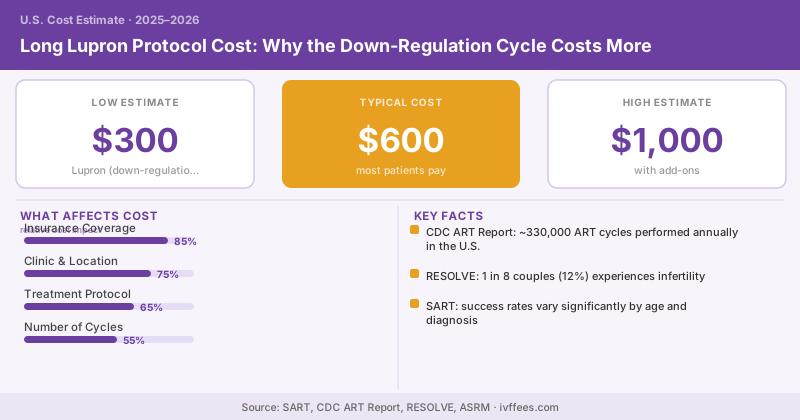
What does the “long protocol” actually cost — and why does it tend to run higher than the short antagonist cycle? The answer comes down to one thing: time on medication. The long Lupron protocol starts suppressing your hormones weeks before stimulation even begins, and every one of those extra days is a drug you’re paying for.
If your clinic put you on this protocol, here’s the real cost picture.
What the Long Protocol Includes
You start Lupron (leuprolide) in the luteal phase of the cycle before your stimulation cycle. That down-regulates your pituitary so your RE has tight control. Then you begin gonadotropins, continue Lupron at a lower dose, and finish with a trigger.
| Medication | Role | Low End | Typical | High End |
|---|---|---|---|---|
| Lupron (down-regulation phase) | 2–4 weeks suppression | $300 | $600 | $1,000 |
| Gonadotropins (Follistim/Gonal-F/Menopur) | Stimulation, 10–14 days | $2,500 | $4,000 | $5,500 |
| Trigger (Ovidrel or hCG) | Final maturation | $90 | $160 | $250 |
| Long Lupron protocol total | Per cycle | $3,500 | $5,200 | $7,000 |
That Lupron down-regulation phase is the cost difference. It’s weeks of an extra drug that the antagonist protocol simply doesn’t use.
Why It Costs More
The math is straightforward. You’re on Lupron for an extra two to four weeks before stimulation, and you often run a slightly longer, higher-dose stimulation phase too. More days of medication, bigger bill. For a side-by-side, our antagonist protocol cost guide shows the shorter alternative.
So why use it at all? For some patients — those with a history of premature ovulation, certain endometriosis cases, or strong responders who need tight control — the long protocol produces better, more predictable results. The extra cost can be worth a better outcome. A 2023 fertility literature review noted the long agonist protocol still performs comparably or better in selected patient groups, which is why it remains in use despite the higher drug load. For the suppression drug itself, see our Lupron IVF cost guide.
The long Lupron protocol typically costs $500–$1,500 more in medications than an antagonist cycle, mostly from weeks of added suppression. It’s chosen for patient-specific reasons, not as a default — so ask your RE why it’s right for you before assuming the higher cost is unavoidable.
What Pushes Your Cost Up or Down
Beyond the protocol itself, your bill depends on your gonadotropin dose (the biggest factor), how long you stimulate, and whether your clinic uses Menopur alongside recombinant FSH. The Lupron portion is the smaller add-on; the injectables are still the bulk of the total.
Don’t reduce or skip Lupron doses to cut costs during the suppression phase. Incomplete down-regulation can lead to a canceled cycle or poor synchronization — meaning thousands in wasted gonadotropins. The suppression phase is cheap insurance for the expensive part that follows.
Saving Where You Can
Your best savings are on the gonadotropins, since they dominate the cost. Compare two or more specialty pharmacies, ask about returning unopened vials, and check manufacturer help through fertility drug assistance programs. ASRM patient surveys have repeatedly shown medications are a heavy out-of-pocket burden for IVF patients, so shopping the big-ticket drugs matters most.
For the full medication menu, see fertility medications cost, and for broader budget tactics, how to reduce IVF cost.
Frequently Asked Questions
Why does the long Lupron protocol cost more than the antagonist protocol? Because it adds two to four weeks of Lupron suppression before stimulation begins. Those extra medication days, plus often a longer stimulation phase, push the total $500–$1,500 higher on average.
If it costs more, why would my clinic choose it? For patient-specific reasons — a history of premature ovulation, certain endometriosis cases, or strong responders who benefit from tighter control. In those cases the better outcome can justify the added cost.
How much of the cost is the Lupron itself? Usually $300–$1,000 for the down-regulation phase. That’s the smaller piece — the gonadotropins remain the bulk of the bill at $2,500–$5,500.