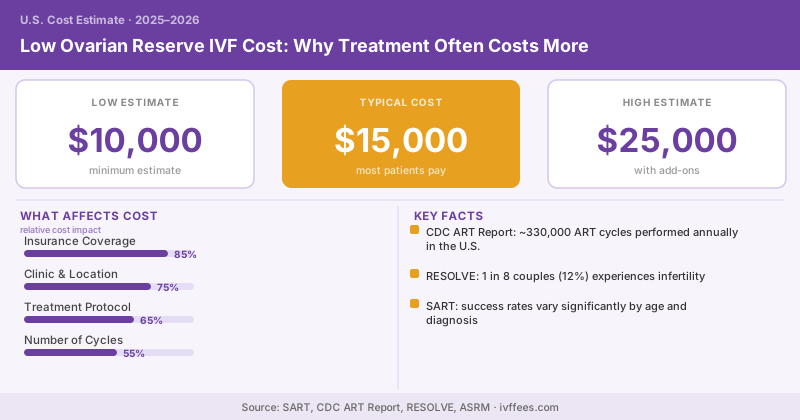
An AMH under 1.0 ng/mL doesn’t just change your odds — it usually changes your bill too, in ways that surprise a lot of patients hearing “low ovarian reserve” for the first time.
Why the Cost Runs Higher
| Cost Component | Normal Reserve | Low Ovarian Reserve |
|---|---|---|
| Stimulation medications (per cycle) | $3,500 – $5,000 | $6,000 – $10,000 |
| Base cycle (retrieval + transfer) | $14,000 – $20,000 | $14,000 – $20,000 |
| Expected cycles to bank viable embryos | 1 | 2 – 3 |
| Total realistic budget | $17,500 – $25,000 | $34,000 – $60,000+ |
The base clinical fees for retrieval and transfer don’t change based on ovarian reserve — the cost difference comes almost entirely from higher medication doses per cycle and the increased likelihood of needing multiple cycles to bank enough viable embryos.
Why Medication Doses (and Costs) Go Up
Patients with low ovarian reserve typically respond less robustly to standard stimulation doses, producing fewer follicles per cycle. REs frequently respond by increasing gonadotropin doses in an attempt to recruit more follicles, which directly drives up the medication cost since these drugs are priced per unit and higher doses simply require more medication purchased through a specialty pharmacy. Even with higher doses, egg yield often remains lower than for patients with normal reserve — a frustrating reality that doesn’t always track with the added medication expense.
Before starting a high-dose stimulation protocol, ask your RE for a realistic expected egg yield based on your specific AMH, antral follicle count, and age — not just a general statistic. This helps set expectations about whether one cycle is likely to be enough or whether you should budget upfront for the strong possibility of needing a second or third cycle to reach a viable embryo count.
AMH Is a Data Point, Not the Whole Picture
Most US labs flag an AMH below 1.0 ng/mL as low or diminished ovarian reserve, with under 0.5 ng/mL considered very low. But AMH alone doesn’t tell the full story — your RE combines it with antral follicle count (visible on ultrasound), FSH level, and your age to build a fuller picture of expected response and to plan your specific stimulation protocol. Two patients with an identical AMH can have meaningfully different treatment plans and cost trajectories based on these other factors.
Mini-IVF: A Lower-Cost Alternative Worth Discussing
Some patients with low ovarian reserve are reasonable candidates for mini-IVF or minimal stimulation protocols, which use lower medication doses (and therefore lower medication cost per cycle) with the trade-off of typically yielding fewer eggs per attempt. Whether this is a smart financial choice depends heavily on your specific numbers — for some patients, several lower-cost mini-IVF cycles work out cheaper overall than fewer high-dose cycles; for others, the opposite is true. This is a calculation worth doing explicitly with your RE rather than assuming either approach is automatically cheaper.
Don’t let sticker shock over a single high-dose medication cycle push you toward skipping recommended monitoring appointments to save money. Low ovarian reserve patients generally need closer monitoring, not less, since fewer follicles means each one matters more for your retrieval outcome — cutting monitoring corners increases the risk of a wasted, expensive cycle.
Why Multiple Cycles Often Change the Total Math
Because egg yield per cycle tends to be lower with diminished ovarian reserve, many patients need to bank embryos across two or three retrieval cycles to reach a number they and their RE feel comfortable proceeding with for transfer, particularly if PGT-A testing is also planned, which further reduces the number of transferable embryos from a small starting batch. This is the core reason total realistic budgets for low ovarian reserve patients often run well beyond a single cycle’s cost, even before storage or additional testing fees.
The Bottom Line
Realistically budget $34,000 to $60,000 or more for IVF with low ovarian reserve, factoring in higher per-cycle medication costs and the strong likelihood of needing multiple retrieval attempts. Ask your RE for a personalized expected yield and discuss whether a mini-IVF approach might change your total cost trajectory before committing to a single high-dose protocol.