Most patients assume azoospermia means no biological children are possible. Wrong. Even when a man produces zero sperm in his ejaculate, a surgeon using an operating microscope can often find tiny pockets of sperm production hidden inside the testicle. That procedure is micro-TESE, and it’s the most advanced — and expensive — retrieval method available.
Male factor contributes to roughly 40–50% of all infertility cases, per the American Urological Association, and non-obstructive azoospermia is one of the toughest versions to treat. Micro-TESE gives those men a shot. Here’s what it costs.
What Micro-TESE Costs
Microdissection testicular sperm extraction uses a high-powered surgical microscope to examine the seminiferous tubules and identify the fuller, more opaque ones likely to contain sperm. It’s far more precise — and more expensive — than a blind needle aspiration. Sperm retrieval rates run 40–60% even in men with non-obstructive azoospermia, which is why surgeons reach for it.
| Component | Low | Typical | High |
|---|---|---|---|
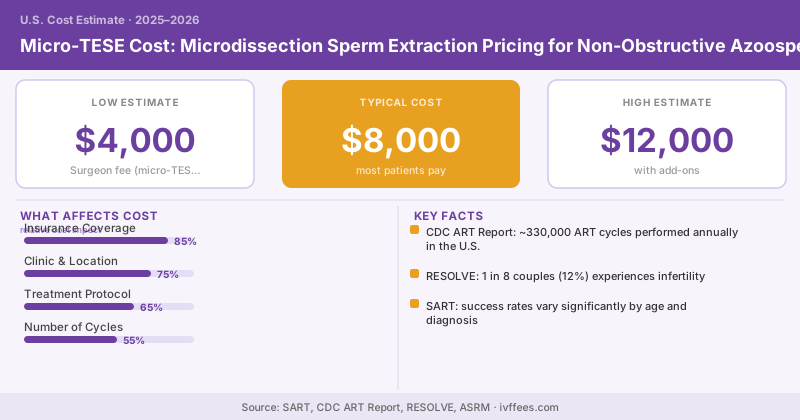
| Surgeon fee (micro-TESE) | $4,000 | $8,000 | $12,000 |
| Anesthesia (general) | $800 | $1,500 | $3,000 |
| Operating room/facility | $1,500 | $3,000 | $6,000 |
| Andrology lab processing | $500 | $1,000 | $2,000 |
| Sperm cryopreservation (initial) | $300 | $600 | $1,200 |
All-in, most patients pay $6,000 to $16,000 for the retrieval itself. And that’s before IVF — micro-TESE only makes sense paired with IVF and ICSI, since the few sperm recovered must be injected directly into eggs.
Micro-TESE costs $6,000–$16,000 and is the gold standard for non-obstructive azoospermia, recovering usable sperm in 40–60% of cases. It’s almost always combined with an IVF cycle, so budget for the retrieval plus $15,000–$25,000 for IVF on top.
Why It Costs More Than Standard Retrieval
A simpler TESA or TESE uses a needle or small biopsy with no microscope and runs $2,000–$6,000. Micro-TESE costs two to three times more because it requires:
- A specialized operating microscope
- General anesthesia rather than local
- A fellowship-trained microsurgeon
- A longer OR time (1–3 hours)
- An embryologist on standby to search the tissue in real time
That embryologist coordination matters. The procedure is often timed to the female partner’s egg retrieval so fresh sperm can be used immediately, which adds scheduling complexity and cost.
What Affects Your Total
Whether they find sperm. If the first micro-TESE is negative, some couples pursue a repeat attempt or move to donor sperm. Plan emotionally and financially for a possible second procedure.
Fresh vs frozen cycle. Doing micro-TESE the same day as egg retrieval avoids a freeze-thaw step but requires tight coordination. Retrieving and freezing sperm in advance gives flexibility but adds storage fees.
Diagnostic workup first. Before surgery you’ll need hormone testing and genetic screening — a Y chromosome microdeletion test and karyotype. A complete male fertility evaluation runs $200–$2,000 and can predict whether micro-TESE is likely to succeed.
Y chromosome microdeletions in the AZFa or AZFb regions predict a near-zero chance of finding sperm with micro-TESE. Get genetic testing before paying for the surgery — it can save you thousands and spare you a futile procedure.
Comparing the Retrieval Options
If your azoospermia is obstructive (a blockage, not a production problem), you may not need micro-TESE at all — a cheaper TESA/TESE often works because production is normal. Micro-TESE is specifically for non-obstructive cases where sperm production is the issue. A proper azoospermia evaluation sorts out which type you have, and that diagnosis is what determines which retrieval method — and price — applies.
Frequently Asked Questions
Does insurance cover micro-TESE? Coverage is improving but still spotty. States with fertility mandates may cover part of it when tied to a covered IVF cycle. Many men pay out of pocket. Always get prior authorization and ask whether the andrology lab and cryopreservation are billed separately.
What are the odds it actually finds sperm? For non-obstructive azoospermia, sperm retrieval rates run 40–60% with micro-TESE in experienced hands — meaningfully higher than the 20–30% from conventional TESE. Hormone levels, testicular volume, and genetic results all factor into your individual odds.
Can I use the retrieved sperm for more than one IVF cycle? Often yes. If enough sperm is recovered, the andrology lab freezes it in multiple vials, so a single micro-TESE can supply several future IVF attempts. That’s a major cost advantage versus repeating the surgery.