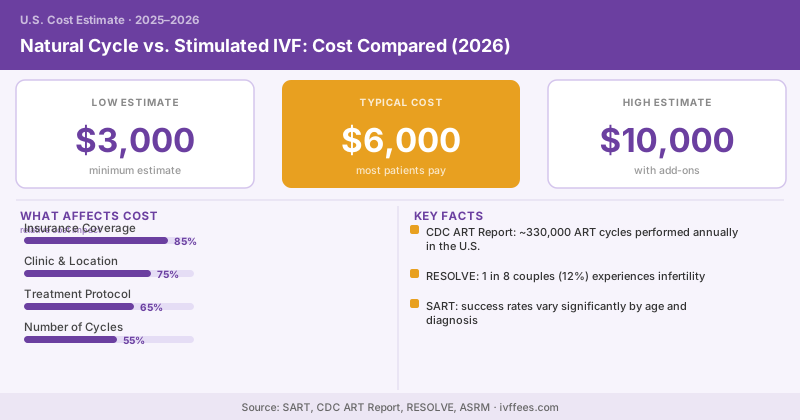
What if you could do IVF for a third of the price? Natural cycle IVF skips the expensive stimulation drugs and retrieves the single egg your body produces on its own, dropping the per-attempt cost to $3,000–$7,000 versus $15,000–$25,000 for a conventional stimulated cycle. Sounds like a no-brainer—until you see the success rates. This guide compares both honestly so you can tell whether the cheaper cycle is actually cheaper per baby.
How They Differ
Conventional IVF uses injectable hormones to stimulate your ovaries into producing many eggs in one cycle—often 8 to 15. Natural cycle IVF uses little or no medication and retrieves the one egg you’d ovulate naturally. Fewer eggs means lower cost but also fewer chances per cycle.
| Factor | Natural Cycle | Stimulated (Conventional) |
|---|---|---|
| Cost per attempt | $3,000–$7,000 | $15,000–$25,000 |
| Medications | Minimal/none | $4,000–$8,000 |
| Eggs retrieved | Usually 1 | 8–15 typical |
| Success rate per cycle | Lower | Higher |
Our dedicated natural cycle IVF cost guide goes deeper on the lower-medication route, and the standard IVF cost breakdown covers the conventional approach.
The Cost-Per-Baby Catch
Here’s the trap with natural cycle IVF: because you retrieve one egg, success per cycle is lower, so you often need more cycles. Three natural cycles at $5,000 each ($15,000) might equal one stimulated cycle’s cost—with comparable or worse total odds. The cheaper sticker doesn’t always mean a cheaper baby.
Natural cycle IVF is cheaper per attempt but usually not cheaper per baby, because you need more attempts to match the odds of one stimulated cycle. It can make sense if you respond poorly to stimulation drugs, want to avoid high medication doses, or have ethical or medical reasons to limit embryos created. For most patients seeking the best odds per dollar, conventional IVF still wins.
Who Natural Cycle Suits
Natural cycle isn’t just a budget play—it’s medically right for some people. Poor responders who barely produce extra eggs on stimulation may do just as well without the drugs. Women who want to avoid hormone side effects, or who object to creating surplus embryos, also choose it. And it’s gentler on the body, allowing back-to-back cycles. If you’re a low responder, see our poor ovarian reserve IVF cost considerations within the main cost guide.
A natural cycle can be canceled if you ovulate before retrieval—and that risk is real because there’s no medication suppressing premature ovulation. A canceled cycle still costs you monitoring and clinic fees with nothing retrieved. Ask your clinic what their cancellation rate is for natural cycles before assuming the low price is what you’ll actually pay.
Mini-IVF: The Middle Ground
If you want something between the two, mini-IVF uses low-dose stimulation to get a few eggs—more than natural cycle, fewer than conventional—at a moderate cost. It’s a popular compromise for cost-conscious patients who still want better-than-one-egg odds. Our mini IVF cost guide covers it, and IVF financing options helps with paying for any approach.
Frequently Asked Questions
Is natural cycle IVF actually cheaper overall? Per attempt, yes—often a third of conventional cost. But because each natural cycle produces just one egg and has lower per-cycle success, many patients need several cycles, which can erase the savings. For best odds per dollar, conventional IVF usually still comes out ahead.
Who’s a good candidate for natural cycle IVF? People who respond poorly to stimulation drugs, want to avoid high hormone doses, prefer not to create surplus embryos, or have medical reasons to limit medication. It’s gentler and cheaper per cycle, but it trades away the volume of eggs that drives conventional IVF’s higher success rates.
What’s the difference between natural cycle and mini-IVF? Natural cycle uses little to no stimulation and retrieves the one egg you’d ovulate naturally. Mini-IVF uses low-dose medication to get a few eggs—a middle ground between natural cycle and conventional IVF, with moderate cost and somewhat better per-cycle odds than a single-egg natural cycle.