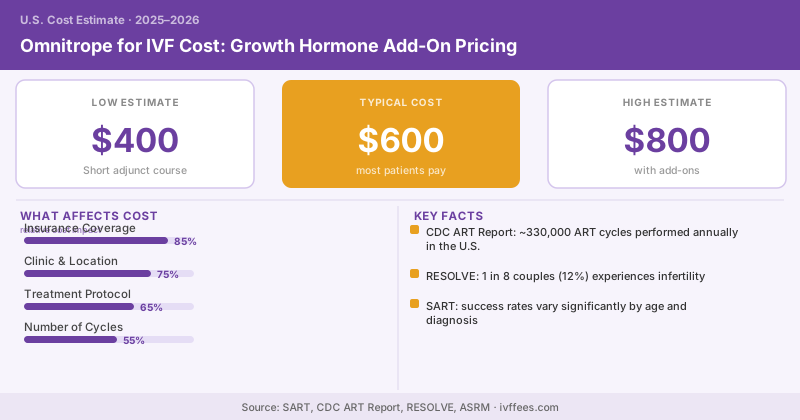
In 2010, almost no fertility clinic was prescribing growth hormone for IVF. Today it’s a fairly routine add-on for poor responders — and Omnitrope is one of the brands you’ll see on the script. It’s not a fertility drug by design. It’s a recombinant human growth hormone (somatropin) borrowed from endocrinology and layered onto stimulation protocols to try to coax better egg quality from tough ovaries.
The catch? It’s expensive, insurance almost never covers it for fertility, and the evidence is genuinely mixed. Here’s the cost picture.
Omnitrope Cost as an IVF Add-On
Omnitrope is dosed in IU or mg and added during stimulation, often for several days to a couple of weeks. Your total depends on daily dose and protocol length.
| Scenario | Dose / Duration | Low End | Typical | High End |
|---|---|---|---|---|
| Short adjunct course | ~5 IU/day, 7 days | $400 | $600 | $800 |
| Standard adjunct course | ~5 IU/day, 10–14 days | $600 | $900 | $1,200 |
| Extended pretreatment | weeks before cycle | $1,000 | $1,500 | $2,500+ |
| Omnitrope 5.8 mg cartridge | Per cartridge | $250 | $350 | $500 |
Because growth hormone is rarely covered for fertility, almost all of this lands out of pocket on top of your already-steep IVF cost and stimulation drugs.
Why Clinics Add Growth Hormone
The theory: growth hormone boosts local production of IGF-1 in the ovary, which may improve how follicles respond to FSH. For poor responders — older patients, those with diminished ovarian reserve, or prior failed cycles — clinics try it hoping for more mature eggs.
Does it work? A 2023 review in the fertility literature found some studies show improved outcomes in poor responders while others show no benefit. It’s not a slam dunk. That uncertainty is exactly why you should ask your RE for their honest read on whether it’ll help your case before spending the money.
Growth hormone like Omnitrope is an unproven, out-of-pocket add-on best reserved for poor responders after a frank talk with your RE. If your reserve and prior response are normal, the $600–$1,200 is unlikely to be money well spent.
Omnitrope vs. Other Growth Hormones
Omnitrope is a somatropin biosimilar, which generally makes it cheaper than the original reference brands. Clinics also use Saizen, Norditropin, and others — they’re broadly comparable for this off-label use. If your clinic offers a choice, the biosimilar route usually saves money. For the wider picture on this adjunct, see our growth hormone IVF cost guide.
Growth hormone for IVF is off-label and not FDA-approved for fertility. That means insurance denial is the norm, and you take on the full cost. Get the total quoted in writing before you commit, and make sure it’s a deliberate choice, not an automatic line item.
Keeping the Cost Down
Price-shop specialty pharmacies, since somatropin pricing varies. Ask whether a biosimilar like Omnitrope is being used instead of a pricier reference brand. And check fertility drug assistance programs plus the manufacturer’s own patient support.
ASRM patient survey data has consistently shown most IVF patients carry significant out-of-pocket medication costs, and add-ons like this stack fast. If you’re weighing where your dollars go, our how to reduce IVF cost guide can help you decide whether an unproven adjunct fits your budget — or whether that money is better spent elsewhere. For context on all stimulation drugs, the fertility medications cost overview is a good starting point.
Frequently Asked Questions
Does insurance cover Omnitrope for IVF? Almost never. Growth hormone for fertility is off-label, so plans routinely deny it. Most patients pay the full $400–$1,200 per cycle out of pocket.
Is growth hormone worth adding to my IVF cycle? It’s mainly considered for poor responders, and even then the evidence is mixed. Some studies show benefit, others show none. Discuss your specific reserve and prior cycle response with your RE before paying for it.
Is Omnitrope cheaper than other growth hormones? Often, yes. It’s a somatropin biosimilar, which typically prices below reference brands like Norditropin or Saizen while doing the same job for this off-label use.